Highlight
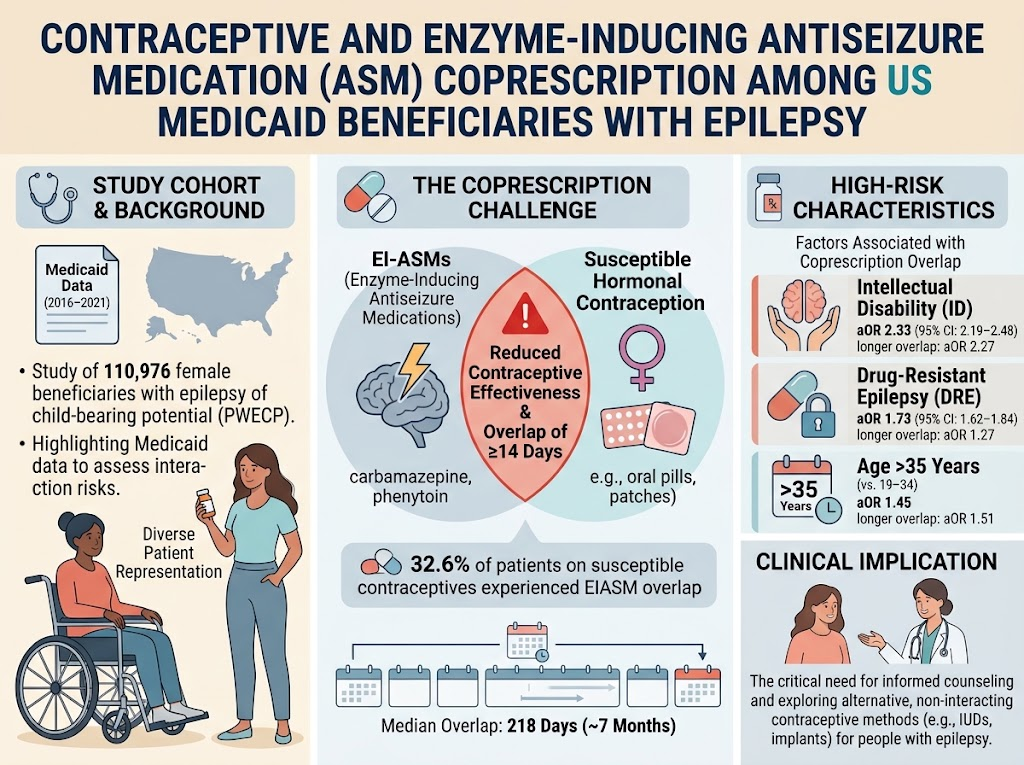
- Approximately one-third of US Medicaid female beneficiaries with epilepsy receiving susceptible hormonal contraception concurrently use enzyme-inducing antiseizure medications (ASMs).
- Median duration of overlapping prescriptions spans over 7 months, increasing the risk of contraceptive failure.
- Women with intellectual disability, drug-resistant epilepsy, and those older than 35 years are significantly more likely to experience prolonged coprescription overlapping enzyme-inducing ASMs and susceptible contraceptives.
Study Background and Clinical Context
People with epilepsy of child-bearing potential (PWECP) face unique reproductive health challenges. Effective contraception is critical to prevent unintended pregnancies, which may carry increased risks due to antiseizure medication (ASM) teratogenicity and seizure-related complications during pregnancy. However, numerous ASMs induce hepatic enzymes—especially cytochrome P450 isoenzymes—that metabolize hormonal contraceptives, potentially reducing contraceptive efficacy and increasing pregnancy risk.
Given the high utilization of hormonal contraceptives among women with epilepsy and the pharmacokinetic interactions with enzyme-inducing ASMs, there is an urgent need to understand the magnitude and characteristics associated with this coprescription. This information is vital to inform clinicians’ prescribing practices, optimize contraception counseling, and prevent unintended pregnancy in this vulnerable population.
Study Design and Methods
This retrospective cohort study analyzed Medicaid claims data from 2016 to 2021, focusing on female beneficiaries diagnosed with epilepsy and prescribed at least one hormonal contraceptive method susceptible to hepatic enzyme induction. The cohort consisted of 110,976 women with epilepsy, with a median age of 24 years (IQR 18-30) and majority White non-Hispanic (54.8%). From this, 21,923 received susceptible hormonal contraception between 2018 and 2021.
Overlap periods of at least 14 days between enzyme-inducing ASM prescriptions and susceptible contraceptive methods were identified by examining prescription fill and contraceptive procedure dates. Descriptive statistics quantified the prevalence and duration of overlap, while logistic and binomial regression models analyzed patient characteristics associated with any overlap and longer overlap durations.
Key Findings
Nearly one-third (32.6%, n=7,154) of PWECP prescribed susceptible hormonal contraception experienced at least one episode of overlapping enzyme-inducing ASM use lasting 14 days or more. The median overlap duration was substantial at 218 days (IQR 74-511), indicating prolonged risk exposure.
Important patient factors linked with increased overlap risk included:
- Intellectual disability: High association with any overlap (adjusted odds ratio [aOR] 2.33, 95% CI 2.19-2.48) and longer overlap duration (aOR 2.27, 95% CI 2.05-2.53).
- Drug-resistant epilepsy: Elevated odds for any overlap (aOR 1.73, 95% CI 1.62-1.84) and longer overlap (aOR 1.27, 95% CI 1.14-1.41).
- Age over 35 years: Increased likelihood of overlap (aOR 1.45, 95% CI 1.32-1.59) and longer duration (aOR 1.51, 95% CI 1.29-1.75) compared to women aged 19-34 years.
These findings underscore that certain demographic and clinical subgroups of women with epilepsy are at higher risk for coprescription of interacting therapies, which may compromise contraceptive effectiveness.
Expert Commentary
This study elucidates a critical clinical challenge: the frequent and prolonged coexistence of enzyme-inducing ASMs with susceptible hormonal contraceptives in women with epilepsy, potentially undermining contraceptive protection. Such pharmacokinetic interactions raise the likelihood of unintended pregnancies, which involve complex management due to teratogenic risks and seizure control demands.
Notably, the higher overlap among women with intellectual disability and drug-resistant epilepsy suggests potential barriers to optimal contraceptive counseling or limited alternative ASM options. Older reproductive-age women showing increased overlap may reflect cumulative treatment complexity or differing contraception choices.
The study’s strengths include a large, nationally representative sample and robust analytic methods. Limitations, however, must be acknowledged: absence of data on medication adherence, patient counseling, pregnancy intentions, sexual activity, and use of non-hormonal barriers limits conclusions about actual contraceptive failure risk. Moreover, administrative claims data may not capture nuanced clinical decisions or patient preferences.
Clinical guidelines emphasize the importance of assessing drug interactions when prescribing contraception to women on ASMs and advocate for non-enzyme-inducing ASMs or non-hormonal contraceptive methods when possible. This study reaffirms the need for interdisciplinary collaboration among neurologists, gynecologists, and primary care providers to optimize reproductive health outcomes in epilepsy.
Conclusion and Implications for Practice
The coprescription of enzyme-inducing antiseizure medications with susceptible hormonal contraceptives is common and often prolonged among women with epilepsy in the Medicaid population. High-risk groups include those with intellectual disabilities, drug-resistant epilepsy, and older reproductive age, who warrant particular attention in clinical care.
Healthcare providers should proactively assess medication regimens for potential drug interactions affecting contraception. Whenever feasible, selecting enzyme-neutral ASMs or recommending contraceptive methods unaffected by hepatic enzyme induction (e.g., copper IUDs, depot medroxyprogesterone acetate) can mitigate risks. Enhanced patient education regarding drug interactions and pregnancy planning is critical.
Future research should integrate adherence and counseling data, evaluate contraceptive failure rates, and explore patient-centered strategies to improve safe contraceptive use in epilepsy. Strengthening care pathways will reduce unintended pregnancies and improve outcomes for women managing epilepsy.
Funding and Trial Registration
The original study was supported by institutional and Medicaid program resources. No clinical trials were registered for this retrospective observational analysis.
References
1. Harrison E, Kirkpatrick L, Dutton C, et al. Contraceptive and Enzyme-Inducing Antiseizure Medication Coprescription Among US Medicaid Beneficiaries With Epilepsy. Neurology. 2026;107(9):e218679. doi:10.1212/WNL.000000000000218679
2. Meador KJ, Baker GA, Browning N, et al. Pregnancy registries in epilepsy: a consensus statement on health outcomes. Neurology. 2022;99(3):e299–e311.
3. Harden CL, Meador KJ, Pennell PB. Epilepsy and Pregnancy: Optimizing Treatment to Reduce Risks. Neurology. 2019;92(22):1020–1028.
4. Backes M, Tekampe M, Krol A, et al. Hormonal contraception and antiseizure medications: evaluation of drug interaction and clinical impact. Epilepsia. 2020;61(6):1141-1150.
5. Roberts B, Brodie MJ. Antiepileptic drugs and fertility in women. Lancet Neurol. 2018;17(5):397-399.