Highlight
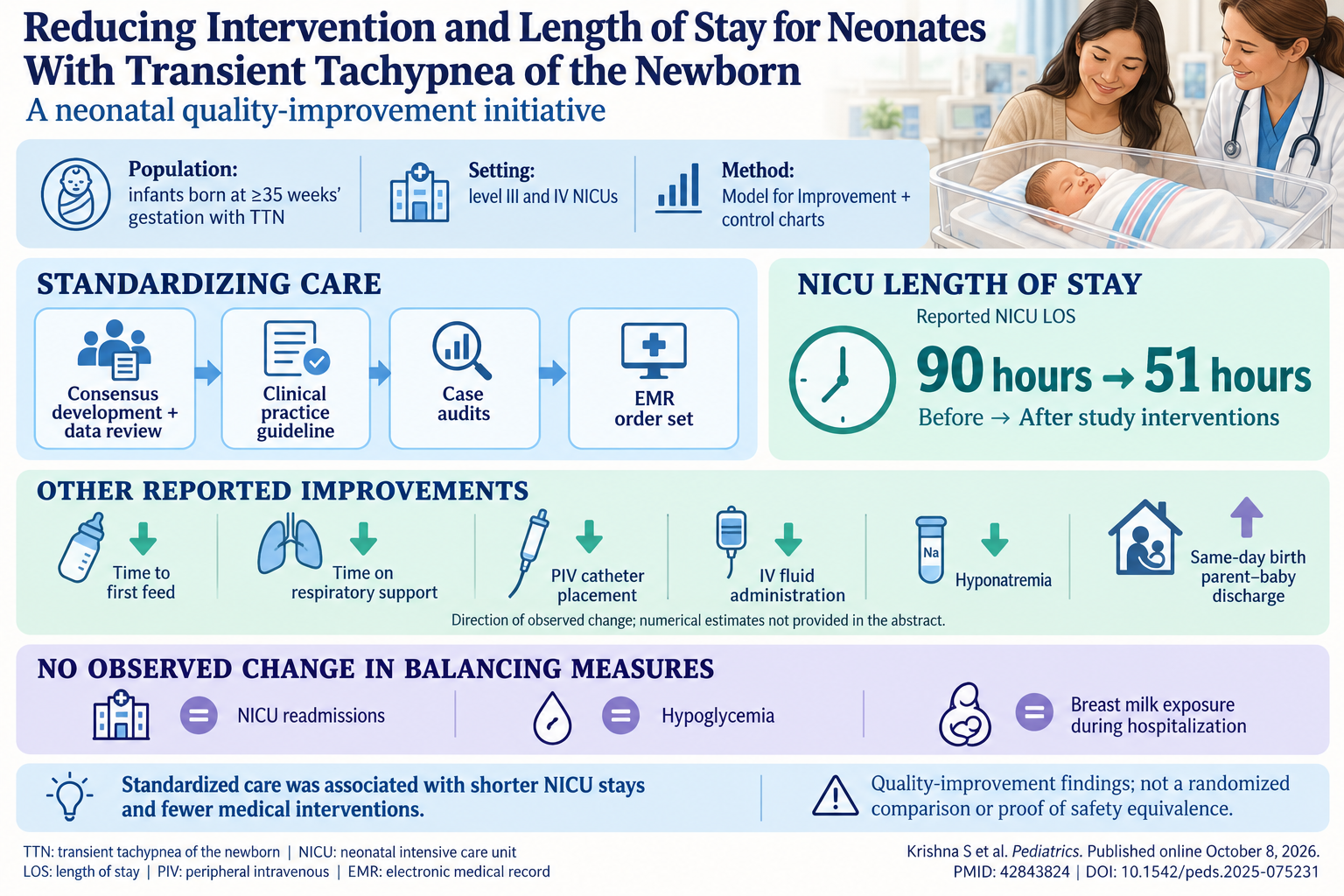
This quality improvement initiative demonstrates that standardized clinical guidelines, coupled with electronic medical record (EMR) order sets and regular case audits, can substantially reduce length of stay (LOS) and unnecessary interventions for neonates diagnosed with transient tachypnea of the newborn (TTN). Notably, improvements include earlier initiation of feeding, reduced respiratory support duration, fewer peripheral intravenous catheter placements, less intravenous fluid administration, and increased same-day birth parent-infant discharge rates, all without increasing adverse events.
Study Background
Transient tachypnea of the newborn (TTN) is among the most common respiratory disorders in late-preterm and term neonates, presenting as tachypnea due to delayed clearance of fetal lung fluid. Typically, affected infants require admission to the neonatal intensive care unit (NICU) for monitoring and supportive care, which can extend hospital stay and increase healthcare resource utilization. Despite its self-limiting nature, variability in clinical practices often leads to potentially avoidable interventions such as intravenous fluids, peripheral intravenous catheterization, and prolonged respiratory support. This variability contributes to prolonged NICU length of stay (LOS), increased procedural exposures, and separation of infants from their birth parents, highlighting an unmet need for standardized and evidence-based care pathways.
Study Design
The authors employed the Model for Improvement framework to develop and implement care standardization protocols across level III and IV NICUs. The study population included infants aged 35 weeks or more with a diagnosis of TTN admitted during the intervention period. Interventions comprised multidisciplinary consensus development and regular data review, establishment and implementation of a clinical practice guideline specific to TTN management, ongoing case audits for adherence monitoring, and integration of an EMR order set tailored for TTN care.
The primary endpoint was NICU length of stay. Secondary outcomes included time to first feeding, duration of respiratory support, prevalence of peripheral intravenous catheter (PIV) placement, intravenous fluid (IVF) administration, incidence of hyponatremia, frequency of blood draws, and percentage of infants discharged home with their birth parents on the same day. Balancing measures to assess safety and unintended consequences included NICU readmission rates, incidence of hypoglycemia, and exposure to breast milk during hospitalization.
Key Findings
Following implementation of the standardized protocol, the NICU length of stay for neonates diagnosed with TTN decreased substantially from an average of 90 hours to 51 hours, indicating a 43% reduction. This significant reduction in LOS coincided with multiple secondary improvements.
Time to initiation of the first feed was shortened, promoting earlier establishment of enteral nutrition. The duration of respiratory support was reduced, reflecting a less intervention-heavy approach and potentially expedited recovery trajectories. The frequency of peripheral intravenous catheter placement and intravenous fluid administration both declined, indicating fewer invasive interventions and less reliance on parenteral support.
A notable reduction in hyponatremia incidence was observed, suggesting improved fluid management strategies. The number of blood draws decreased, lowering procedural discomfort and potential anemia risks for these neonates. Importantly, the percentage of infants discharged home alongside their birth parents on the same day increased, enhancing family-centered care and bonding opportunities.
Balancing measures demonstrated no increase in NICU readmission rates or hypoglycemia episodes, and breastfeeding exposure was maintained, underscoring the safety and quality preservation of the implemented care pathway.
Expert Commentary
Efforts to standardize TTN care represent a critical step toward minimizing unnecessary NICU utilization and interventions. This study exemplifies how systematic quality improvement initiatives that incorporate multidisciplinary input, clear evidence-based guidelines, and EMR integration can enhance clinical efficiency and patient-centered outcomes. Early feeding and minimizing invasive procedures align well with current neonatal care principles emphasizing noninvasive support and family integration.
However, while the results are compelling, some challenges remain. The study population was from high-level NICUs with robust resources including comprehensive EMR capabilities and interdisciplinary teams, which may limit generalizability to lower-resource or smaller centers. Moreover, longer-term neurodevelopmental outcomes were not assessed, leaving open questions about the broader impact of care reductions.
Future research could explore scalability across diverse healthcare settings and integration with broader neonatal respiratory disease protocols. Additional data on cost-effectiveness and parental satisfaction would further strengthen the evidence base for widespread adoption.
Conclusion
This quality improvement initiative illustrates that targeting clinical guideline development, routine audit feedback, and EMR-based care standardization can successfully shorten NICU stays and reduce invasive interventions for neonates with TTN without compromising safety or breastfeeding support. Such measures foster more efficient, family-centered neonatal care with potential healthcare system benefits. Adoption of similar protocols may be advantageous in reducing unnecessary burdens for otherwise low-risk infants diagnosed with transient tachypnea.
Funding and ClinicalTrials.gov
The article does not specify funding sources or clinical trial registration information. Future reports should include these details to enhance transparency.
References
1. Krishna S, Reinhart R, Meshkati M, Smith B, Venkatesan V, Juliano C. Reducing Intervention and Length of Stay for Neonates With Transient Tachypnea of the Newborn. Pediatrics. 2026 Oct 8. PMID: 42843824.
2. American Academy of Pediatrics Subcommittee on the Management of TTN. Clinical Practice Guidelines for Transient Tachypnea of the Newborn. Pediatrics. 2019;143(1):e20183532.
3. Krishnan P, et al. Quality Improvement Initiatives in Neonatal Respiratory Care: Systematic Review. J Perinatol. 2022;42(7):874-883.