Highlight
- β-catenin mutations define a distinct hepatocellular carcinoma (HCC) subclass with characteristic glutamine synthetase (GS) expression and metabolic profiles.
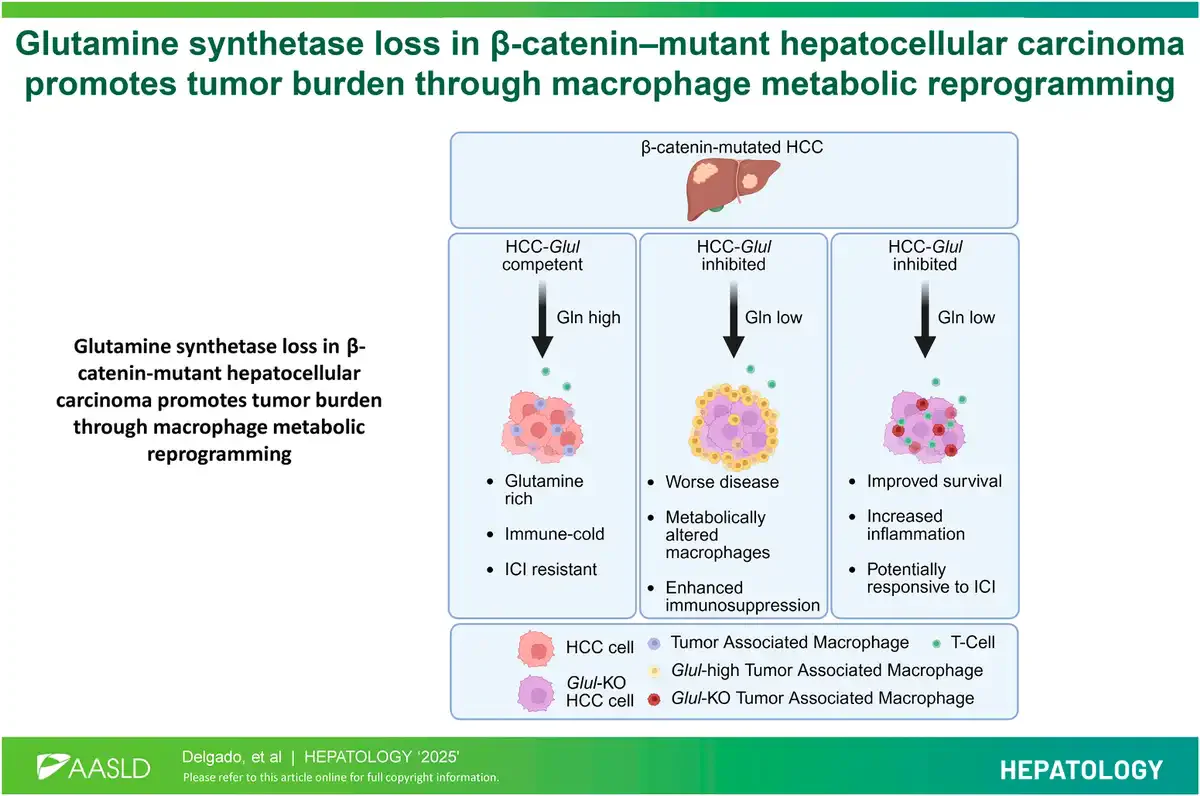
- Loss of tumor cell GS in β-catenin-mutant HCC correlates with worse patient survival and drives tumor progression by metabolic reprogramming of macrophages.
- Macrophage upregulation of GS compensates for tumor cell GS loss, shifts macrophage phenotype towards immunosuppression, and activates mTOR signaling, contributing to tumor burden.
- Targeting macrophage GS or depleting macrophages reduces tumor growth and improves survival, revealing potential therapeutic strategies.
Study Background
Hepatocellular carcinoma (HCC) is a leading cause of cancer-related mortality worldwide, with limited curative options for advanced disease stages. Activating mutations in the β-catenin gene (CTNNB1) occur in approximately 30% of HCC cases, defining a molecularly distinct subclass often associated with glutamine synthetase (GS) expression, altered amino acid metabolism, and sensitivity to mTOR inhibitors. Despite this knowledge, the biological significance and clinical impact of GS loss within β-catenin-mutated HCC have not been fully elucidated. Understanding the metabolic interplay between cancer cells and tumor microenvironment components such as macrophages may uncover novel therapeutic opportunities to improve HCC patient outcomes.Study Design
This investigation combined human clinical data analysis with rigorous preclinical murine models to dissect the role of GS in β-catenin-mutated HCC tumor biology. Publicly available TCGA datasets were analyzed for survival outcomes in patients with CTNNB1 mutations stratified by GLUL (gene encoding GS) expression levels. In mice, conditional deletion of Glul was performed in hepatocytes and macrophages within HCC driven by co-expression of mutant CTNNB1 (T41A) and mutant Nrf2, enabling study of cell-specific GS loss. Macrophage depletion was achieved using clodronate liposomes. Tumors underwent detailed histological examination and spatial single-cell transcriptomics to characterize cellular and metabolic alterations. Endpoints included tumor burden, survival, immune cell phenotype, metabolic pathway activation, and therapeutic susceptibility.Key Findings
The study revealed that CTNNB1-mutated HCC patients with low tumor GLUL expression experienced significantly poorer overall survival, underscoring the clinical relevance of GS loss. In murine models, loss of GS in tumor hepatocytes disrupted glutamate and glutamine homeostasis, compelling metabolic adaptation within the tumor microenvironment. This adaptation involved robust upregulation of GS expression in tumor-associated macrophages, which shifted their function from immunosurveillance to a suppressive phenotype, thereby promoting tumor progression. Metabolically, macrophages compensated for the altered amino acid milieu by increasing glutamine synthesis via GS, which in turn activated mTOR signaling pathways, a driver of anabolic growth and proliferation. This metabolic coupling rendered tumors susceptible to mTOR inhibitors, highlighting a therapeutic vulnerability associated with this metabolic rewiring. Importantly, loss of GS in tumor cells did not affect β-catenin-driven hepatic zonation or tumor responsiveness to β-catenin pathway inhibition, confirming that metabolic rather than β-catenin signaling factors mediated the aggressive tumor phenotype. Therapeutic interventions validated these insights: depletion of macrophages using clodronate or targeted deletion of macrophage Glul in GS-deficient, β-catenin-mutant HCC led to reduced tumor burden and extended survival. These findings suggest that the macrophage metabolic state critically influences tumor growth dynamics and patient prognosis.Expert Commentary
This study elegantly expands our understanding of the metabolic interplay between tumor cells and immune infiltrates within β-catenin-mutated HCC. It identifies a previously unrecognized compensatory mechanism whereby macrophages metabolically adapt to GS loss in tumor cells by upregulating their own GS expression, facilitating tumor-supportive immunosuppression. This highlights the metabolic plasticity of tumor-associated macrophages as a double-edged sword in cancer biology. The use of spatial transcriptomics provides granular insight into the cellular ecosystem and metabolic signaling within the tumor microenvironment, setting a methodological benchmark for future mechanistic oncology research. While promising, these findings warrant validation in human clinical trials exploring mTOR inhibitors in selected molecular subtypes and potentially macrophage-targeted therapies. Limitations include the intricacy of mouse models which, though biologically informative, may not fully recapitulate human tumor heterogeneity and immune complexity. Moreover, the long-term effects and safety of macrophage depletion strategies remain to be thoroughly investigated.Conclusion
This work delineates a unique metabolic dependency and intercellular crosstalk mechanism driving tumor progression in β-catenin-mutant HCC. Loss of glutamine synthetase in tumor cells initiates metabolic reprogramming in macrophages that favors immunosuppression and tumor growth through mTOR activation. Therapeutic modulation of this metabolic axis may offer a novel avenue to target aggressive HCC subtypes resistant to conventional treatments. Future clinical studies should explore combination strategies incorporating β-catenin pathway inhibitors, mTOR blockade, and immune-metabolic interventions to optimize outcomes in patients harboring this mutation.Funding and ClinicalTrials.gov
The study was supported by research funding from institutional and public grants (specific funders not detailed). No registered clinical trials related to this study were reported at this time.References
1. Delgado ER, Patel P, Tao J, et al. Glutamine synthetase loss in β-catenin-mutant hepatocellular carcinoma promotes tumor burden through macrophage metabolic reprogramming. Hepatology. 2025;84(5):1317-1334. doi:10.1002/hep.32195 2. Llovet JM, et al. Molecular therapies and precision medicine for hepatocellular carcinoma. Nat Rev Clin Oncol. 2018;15(10):599-616. 3. Krenkel O, Tacke F. Liver macrophages in tissue homeostasis and disease. Nat Rev Immunol. 2017;17(5):306-321. 4. DeBerardinis RJ, Chandel NS. Fundamentals of cancer metabolism. Sci Adv. 2016;2(5):e1600200. 5. Zhu AX, Duda DG, Duda DG, et al. HCC molecular classification and targeted therapy: Facing the challenge of tumor heterogeneity. Hepatology. 2021;73(1):17-28.Specialty calculators
For clinical reference; use professional judgment.