Highlight
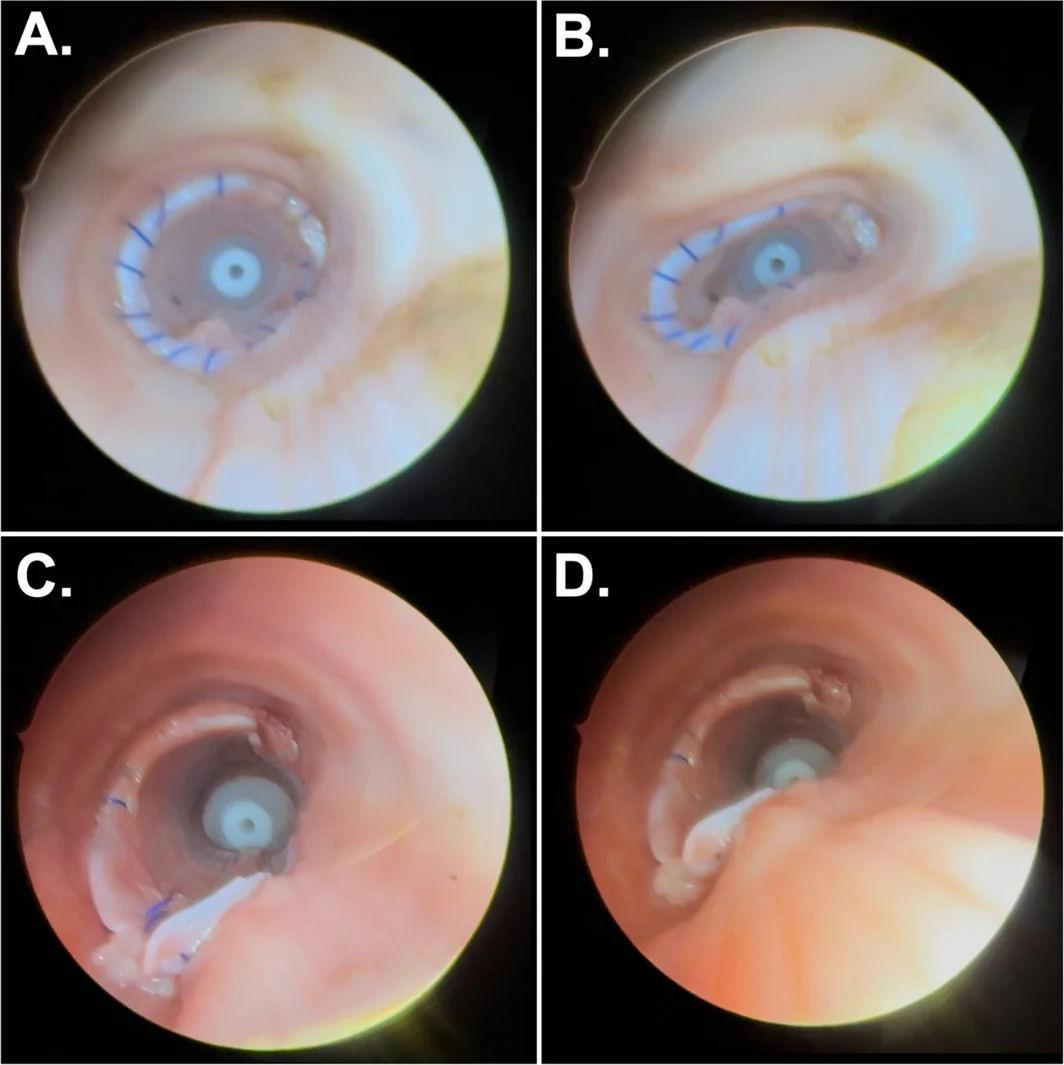
This study provides a detailed mechanical comparison between slide tracheoplasty and end-to-end anastomosis techniques using an ex vivo porcine tracheal model. Key findings include: (1) Slide tracheoplasty constructs demonstrated significantly lower tensile strength and stiffness compared to end-to-end repairs; (2) Slide tracheoplasty redistributes mechanical stress over a broad area, reducing localized tension but limiting maximal load-bearing capacity; (3) These biomechanical insights highlight the trade-offs between anastomotic tension and overall mechanical resilience, vital for surgical decision-making in airway reconstruction.