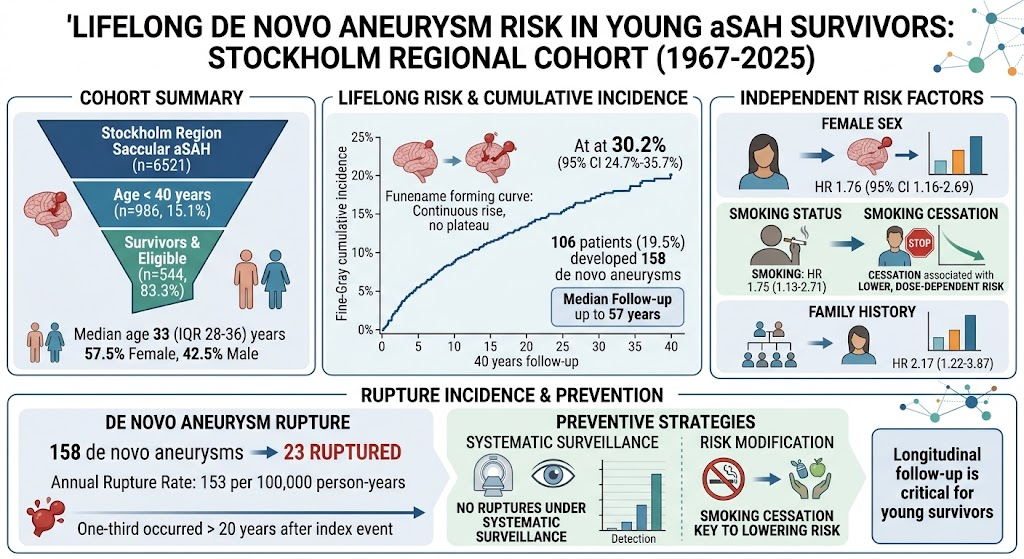
Young survivors of aneurysmal subarachnoid hemorrhage (aSAH) have a persistent, lifelong risk of developing de novo intracranial aneurysms, with cumulative incidence reaching 30% over 40 years.
Female sex, active smoking, and positive family history significantly increase the risk of de novo aneurysm formation; smoking cessation notably lowers this risk in a dose-dependent manner.
No aneurysm ruptures occurred in patients under systematic radiological surveillance, highlighting the effectiveness of long-term monitoring.
One-third of aneurysm ruptures occurred more than 20 years after the initial hemorrhagic event, underscoring the need for lifelong vigilance in this population.