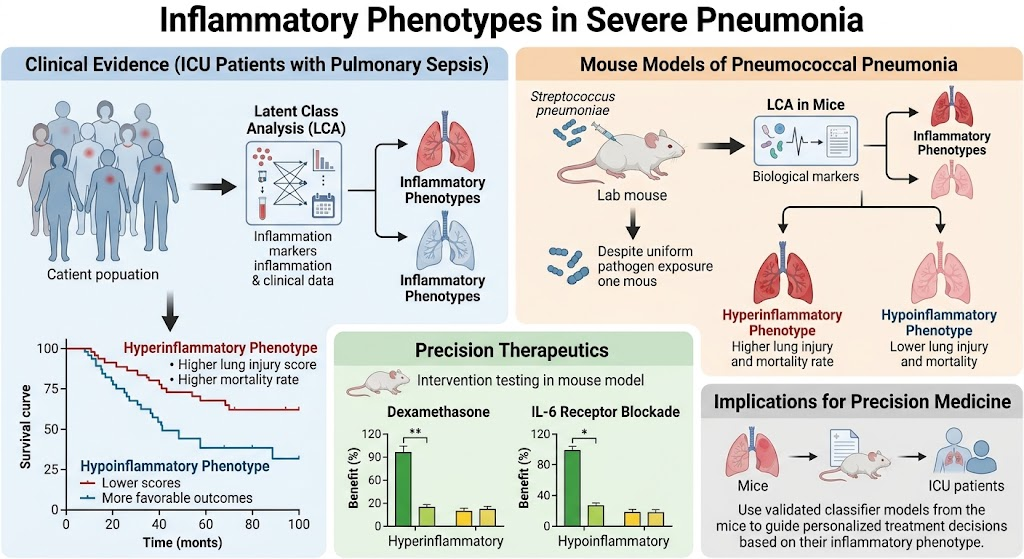
Identification of hyperinflammatory and hypoinflammatory phenotypes in critically ill pneumonia patients correlates with lung injury severity and mortality risk.
Latent class analysis (LCA) reveals parallel inflammatory phenotypes in a murine model of pneumococcal pneumonia despite uniform pathogenic exposure.
Distinct phenotypes demonstrate differential responses to anti-inflammatory therapies, supporting a precision medicine approach.
Integration of clinical and experimental data offers a robust translational framework to develop phenotype-targeted interventions in critical illness.