Highlight
This observational cohort study of 440 adults with severe cardiogenic shock receiving venoarterial extracorporeal membrane oxygenation (VA ECMO) support reveals that sustained inotropic use during ECMO is common. Higher cumulative inotropic exposure correlates with increased risks of ECMO weaning failure, 30-day mortality, arrhythmias, and delayed lactate clearance, which are markers of impaired cardiac recovery. The study underscores the clinical dilemma regarding inotropic management during VA ECMO and suggests careful reevaluation of their use to enhance patient outcomes.Study Background
Cardiogenic shock (CS) remains a critical condition characterized by inadequate tissue perfusion due to impaired cardiac output. VA ECMO serves as a life-saving modality, providing both cardiac and respiratory support by oxygenating blood and maintaining systemic perfusion independent of native heart function. However, the role of inotropic agents during VA ECMO is complex and not fully understood. Inotropes, which enhance myocardial contractility, are traditionally employed to support failing hearts. Yet, during VA ECMO, where extracorporeal flow partially substitutes cardiac output, the incremental benefit of inotropes relative to their risks—such as arrhythmogenesis and increased myocardial oxygen consumption—may be diminished. Importantly, inotropic drugs may impede myocardial recovery by increasing myocardial workload and promoting deleterious remodeling. Given these concerns, understanding the temporal impact and cumulative burden of inotropic exposure on ECMO weaning and patient prognosis is essential for optimizing management strategies in this vulnerable population.Study Design
Van Steenwijk et al. conducted a multicenter observational cohort study involving six hospitals in the Netherlands, enrolling 440 adult patients with various etiologies of severe cardiogenic shock who required VA ECMO support between 2018 and 2024. The study employed a longitudinal assessment of inotropic therapy intensity, quantified daily using a standardized inotropic score accounting for doses of commonly used inotropes. The cumulative inotropic exposure per day was computed using the area under the curve (AUC) approach, capturing the total inotropic burden over time during ECMO support. Primary endpoints included ECMO weaning failure, defined by a composite of death, ongoing ECMO requirement, or the need for heart replacement therapy within 30 days. Secondary endpoints encompassed 30-day mortality, incidence of arrhythmias, and lactate clearance kinetics as a surrogate for tissue perfusion and metabolic recovery. Advanced joint modeling techniques were applied to integrate longitudinal inotropic exposure data with time-to-event outcomes, adjusting for potential confounders.Key Findings
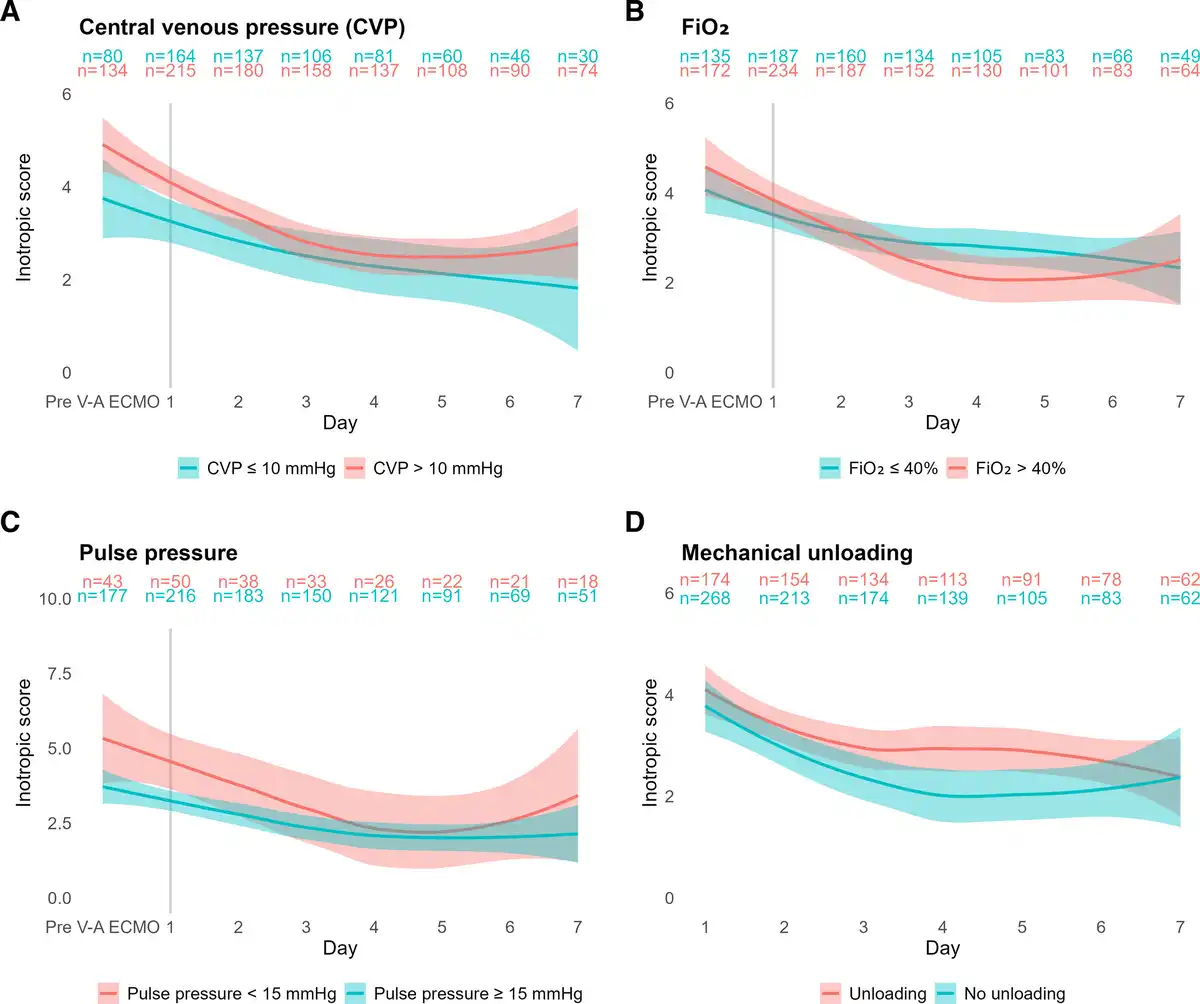
Among the 440 patients analyzed, 235 (53.4%) experienced ECMO weaning failure. Interestingly, inotropic support largely remained unchanged in the days following ECMO initiation, indicating persistent dependence or clinical equipoise regarding tapering. Joint models demonstrated that higher cumulative inotropic exposure during VA ECMO was significantly associated with increased risk of ECMO weaning failure (hazard ratio [HR] 1.04 per unit increase in inotropic score; 95% confidence interval [CI] 1.00–1.07). Similarly, increased inotropic exposure was linked with elevated 30-day mortality (HR 1.04; 95% CI 1.01–1.08) and higher incidence of arrhythmias (HR 1.05; 95% CI 1.01–1.08). Moreover, higher inotropic burden correlated with protracted lactate clearance (HR 0.96; 95% CI 0.92–0.99), suggesting impaired metabolic recovery and persistent tissue hypoperfusion despite ECMO support. Of note, these associations persisted after adjustment for baseline clinical characteristics and severity of cardiogenic shock, implying an independent detrimental effect of sustained inotropic exposure.Expert Commentary
This study addresses a critical therapeutic paradox in acute cardiogenic shock management under VA ECMO. While inotropes theoretically support the myocardium, their continued use during ECMO may not promote recovery but rather contribute to adverse outcomes. Mechanistically, inotropes increase myocardial oxygen demand and can exacerbate ischemia or induce arrhythmias, potentially explaining the increased mortality and weaning failure observed. The delayed lactate clearance further supports the hypothesis that excessive catecholaminergic stimulation may impair microcirculatory and metabolic function. The relatively stable inotropic dosing after ECMO initiation observed in this cohort highlights a potential area for clinical intervention, suggesting that current practice may not adequately prioritize minimization or weaning of inotropic agents. Limitations include the observational design, which cannot definitively establish causality, and possible residual confounding by indication, where sicker patients require higher inotropic doses. However, the use of joint modeling strengthens the validity of longitudinal exposure-outcome relationships. Current guidelines provide limited direction on managing inotropic therapy in VA ECMO, underscoring the need for prospective, randomized trials to define optimal strategies and validate whether tapering or discontinuation of inotropes improves myocardial recovery and clinical outcomes.Conclusion
This multicenter observational study provides compelling evidence that higher cumulative inotropic exposure during VA ECMO support in severe cardiogenic shock is associated with increased risks of ECMO weaning failure, mortality, arrhythmias, and impaired metabolic recovery. Clinicians should carefully reconsider the routine use of inotropes during ECMO, and future research should focus on prospective interventional studies to determine if inotropic dose reduction or discontinuation can facilitate cardiac recovery and improve patient survival. In the interim, individualized patient assessment and cautious titration of inotropic therapy remain paramount to balance supporting cardiac function against potential harms in this critically ill population.Funding and ClinicalTrials.gov
The study was conducted without specific interventional funding. Clinical trial registration details were not provided in the publication.References
- van Steenwijk MPJ, Pladet LCA, van Esch A, et al. Time-Dependent Effects of Inotropic Exposure During Venoarterial Extracorporeal Membrane Oxygenation Support on the Probability of Extracorporeal Membrane Oxygenation Weaning Failure. Crit Care Med. 2026 Sep 25. PMID: 42809661.
- Combes A, Brodie D, Chen YS, et al. The IABP-SHOCK II trial and the impact on inotropic support and ECMO use. Intensive Care Med. 2018;44(3):356-359.
- Shekar K, Fraser JF, Coombes JS, et al. Extracorporeal life support and inotropic therapy: balancing myocardial recovery and systemic hemodynamics. Crit Care. 2014;18(6):678.
- Parissis H, Koulouris S, Pavlides G, et al. Inotropes and vasoactive drugs management in cardiogenic shock supported with VA-ECMO: a systematic review. Heart Fail Rev. 2023;28(3):631-642.