Highlight
- Chronic rhinosinusitis (CRS) patients with documented intranasal substance use exhibit distinct sinonasal histopathologic alterations compared to non-users.
- Key histopathologic features among intranasal substance users include increased neutrophilic inflammation, basement membrane thickening, subepithelial edema, squamous metaplasia, and fibrosis.
- Substance use correlates with demographic differences, particularly increased male predominance and distinct CRS subtype distribution.
- Findings emphasize the importance of substance use screening, cessation counseling, and vigilant postoperative surveillance in CRS management.
Study Background
Chronic rhinosinusitis (CRS) is a prevalent inflammatory condition of the sinonasal mucosa characterized by persistent symptoms and mucosal changes. CRS substantially impacts patient quality of life and healthcare utilization. While multiple etiologies contribute to CRS pathogenesis, behavioral factors such as intranasal substance use may influence mucosal inflammation and remodeling. Intranasal use of substances like cocaine, cannabis, and heroin has been implicated in direct mucosal injury and impaired sinonasal immunity, yet structured histopathologic characterization in this population remains limited. Understanding histologic patterns associated with substance exposure informs tailored clinical management and surgical outcomes.
Study Design
This retrospective observational study reviewed adult patients with medically recalcitrant CRS undergoing endoscopic sinus surgery from January 2021 to October 2024. Patients with documented intranasal substance use were identified and compared to CRS patients without reported substance exposure. Demographic data, CRS subtype classification, and structured sinonasal histopathology variables were analyzed. Histopathologic evaluation included assessment of inflammatory cell infiltrates, basement membrane thickness, subepithelial edema, epithelial morphology, and fibrosis. Statistical analysis involved chi-square, Fisher exact, and Student’s t-tests to determine significant differences between cohorts.
Key Findings
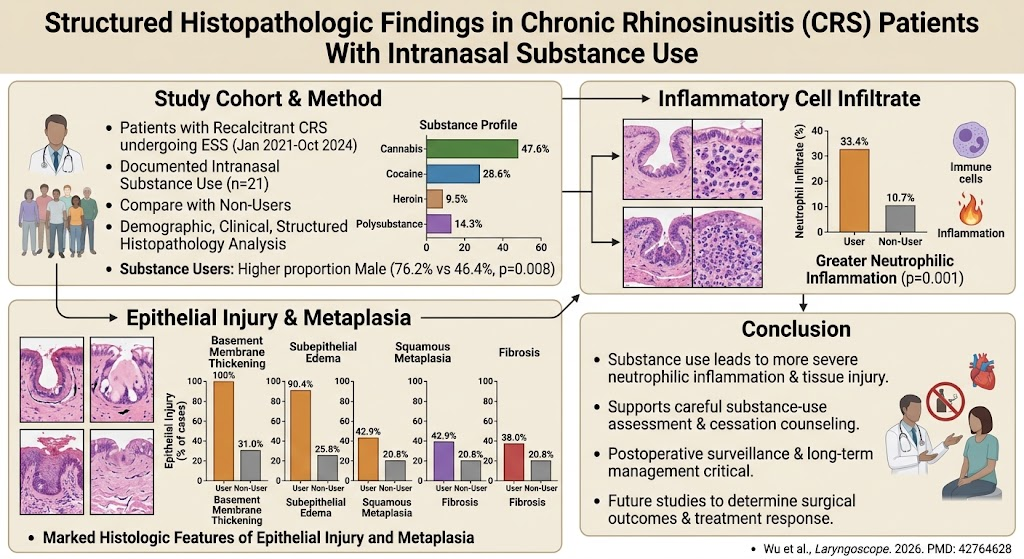
A total of 21 CRS patients with documented intranasal substance use were identified, with substance breakdown as follows: cannabis (47.6%), cocaine (28.6%), heroin (9.5%), and polysubstance use (14.3%). Compared with non-users, substance use patients were predominantly male (76.2% versus 46.4%, p=0.008) and exhibited distinct CRS subtype distribution (p<0.001). No significant differences emerged in age or race demographics.
Histopathologically, substance users demonstrated marked neutrophilic infiltration in sinonasal tissues (33.4% versus 10.7%, p=0.001), indicating enhanced acute inflammation. Basement membrane thickening, a hallmark of chronic mucosal injury, was universally present in substance users (100% versus 31.0%, p<0.001). Subepithelial edema, reflecting mucosal barrier disruption and interstitial fluid accumulation, was significantly higher (90.4% versus 25.8%, p<0.001). Squamous metaplasia, indicative of epithelial injury and remodeling from ciliated columnar to squamous epithelium, was more frequent (42.9% versus 20.8%, p=0.016). Increased fibrosis (38.0% versus 20.8%, p=0.013) further highlighted tissue remodeling in this cohort.
These findings collectively suggest that intranasal substance use exacerbates neutrophil-mediated inflammation and instigates mucosal epithelial alterations and extracellular matrix remodeling distinct from non-users.
Expert Commentary
The data underscore the pathophysiologic impact of intranasal substance exposure on sinonasal mucosa in CRS. Neutrophilic inflammation aligns with an acute or mixed inflammatory phenotype, possibly driven by toxic insults from substances such as cocaine and heroin known for vasoconstrictive and cytotoxic effects. Basement membrane thickening and subepithelial edema imply chronic injury with remodeling processes that may impair mucociliary clearance and promote persistent infection or inflammation.
Squamous metaplasia reflects an adaptive but dysfunctional epithelial response, potentially predisposing to mucosal barrier breakdown and altered microbiome. Fibrosis denotes advanced tissue remodeling which can compromise sinus patency and surgical outcomes.
Limitations include the retrospective design and relatively small sample size, which constrain causal inference and generalizability. Substance documentation may be subject to underreporting, and polysubstance effects require further segregation. Future prospective and mechanistic studies are warranted to clarify how these histologic patterns influence pharmacologic and surgical treatment efficacy.
Conclusion
This study establishes that CRS patients with intranasal substance use experience distinct histopathologic changes characterized by heightened neutrophilic inflammation and marked epithelial injury and remodeling. Clinicians should incorporate careful substance use screening and cessation counseling as part of CRS management. Enhanced postoperative surveillance is advisable given potential implications for healing and recurrence. These findings open avenues for personalized therapeutic approaches integrating behavioral and medical interventions to improve outcomes in this vulnerable patient population.
Funding and ClinicalTrials.gov
No specific funding disclosures were reported for this study. This analysis was conducted as part of institutional research without registered clinical trial oversight.
References
1. Haji RA, Cyberski TF, Primer G, et al. Structured Histopathologic Findings in Chronic Rhinosinusitis Patients With Intranasal Substance Use. The Laryngoscope. 2026 Sep 20. PMID: 42764628.
2. Fokkens WJ, Lund VJ, Hopkins C, et al. European Position Paper on Rhinosinusitis and Nasal Polyps 2020. Rhinology. 2020 Feb 1;58(S29):1-464.
3. Kennedy DW. Functional Endoscopic Sinus Surgery. Technique. Arch Otolaryngol. 1985 Oct;111(10):643-9.
4. Kuhn FA. Impact of Substance Abuse on Sinonasal Health. Otolaryngol Clin North Am. 2016 Aug;49(4):937-53.