Highlight
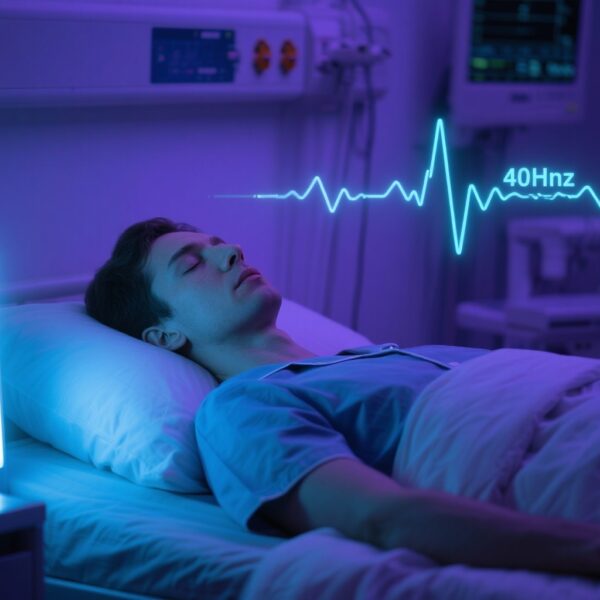
– A prospective observational study (n=37) exposed adults with insomnia to daily 40 Hz light-and-sound flicker for 8 weeks; mean adherence was 92.2% and no severe adverse events were reported.
– Sleep-diary data reported reductions in sleep onset latency and nocturnal arousals and increases in total sleep time after gamma flicker exposure.
– Findings are hypothesis-generating: they support biological plausibility but are limited by small sample size, lack of a control or sham condition, and reliance on subjective outcome measures.