Highlight
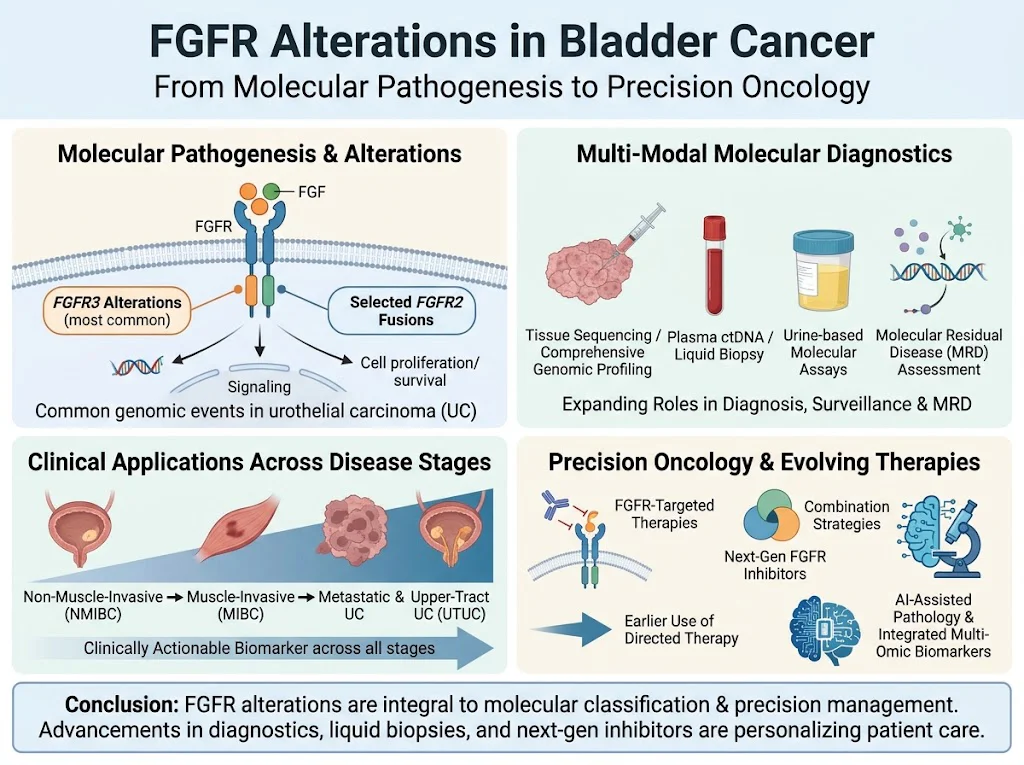
Fibroblast growth factor receptor (FGFR) pathway alterations, notably FGFR3 mutations and FGFR2 fusions, are frequent and clinically actionable in urothelial carcinoma (UC). Advances in molecular diagnostics, including genomic profiling and liquid biopsy, enhance detection and therapeutic decision-making. Evolving FGFR-targeted therapies and combination strategies are reshaping precision oncology approaches in bladder cancer.
Study Background
Urothelial carcinoma (UC), predominantly manifesting as bladder cancer, remains a significant oncological challenge due to its clinical heterogeneity and frequent recurrence. Despite initial treatment responses, advanced disease stages often carry poor prognosis. Molecular characterization of UC has revealed alterations in the fibroblast growth factor receptor (FGFR) pathway, notably FGFR3 mutations and FGFR2 fusions, which occur across non-muscle-invasive, muscle-invasive, metastatic, and upper-tract UC. These genomic events provide new avenues for precision medicine, aiming to improve outcomes through targeted therapeutic strategies.
Molecular Pathogenesis of FGFR Alterations in UC
The FGFR family of receptor tyrosine kinases (FGFR1-4) is integral to cell proliferation, differentiation, and survival through signaling cascades such as RAS/MAPK and PI3K/AKT. Mutations and fusions involving FGFR3 lead to constitutive receptor activation, promoting oncogenesis in UC. FGFR3 alterations predominate, found in approximately 60% of non-muscle-invasive bladder cancers and a substantial subset of muscle-invasive tumors. FGFR2 fusions, though less common, identify another subset amenable to therapeutic targeting. These aberrations contribute to tumor growth, angiogenesis, and treatment resistance.
Molecular Diagnostics and Biomarker Assessment
Accurate detection of FGFR alterations is crucial for optimizing patient selection for targeted therapies. Comprehensive genomic profiling (CGP) of tumor tissue remains the gold standard for identifying FGFR mutations and fusions. Emerging technologies include plasma-based circulating tumor DNA (ctDNA) assays and urine-based molecular tests that facilitate non-invasive detection and longitudinal monitoring. Molecular residual disease (MRD) assessment is gaining prominence in guiding adjuvant therapy decisions and early detection of relapse. Integration of artificial intelligence-assisted pathology and multi-omic biomarker platforms promises enhanced precision in diagnosis and therapeutic stratification.
Clinical Applications and FGFR-Directed Therapies
FGFR alterations serve as actionable biomarkers across UC stages. The approval of selective FGFR inhibitors, such as erdafitinib, marks a therapeutic milestone, particularly in patients with FGFR2/3 alterations who have progressed on platinum-based chemotherapy. Clinical trials demonstrate meaningful response rates and manageable safety profiles with FGFR-targeted agents. Combination regimens incorporating FGFR inhibitors with immunotherapy or chemotherapy are under active investigation to overcome resistance and enhance efficacy. Early integration of FGFR-directed therapy is being explored in neoadjuvant and adjuvant settings to improve outcomes.
Safety and Efficacy Considerations
FGFR inhibitors generally exhibit favorable tolerability, with common adverse effects including hyperphosphatemia, stomatitis, and fatigue. Ongoing studies aim to refine dosing strategies and identify biomarkers predictive of response and resistance. The optimal sequencing of FGFR-targeted therapies within the evolving UC treatment landscape remains to be established.
Expert Commentary
Leading experts emphasize the transformative impact of FGFR molecular biology in redefining UC management. The identification of FGFR alterations as therapeutic targets exemplifies precision oncology’s potential to individualize treatment. Challenges remain in ensuring broad access to advanced molecular diagnostics and in understanding resistance mechanisms. The integration of novel technologies such as artificial intelligence-assisted pathology and liquid biopsy surveillance is poised to enhance real-world implementation and patient outcomes.
Conclusion and Future Directions
FGFR alterations have emerged as critical molecular markers shaping the precision management of urothelial carcinoma. Advances in comprehensive molecular diagnostics, liquid biopsies, and next-generation FGFR inhibitors are rapidly expanding personalized treatment paradigms. Continued clinical research into combination strategies, earlier therapeutic intervention, and integrative biomarker platforms will further optimize patient selection and outcomes. The evolving landscape underscores the need for multidisciplinary collaboration and molecular tumor boards to effectively translate these innovations into clinical practice.
Funding and Clinical Trials
This review is based on publicly available literature and does not report new funded clinical trials. Ongoing clinical trials investigating FGFR inhibitors in UC are registered on ClinicalTrials.gov.
References
- Collins K, Cheng L. FGFR Alterations in Bladder Cancer-From Molecular Pathogenesis to Precision Oncology. JAMA Oncol. 2026 Oct 29. PMID: 42955008.
- Gurney H, Simeonov A, Hines J, et al. Molecular targets in urothelial carcinoma: Update on FGFR alterations and treatment strategies. Nat Rev Urol. 2024;21(3):165-184.
- Pal SK, Rosenberg JE. FGFR3 mutations and urothelial carcinoma: From bench to bedside. Clin Cancer Res. 2023;29(14):2567-2576.
- Fajac A, Lugagne C, Lantuejoul S, et al. Liquid biopsy and molecular diagnostics in bladder cancer: Moving towards personalized medicine. Eur Urol Focus. 2025;11(2):330-345.
- Rosenberg JE, Hoffman-Censits J, Powles T, et al. Atezolizumab in advanced urothelial carcinoma: Long-term outcomes and biomarker analyses. Lancet Oncol. 2024;25(1):44-56.
Specialty calculators
For clinical reference; use professional judgment.