Highlight
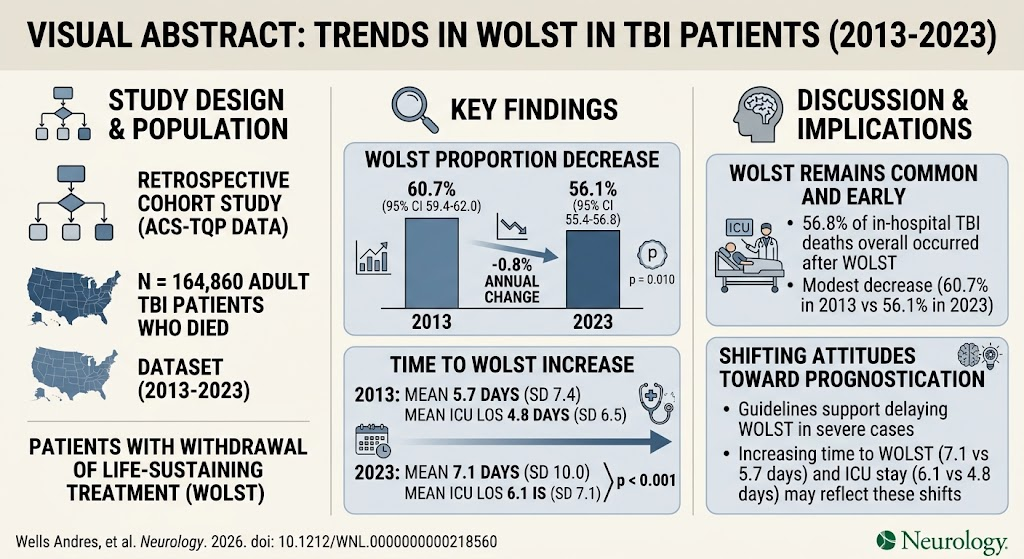
- Withdrawal of life-sustaining treatment (WOLST) in traumatic brain injury (TBI) patients decreased modestly between 2013 and 2023.
- The timing of WOLST was delayed over the decade, with an increase in the average time to withdrawal after admission.
- Patients who underwent WOLST were older and had more preexisting comorbidities than those who did not.
- Despite evolving trends reflecting cautious prognostication, WOLST remains a common pathway to mortality in severe TBI.