Highlight
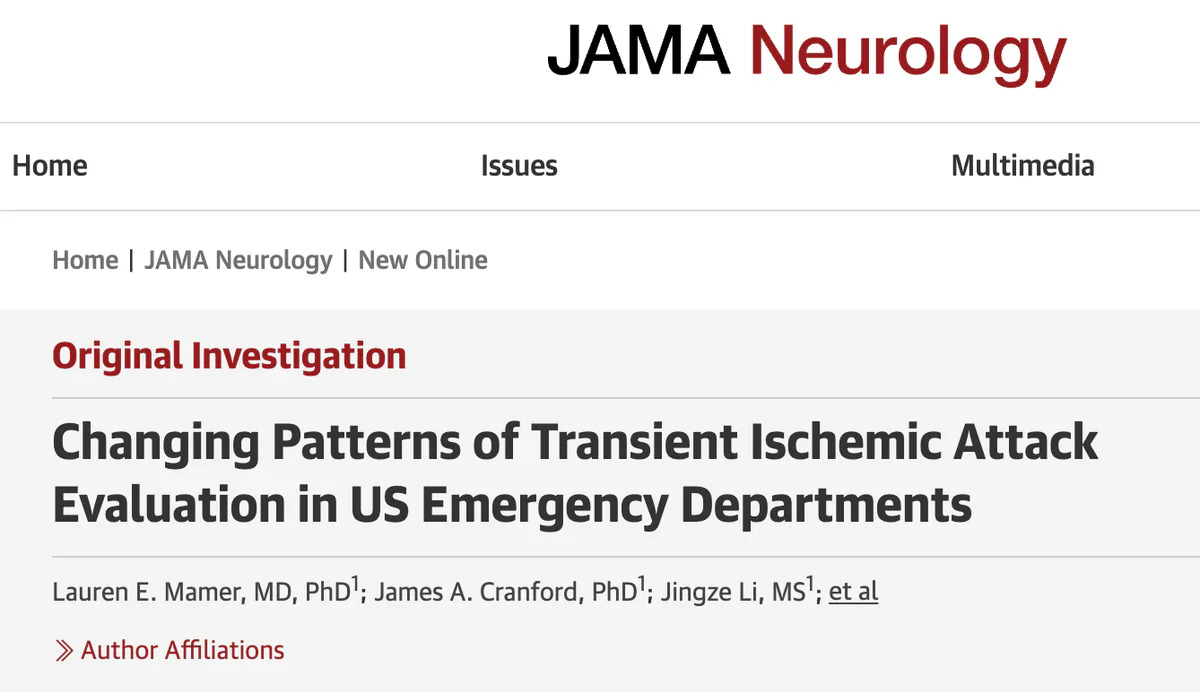
1. Over 2 million US emergency department visits for transient ischemic attack (TIA) were analyzed from 2013 to 2021, revealing a significant increase in outpatient discharge rates from 45% to 66%.
2. There was a marked rise in advanced imaging during discharged TIA encounters, with computed tomography angiography use jumping from 4% to 45%, and magnetic resonance imaging from 17% to 53%, suggesting more comprehensive outpatient evaluation.
3. Mean emergency department charges per discharged TIA encounter increased by over 50%, reflecting growing resource utilization and cost implications.
4. Rural hospitals discharged more TIA patients but used less magnetic resonance imaging compared to urban centers, highlighting disparities in diagnostic resource availability.
Study Background
Transient ischemic attack (TIA) represents a critical warning event of potential future ischemic stroke. Prompt and accurate evaluation in the emergency department (ED) is essential to implement effective secondary stroke prevention strategies. Clinical guidelines advocate for multimodal, resource-intensive diagnostic approaches—including vascular imaging, neuroimaging, and cardiac evaluation—to identify high-risk patients. However, such resources are unevenly distributed across EDs nationwide. Understanding national trends in TIA evaluation and management in the ED is key to informing healthcare policies and optimizing care delivery amidst evolving clinical practices and resource limitations.
Study Design
This retrospective repeated cross-sectional study utilized the National Emergency Department Sample (NEDS) from the Healthcare Cost and Utilization Project, encompassing weighted, nationally representative data of emergency visits in the United States from 2013 through 2021. Adult patients (aged ≥18 years) with a first-listed diagnosis code for TIA or stroke (ICD-9 or ICD-10) were included. The primary exposures analyzed were calendar years. Outcomes focused on the rate of ED discharge following TIA visits, frequency and modality of imaging among discharged TIA encounters, and inflation-adjusted ED charges per case. Secondary analyses assessed variations by patient demographics and hospital characteristics, including rural versus urban location. Statistical analyses adjusted for confounders were conducted between October 2024 and April 2026.
Key Findings
Among an estimated 2,151,408 weighted ED visits for TIA (mean patient age 69.8 years; 55.5% female), significant temporal trends emerged over the nine-year period:
1. Increasing Trends in ED Discharge
The proportion of TIA patients discharged directly from the ED rose significantly from 45% in 2013 to 66% in 2021 (P<.001 for trend). This shift likely reflects evolving care models favoring expedited outpatient diagnosis and management to reduce inpatient hospitalization burden.
2. Escalation of Imaging Use Among Discharged Patients
Advanced neuroimaging and vascular imaging utilization more than quadrupled among discharged patients. Computed tomography angiography (CTA) utilization increased from 4% to 45%, and magnetic resonance imaging (MRI) use rose from 17% to 53% over the study period (both P<.001 for trends). Enhanced imaging use is in alignment with guideline recommendations to detect arterial pathology and infarction risk, supporting timely therapeutic decisions.
3. Rising ED Charges
Mean ED charges per discharged TIA visit increased from $1,746 to $2,755 (adjusted for inflation), a more than 50% increase, indicating higher resource intensity and potential economic impacts on healthcare systems and payers.
4. Rural Versus Urban Disparities
Rural EDs discharged TIA patients at consistently higher rates than urban centers across all years studied. However, magnetic resonance imaging use in rural hospitals was notably lower, suggesting disparities in access to advanced diagnostic tools. These resource constraints in rural settings may challenge optimal secondary prevention strategies.
Expert Commentary
This study provides important real-world insights into shifting paradigms in TIA care within US EDs. The move toward increased outpatient management with intensive imaging reflects an attempt to balance healthcare resource stewardship with the imperative for rapid risk stratification. However, this shift introduces complexities regarding care coordination, follow-up timeliness, and the capacity of outpatient systems to absorb increased diagnostic workloads. The notable cost escalation underscores a need to evaluate cost-effectiveness and sustainability of these evolving models.
Disparities observed between rural and urban hospitals highlight persistent inequities in infrastructure and access to state-of-the-art imaging, which may translate to variation in patient outcomes. Strategies to bridge these gaps—such as telemedicine consultation, regional stroke care networks, or increased funding for rural resource enhancement—are warranted.
Limitations include reliance on administrative codes, which may introduce diagnostic misclassification, and absence of direct clinical outcome data. The findings are nevertheless robust given the large, nationally representative dataset and adjustment for confounders.
Conclusions
The evaluation of transient ischemic attack in US emergency departments is undergoing a substantial transformation, characterized by increased discharge rates and a surge in advanced imaging utilization. This trend reflects an effort to expedite TIA evaluation outside of hospital admission, with implications for healthcare costs, ED operational dynamics, and rural access disparities. Future work should focus on optimizing care protocols to ensure comprehensive, equitable evaluation and prompt initiation of secondary stroke prevention in all settings, while carefully monitoring the impact on health outcomes and system costs.
Funding and Registration
This study was supported by institutional research funds specified in the original publication. No clinical trial registration is applicable as this was an observational study utilizing administrative healthcare data.
References
1. Mamer LE, Cranford JA, Li J, et al. Changing Patterns of Transient Ischemic Attack Evaluation in US Emergency Departments. JAMA Neurol. 2026;doi:10.1001/jamaneurol.2026.31749.
2. Kleindorfer DO, Towfighi A, Chaturvedi S, et al; American Heart Association Stroke Council. 2021 Guideline for the Prevention of Stroke in Patients With Stroke and Transient Ischemic Attack. Stroke. 2021;52:e364–e467.
3. Giles MF, Rothwell PM. Risk of stroke early after transient ischaemic attack: a systematic review and meta-analysis. Lancet Neurol. 2007;6(12):1063-72.
4. Shekhar S, Ay H. Emerging paradigms in transient ischemic attack evaluation and management. Neurology. 2023;100(10):e1012-e1020.