Highlight
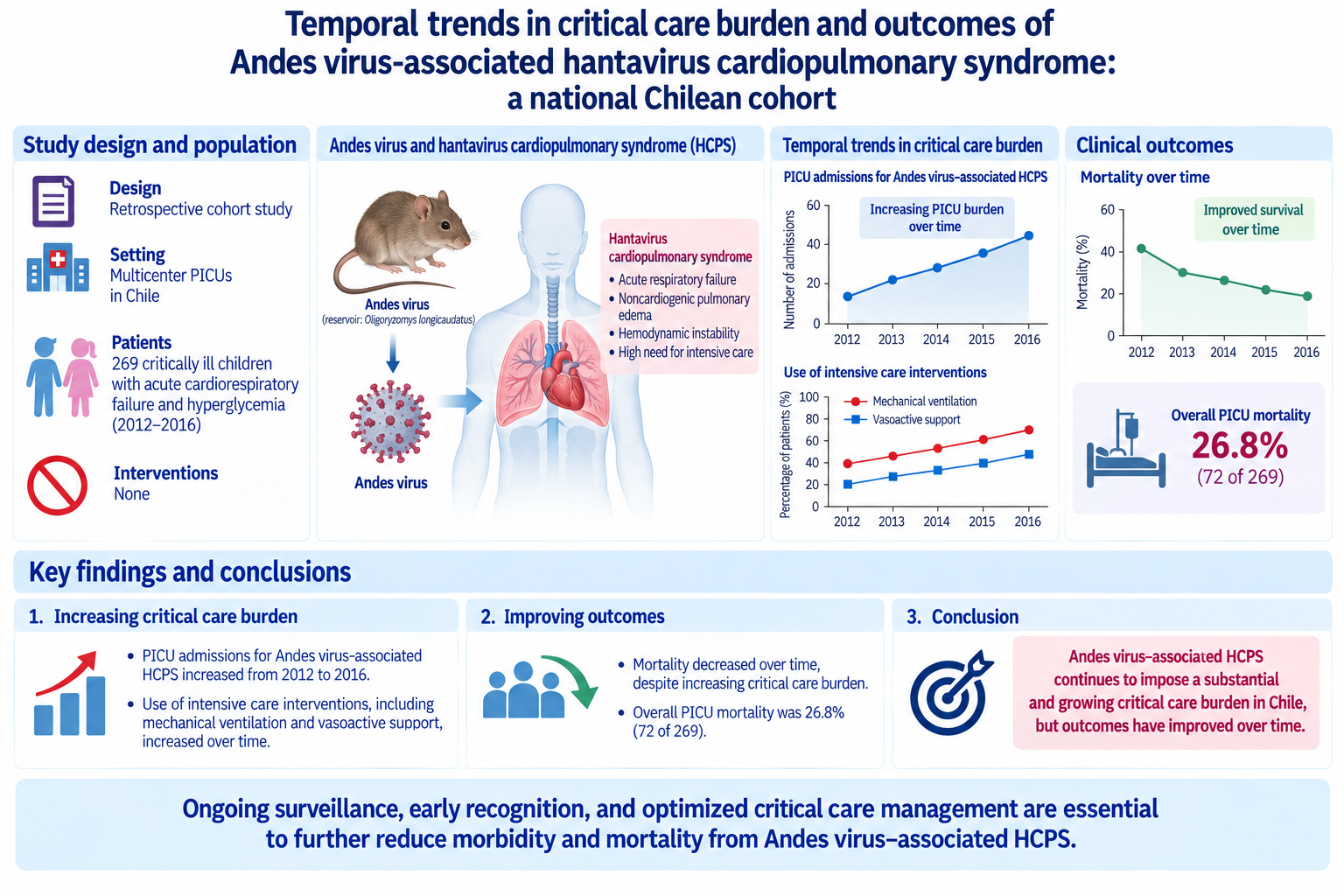
– Andes virus-associated hantavirus cardiopulmonary syndrome (HCPS) is a severe illness needing significant respiratory support.
– In a Chilean national cohort, approximately half of critical HCPS cases required extracorporeal membrane oxygenation (ECMO).
– Hospital length of stay averaged eight days with an overall in-hospital mortality of 20.5%.
– The COVID-19 pandemic period independently correlated with a near threefold increase in HCPS mortality.
Background
Hantavirus cardiopulmonary syndrome (HCPS) is a rare but often fatal zoonotic infection caused by hantaviruses, predominantly the Andes virus in South America. HCPS is characterized by rapid cardiopulmonary deterioration, with high rates of respiratory failure and hemodynamic shock. Chile and Argentina bear a disproportionate burden of infection due to endemic viral circulation. Despite advances in critical care, HCPS mortality remains substantial. The recent report of an outbreak on a cruise ship underscores an urgent need to understand contemporary care demands and outcomes, aiding in preparedness and management strategies.
Study Design
This retrospective observational study utilized the Diagnosis-Related Groups (DRG) database encompassing 31 hospitals in Chile from January 1, 2019, through December 31, 2024. The cohort comprised 215 patients diagnosed with HCPS attributed to Andes virus infection. Patients were stratified according to the highest level of respiratory support received during hospitalization: no respiratory support, non-invasive ventilation (NIV), invasive mechanical ventilation (MV), or extracorporeal membrane oxygenation (ECMO). The primary outcomes included hospital length of stay (LOS) and in-hospital mortality. Mortality was further assessed across three temporal periods: pre-COVID-19 pandemic, during the pandemic, and post-pandemic to evaluate the pandemic impact.
Key Findings
Among 215 patients, 69.3% were male and the majority (87%) were adults. Respiratory support was required by 148 (68.8%) patients. Specifically, 14.2% received NIV, 36.5% underwent MV, and 49.3% required ECMO—the latter indicative of profound respiratory and circulatory failure.
Hospital LOS had a median of 8 days (interquartile range 3 to 15 days). The overall in-hospital mortality was 20.5%. Mortality rates were distinctly higher in patients undergoing invasive support: 29.6% for those on MV and 32.9% for those receiving ECMO. These figures highlight the persistent severity and fatality associated with advanced respiratory failure in HCPS despite the availability of state-of-the-art life support techniques.
Importantly, multivariable analysis revealed the COVID-19 pandemic period was independently associated with a significant increase in in-hospital mortality (adjusted odds ratio 2.73 [95% CI 1.06–7.63], p=0.045). This suggests that resource allocation, healthcare system strain, or overlapping clinical complexities during the pandemic may have adversely influenced HCPS patient outcomes.
Expert Commentary
This study provides critical insight into the evolving clinical burden of HCPS related to Andes virus in Chile. The remarkably high use of ECMO reflects contemporary intensive care capabilities but also the severity of organ dysfunction experienced by patients. The observed mortality rates, while substantial, may represent improved outcomes relative to historic fatality rates attributed to HCPS, potentially reflecting improvements in critical care management and early identification.
The noted impact of the COVID-19 pandemic on outcomes is notable and warrants further exploration. Possible contributing factors include reduced ICU availability, changes in clinical protocols, or diagnostic delays. As Andes virus HCPS is primarily a viral pneumonitis progressing to cardiopulmonary shock, any healthcare disruption could exacerbate mortality risk.
Limitations include reliance on administrative DRG data, which may lack granularity regarding clinical variables, timing of interventions, and long-term sequelae. Nevertheless, the national multicenter scope enhances generalizability to similar endemic regions.
Conclusion
Andes virus-associated HCPS continues to impose a significant critical care burden with high requirements for invasive respiratory support, especially ECMO, and mortality rates exceeding 20%. The COVID-19 pandemic period was associated with a marked increase in mortality, underscoring the vulnerability of HCPS patients during healthcare crises. These findings emphasize the need for optimized critical care resource allocation and continued surveillance to improve outcomes for this severe infectious cardiopulmonary syndrome.
Funding and Clinical Trials
The study did not specify external funding sources. No clinical trial registration was reported as this was a retrospective database analysis.
References
1. Meza-Fuentes G, Delgado I, Vial PA, et al. Temporal trends in critical care burden and outcomes of Andes virus-associated hantavirus cardiopulmonary syndrome: a national Chilean cohort. Intensive care medicine. 2026 Sep 2. PMID: 42684407.
2. Vial PA, Valdivieso F, Mertz GJ. Andes virus infection in humans: Pathogenesis, epidemiology, and clinical features. Infect Dis Clin North Am. 2018;32(1):101-110.
3. MacNeil A, Nichol ST, Spiropoulou CF. Hantavirus Pulmonary Syndrome. Virus Res. 2011 May; 162(1-2): 138-147.
4. COVID-19 and Critical Care: Implications for resource allocation and outcomes. Lancet Respir Med. 2021;9(1):4-6.