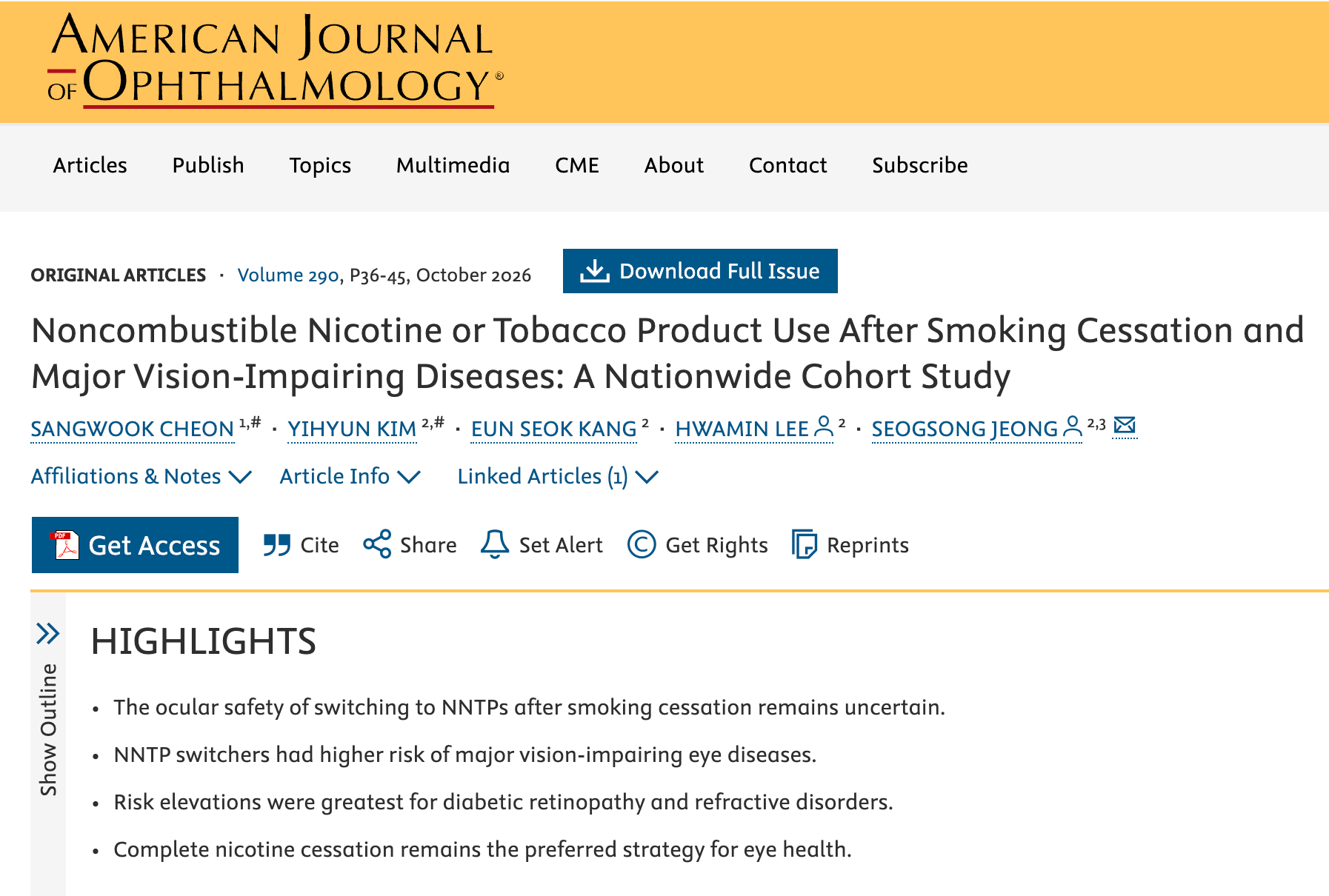
Highlights
- Switching from combustible cigarettes to noncombustible nicotine/tobacco products (NNTPs) after smoking cessation is linked to a modest but consistent increase in risk for major vision-impairing eye diseases compared with complete nicotine abstinence.
- Risk elevation is particularly notable for diabetic retinopathy and refractive/accommodation disorders, underscoring specific ocular pathologies potentially modulated by continued nicotine exposure.
- This large-scale nationwide longitudinal cohort study employed robust propensity score matching and competing risk models, strengthening causal inference in a real-world population.
- The findings challenge the assumption that NNTPs provide a visually safe harm-reduction alternative and support clinical recommendations favoring complete tobacco and nicotine cessation for ocular health.
Background
Tobacco smoking remains a major modifiable risk factor for a spectrum of ocular diseases contributing to vision impairment and blindness globally. Combustible cigarettes (CCs) are recognized for their toxic constituents and oxidative stress induction, which exacerbate pathologies such as cataract, glaucoma, age-related macular degeneration (AMD), and diabetic retinopathy. As cessation of smoking is paramount for ocular and systemic health, noncombustible nicotine or tobacco products (NNTPs)—including e-cigarettes, nicotine replacement therapy, and heated tobacco products—have been increasingly used as alternatives or transitional substitutes. While NNTPs are perceived as safer, accumulating evidence questions their innocuity, particularly regarding microvascular and inflammatory mechanisms relevant to ocular disease progression. Prior to the discussed study, limited large-scale, long-term data quantified the comparative risk of vision-impairing diseases among NNTP users post-CC cessation versus complete quitters.Key Content
Nationwide Cohort Evidence from Korea
Cheon et al. (2026) conducted a retrospective cohort study using data from 179,273 Korean adults who were CC smokers in 2011–2012 and reported smoking cessation in 2018–2019. Participants were classified as complete quitters or NNTP switchers. Through propensity score matching (n=32,316) to balance demographics, clinical factors, and lifestyle, the study followed subjects for a mean of 4.6 years, capturing incident major vision-impairing diseases: cataract, glaucoma, age-related macular degeneration, diabetic retinopathy, and refractive/accommodation disorders via standardized diagnostic codes. The findings revealed a modest but statistically significant increased risk of any major vision-impairing eye disease in NNTP users compared to complete quitters (SHR 1.07; 95% CI, 1.02–1.13). Subanalysis identified diabetic retinopathy (SHR 1.24) and refractive/accommodation disorders (SHR 1.07) as driving the risk elevation. The robustness of results was confirmed by analyses using inverse probability weighting and Cox proportional hazards models, as well as sensitivity and subgroup analyses.Mechanistic Insights
Nicotine and other constituents in NNTPs may promote microvascular dysfunction, oxidative stress, and inflammation, thereby exacerbating diabetic retinopathy and potentially impairing ocular accommodation mechanisms. Although NNTPs lack combustion byproducts, the retained nicotine exposure appears sufficient to sustain risk pathways. Experimental data indicate nicotine’s adverse effect on retinal and choroidal vasculature and lens epithelial cells, supporting clinical observations.Comparisons with Prior Research and Guidelines
Earlier observational studies established smoking as a major risk factor for cataract, AMD, and glaucoma. However, scant evidence previously existed regarding NNTPs’ ocular impact. Nicotine’s role as a vasoactive alkaloid lends biological plausibility to sustained risks despite absence of combustion. Tobacco control guidelines emphasize complete cessation but acknowledge NNTPs for harm reduction. The current data call for re-evaluation of this stance concerning ocular endpoints.Methodological Strengths and Limitations
The study’s strengths include the large nationwide cohort, longitudinal design with extended follow-up, application of advanced statistical methods (propensity score matching, competing risk models), and comprehensive adjustment for comorbidities and lifestyle factors. Limitations involve reliance on administrative diagnostic codes, possible misclassification or underreporting, and lack of detailed data on NNTP types, duration, and intensity.Expert Commentary
The evidence from this well-conducted cohort study suggests that shifting from CCs to NNTPs is not risk-free regarding vision-threatening eye diseases. From a clinical perspective, these findings emphasize the importance of promoting complete nicotine abstinence to prevent ocular morbidity. While NNTPs may reduce some harms linked to combustion-related toxins, nicotine’s effects on microvascular integrity and oxidative stress remain relevant, especially in vulnerable populations such as persons with diabetes. Ophthalmologists and primary care providers should incorporate counseling about ocular risks in tobacco cessation discussions. Mechanistically, nicotine-induced vasoconstriction and pro-inflammatory pathways may underpin the observed associations, warranting further molecular and clinical research. The study also highlights a need for more granular epidemiological data differentiating among NNTPs and assessing dose-response relationships. Given the ongoing debate in tobacco harm reduction policies, these ocular safety data provide critical nuance: harm reduction should not imply visual harmlessness, and providers should advocate for complete cessation when feasible. Regulatory agencies might also consider vision health outcomes when evaluating NNTP products.Conclusion
This nationwide cohort study demonstrates that switching from combustible cigarettes to noncombustible nicotine or tobacco products confers a modest but persistent risk elevation for major vision-impairing diseases compared with complete tobacco cessation. The risk is most accentuated in diabetic retinopathy and refractive/accommodation disorders. These findings challenge assumptions about the ocular safety of NNTPs and underscore the imperative of complete nicotine abstinence for preserving eye health. Future research should focus on elucidating mechanistic pathways, stratifying risk by NNTP type and exposure, and integrating ocular outcomes into tobacco regulatory frameworks.References
- Cheon S, Kim Y, Kang ES, Lee H, Jeong S. Noncombustible Nicotine or Tobacco Product Use After Smoking Cessation and Major Vision-Impairing Diseases: A Nationwide Cohort Study. American Journal of Ophthalmology. 2026 Jun 13;290:36-45. PMID: 42288324.