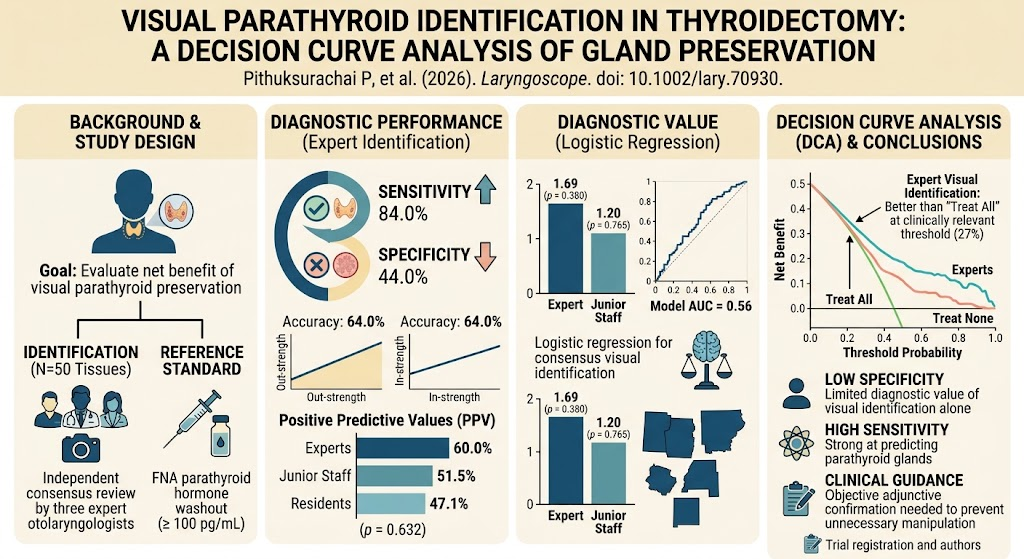
Visual identification of parathyroid glands during thyroidectomy achieves moderate sensitivity (84%) but low specificity (44%), limiting accuracy.
Diagnostic accuracy does not significantly vary between expert otolaryngologists, junior staff, and residents.
Decision curve analysis demonstrates that visual identification offers greater net clinical benefit than universal treatment or no treatment at a threshold probability of 27%.
Results underscore the need for objective adjunctive techniques, such as biochemical or optical methods, to improve parathyroid gland preservation.