Highlight
This study examined the feasibility and patient engagement levels of a video-based tobacco cessation program implemented in general surgery clinics. Key findings included low overall patient participation in advanced support sessions and differential engagement related to diagnosis types. Notably, there were no statistically significant racial disparities in participation steps, but White patients were more represented at each progressive stage. The intervention, despite its promise, indicated challenges in aligning virtual cessation resources with the specific surgical patient population.
Study Background
Tobacco smoking remains a leading preventable cause of morbidity and mortality worldwide and specifically increases perioperative complications including wound healing disturbances, cardiopulmonary adverse events, and infections. Smoking cessation preoperatively has been shown to reduce these risks, improving surgical outcomes and long-term health. However, delivering effective tobacco cessation interventions in busy surgical settings is challenging due to time constraints, limited specialized personnel, and patient engagement barriers. Virtual care models have expanded accessibility to behavioral interventions, potentially overcoming logistic hurdles. This study sought to evaluate video-based telehealth counseling as a scalable and accessible approach for facilitating smoking cessation among surgical patients at the point of care.
Study Design
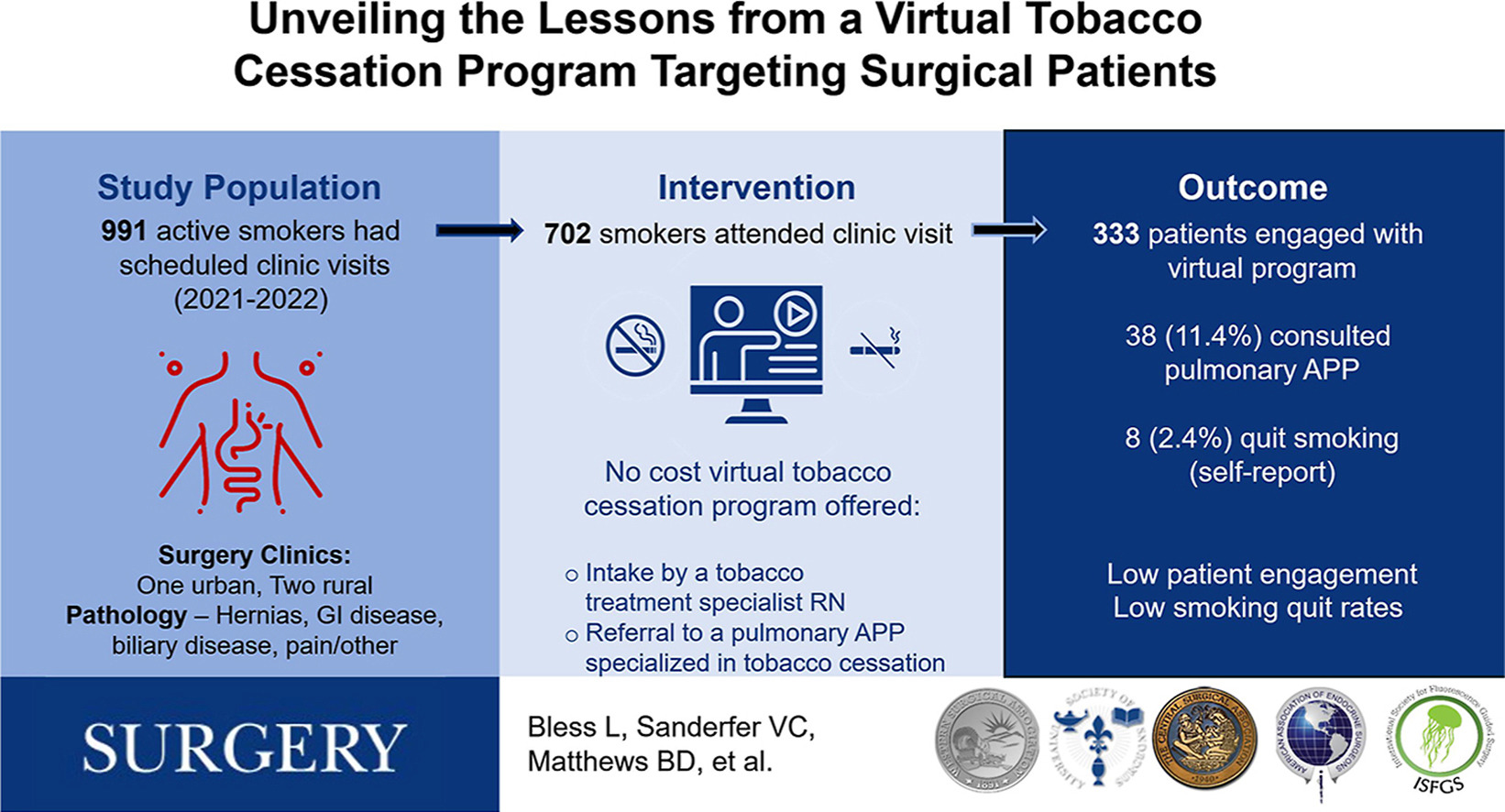
The study was conducted in three different general surgery clinics over varied time frames ranging from 3 to 19 months. The intervention workflow identified and engaged active smokers during their clinic visit. After initial engagement by a tobacco specialist nurse to assess smoking status and readiness to quit, a subset of patients was referred for more intensive longitudinal support through video-based visits with an advanced practice provider (APP). The primary endpoints measured were rates of patient referral, scheduling, and attendance at these virtual cessation counseling sessions, stratified by race and surgical diagnosis.
Key Findings
Out of 702 patients attending the participating clinics, 10.3% were referred to the advanced practice provider for tobacco cessation counseling, but only 5.4% attended at least one counseling session. Although patient engagement was low, analyses showed no statistically significant racial differences at each step of the cessation process. However, the proportion of White patients increased progressively at each engagement stage, indicating possible subtle disparities. Patients undergoing surgery for hernias and gastrointestinal diseases were more likely than those with other surgical diagnoses to schedule and attend cessation sessions. This suggests that certain clinical contexts may influence patient motivation or provider referral patterns.
The overall low engagement highlights several challenges. Despite leveraging virtual care to increase accessibility, patients and providers in these general surgery settings may face barriers such as competing clinical priorities, lack of perceived urgency, or technological challenges that limit uptake. The intervention’s alignment with patient needs and optimal timing also appeared suboptimal, underscoring the gap between program availability and meaningful patient behavior change.
Expert Commentary
The study underscores the complexity of implementing tobacco cessation programs in surgical populations using telehealth modalities. Experts emphasize that while virtual platforms remove some access barriers, they do not automatically guarantee patient engagement, especially among populations who may have limited digital literacy or competing health concerns. Tailored messaging that highlights immediate perioperative benefits of cessation, integration with surgical workflows for timely intervention, and provider training to reinforce cessation importance may improve uptake.
Additionally, understanding patient-level determinants—such as motivation, readiness to quit, socioeconomic factors, and surgical diagnosis-specific concerns—can help customize cessation strategies. Prior literature indicates that multimodal approaches combining behavioral counseling, pharmacotherapy, and consistent follow-up yield higher abstinence rates. Virtual programs need to incorporate these features and address technological and perceptual barriers to optimize effectiveness.
Conclusion
This study reveals critical insights into the limitations and opportunities of delivering virtual tobacco cessation interventions within general surgery clinics. While virtual telehealth presents a promising avenue to expand access, low patient engagement and progression through counseling stages remain barriers. Future work needs to identify optimal patient populations, refine timing and delivery approaches, and integrate multimodal support systems tailored to the unique perioperative context. Success will rely on aligning intervention design with patient preferences, clinical workflows, and behavioral science principles to more effectively reduce tobacco use and improve surgical outcomes.
Funding and Clinicaltrials.gov
No specific funding or clinical trial registration was reported for this study.
References
Bless L, Sanderfer VC, Matthews BD, Cain C, Kaiser N, Manning D, McCarthy L, Reinke CE. Unveiling the lessons from a virtual tobacco cessation program targeting surgical patients. Surgery. 2026 Oct;198:110448. doi: 10.1016/j.surg.2026.110448. Epub 2026 Jul 16. PMID: 42570424.