Highlight
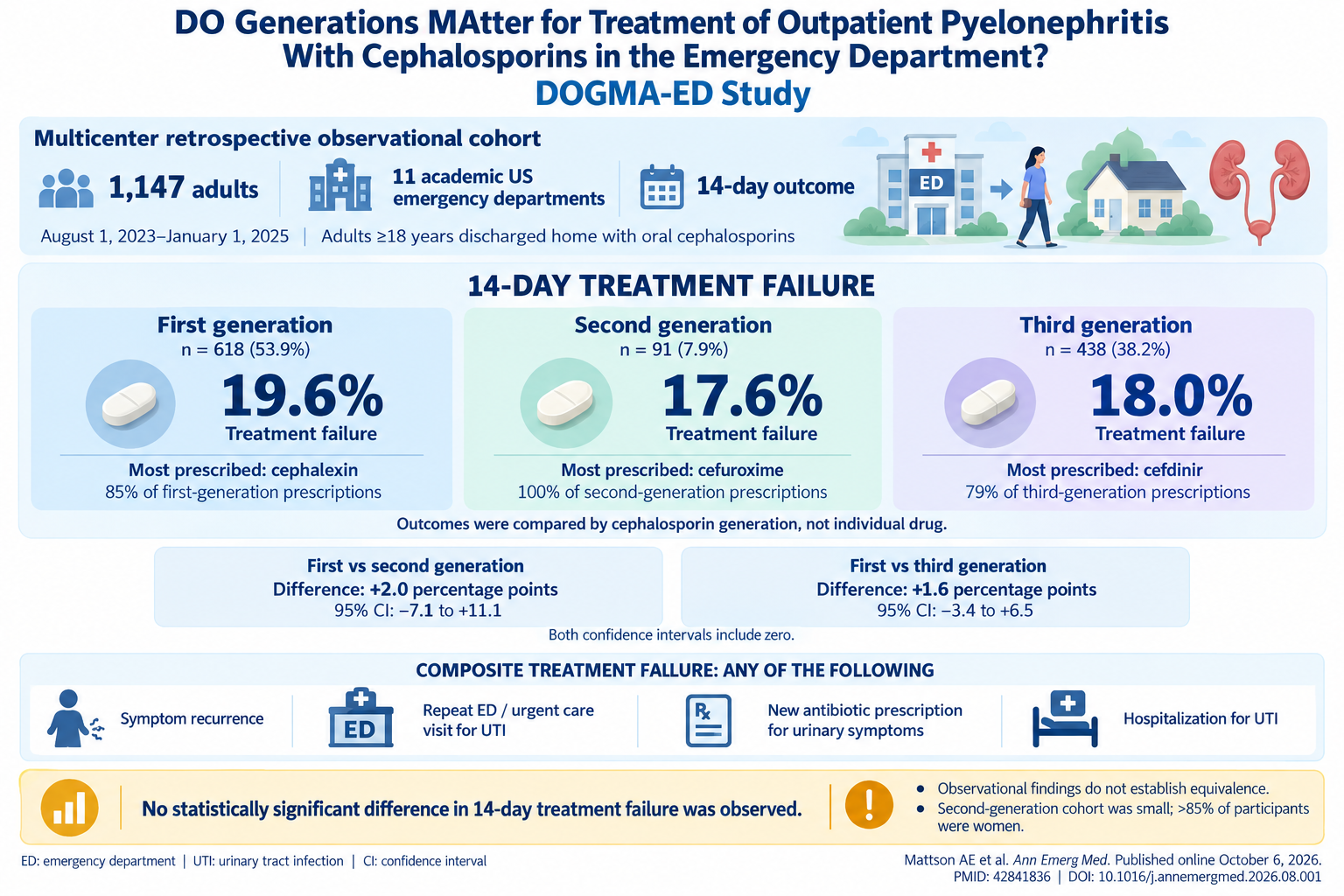
The DOGMA-ED study compared first-, second-, and third-generation oral cephalosporins for treating adult patients with pyelonephritis discharged from emergency departments (EDs). The findings demonstrated no significant difference in 14-day treatment failure rates across generations, supporting the equivalency of these antibiotic choices for outpatient management.
Study Background
Pyelonephritis, a bacterial infection of the kidney, remains a common and potentially serious form of urinary tract infection (UTI) that often presents to emergency departments. Timely and effective outpatient antibiotic treatment is critical to prevent progression to severe infection requiring hospitalization. Oral cephalosporins are widely used in clinical practice for mild to moderate cases discharged from the ED, but clinical guidance regarding the optimal cephalosporin generation—ranging from first- to third-generation agents—has been limited by a lack of direct comparative effectiveness data. Given evolving antimicrobial resistance patterns and the need to improve stewardship, understanding whether newer-generation cephalosporins confer added benefit over older agents is clinically important.
Study Design
This retrospective, observational cohort study was conducted across 11 geographically dispersed academic emergency departments in the United States from August 1, 2023 to January 1, 2025. It included adult patients aged 18 years and older diagnosed with pyelonephritis and discharged home on an oral cephalosporin. The oral cephalosporins were categorized by generation: first-generation (primarily cephalexin), second-generation (exclusively cefuroxime), and third-generation (mainly cefdinir). The primary endpoint was treatment failure at 14 days, defined as a composite of recurrence of urinary symptoms, repeat ED or urgent care visit, prescription of new antibiotics for urinary symptoms, or hospitalization related to urinary infection. Secondary outcomes included modifications in the initial antimicrobial therapy informed by culture and susceptibility results.
Key Findings
The study evaluated 1,147 patients, predominantly women (>85%), reflecting the expected epidemiology of pyelonephritis. Distribution by cephalosporin generation was 54% first-generation, 8% second-generation, and 38% third-generation. The rates of 14-day composite treatment failure were similar across groups: 19.6% for first-generation, 17.6% for second-generation, and 18.0% for third-generation cephalosporins. Statistical analyses revealed no significant differences [(first vs second: difference 2.0%, 95% CI -7.1 to 11.1) and (first vs third: difference 1.6%, 95% CI -3.4 to 6.5)]. Secondary modification rates of therapy based on culture data were not highlighted as significantly different. These findings suggest comparable clinical effectiveness despite the differences in the cephalosporin spectrum and pharmacokinetic profiles.
Expert Commentary
This study is consequential for clinical practice because it challenges the assumption that later-generation cephalosporins necessarily yield superior outpatient treatment outcomes for pyelonephritis. The comparable failure rates imply that first-generation agents such as cephalexin remain a viable option, which could have important implications for antimicrobial stewardship and cost-effectiveness. While third-generation cephalosporins typically possess broader activity, their overuse risks promoting resistance. Limitations include the retrospective design, potential variability in prescribing practices, and the predominance of women in the cohort, which may affect generalizability. Future prospective studies and stratified analyses by pathogen susceptibility and patient comorbidities would be valuable.
Conclusion
The DOGMA-ED multicenter analysis demonstrates that first-, second-, and third-generation oral cephalosporins result in similar 14-day treatment failure rates following ED discharge for acute pyelonephritis. These data support flexible antibiotic selection tailored to patient-specific factors, antimicrobial stewardship considerations, and local resistance patterns without compromising clinical outcomes. Clinicians can be reassured that older generation oral cephalosporins remain an effective and appropriate choice in this common outpatient infectious scenario.
Funding and Clinical Trials
The article does not report specific funding sources or registered clinical trial numbers but is published in the Annals of Emergency Medicine with multiple academic contributors.
References
Mattson AE, Spolsdoff D, Brown CS, et al. DO Generations MAtter for Treatment of Outpatient Pyelonephritis With Cephalosporins in the Emergency Department? DOGMA-ED Study. Ann Emerg Med. 2026 Oct 6. PMID: 42841836.
Brown PD, et al. Comparative efficacy of oral cephalosporins in urinary tract infections: a review. Infect Dis Clin North Am. 2022;36(2):317-335.
Gupta K, et al. International Clinical Practice Guidelines for the treatment of acute uncomplicated cystitis and pyelonephritis in women: A 2010 update by the Infectious Diseases Society of America and the European Society for Microbiology and Infectious Diseases. Clin Infect Dis. 2011;52(5):e103-20.