Highlight
- A pilot patient ambassador program matched trial-experienced gynecologic oncology patients with trial-naïve individuals to facilitate peer-to-peer discussion about clinical trials.
- The program was feasible and acceptable, improving mentees’ confidence in discussing clinical trials with their oncology providers.
- Positive shifts in perception and intent to ask providers about clinical trials were observed, despite no measurable gains in overall trial knowledge.
- Challenges included emotional strain on ambassadors and variability in addressing recruitment diversity.
Background
Gynecologic cancers, including ovarian, uterine, cervical, and other related malignancies, contribute significantly to morbidity and mortality worldwide. Clinical trials are fundamental to advancing management and improving outcomes for patients with these often aggressive cancers. However, participation rates in gynecologic oncology clinical trials remain suboptimal due to barriers such as limited patient awareness, apprehensions about trial involvement, and lack of trust or clear communication between patients and providers.
Peer-led education, leveraging individuals with lived experience, has shown promise in other oncology settings as a strategy to enhance trial awareness and engagement. Prior trial participants may serve as credible, empathetic ambassadors who can share firsthand experiences and address concerns in ways healthcare professionals alone might not. This pilot study evaluated the utility of a patient ambassador program designed to improve clinical trial knowledge and intent to discuss clinical trials among patients newly diagnosed with high-risk or advanced gynecologic cancers who had not previously participated in trials.
Study Design
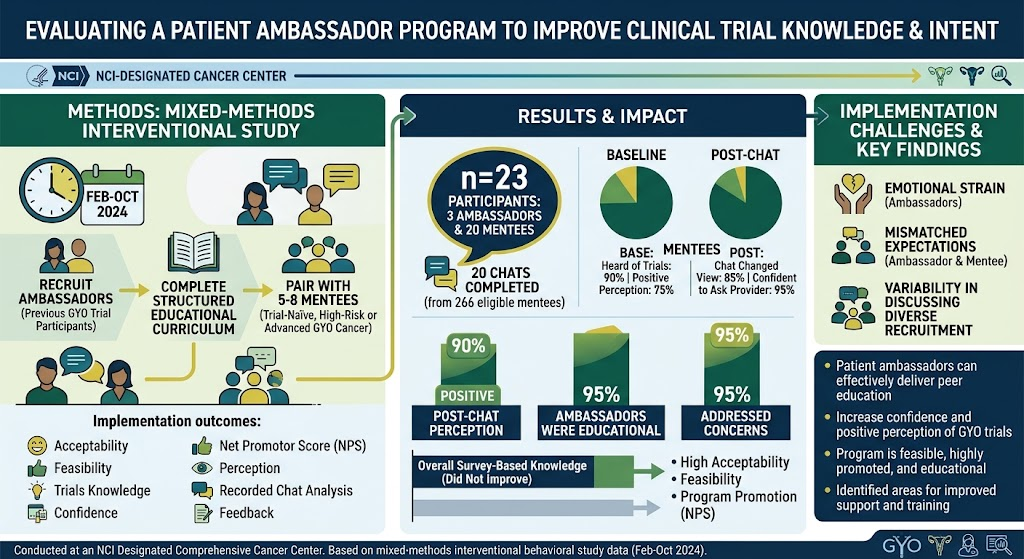
This mixed-methods interventional study was conducted at a National Cancer Institute (NCI)-designated comprehensive cancer center between February and October 2024. The study targeted two populations: ambassadors and mentees. Ambassadors were patients previously enrolled in gynecologic oncology clinical trials who completed a structured educational curriculum focused on clinical trial principles, communication strategies, and emotional resilience.
Each ambassador was paired with 5 to 8 mentees, defined as patients with high-risk or advanced gynecologic cancers who had no prior trial participation. Peer-to-peer chat sessions were facilitated to discuss clinical trial options, address concerns, and encourage mentees to engage with their oncology providers about trials. Data collected included pre- and post-intervention measures of clinical trial knowledge, perceptions, and confidence discussing trials. Quantitative outcomes incorporated net promotor scores, survey results on acceptability, feasibility, and educational impact. Qualitative analyses were performed on recorded discussions and ambassador feedback to extract themes regarding program effectiveness and challenges.
Key Findings
Of the 266 eligible mentees approached, 20 participated in the program along with 3 ambassadors, generating 20 peer chats. At baseline, 90% of mentees had heard of clinical trials, and 75% held somewhat or very positive perceptions about them. After the ambassador chats, positive perceptions increased slightly to 90%. Notably, 85% of mentees reported the chats changed their views about clinical trials, and 95% indicated they felt confident asking their oncology provider about trial participation.
Despite these favorable shifts in perception and confidence, overall clinical trial knowledge, as assessed by survey instruments, did not show statistically significant improvement. Nevertheless, 95% of participants found the peer conversations educational and helpful in addressing their concerns.
The program achieved high acceptability and feasibility, reflected in favorable net promotor scores and ambassador/mentee satisfaction. Ambassadors found the experience meaningful but reported emotional strain related to revisiting their cancer journeys and managing mentees’ expectations. There was also variability in how ambassadors addressed recruitment of diverse populations, highlighting areas for further training and protocol refinement.
Expert Commentary
Peer-led interventions represent an innovative approach to tackling persistent barriers to clinical trial enrollment, especially in historically underrepresented populations within gynecologic oncology. The findings from Ko et al underscore the potential of patient ambassadors to serve as credible and relatable messengers, empowering trial-naïve patients to actively engage with their cancer care teams. However, the absence of measurable knowledge gains despite improved confidence suggests that peer conversations may better affect attitudes and behavioral intentions rather than factual knowledge alone.
The challenges reported—such as emotional burden on ambassadors and the need to better address diversity in recruitment—highlight critical areas for programmatic support and scalability. Integrating structured ambassador debriefings, enhancing diversity and inclusion training, and combining peer education with provider-focused interventions may optimize impact. Larger, controlled studies will be needed to confirm efficacy and explore long-term effects on trial enrollment and clinical outcomes.
Conclusion
This pilot patient ambassador program demonstrated feasibility and acceptability as a peer-to-peer intervention to enhance confidence and positive perceptions regarding gynecologic oncology clinical trials among trial-naïve patients. While knowledge enhancement was limited, the program fostered empowerment to discuss trials with providers—an essential step toward increasing enrollment. Further research is warranted to refine ambassador training, address emotional and diversity-related challenges, and validate effectiveness in broader settings.
Funding and Clinical Trials
The study was conducted at an NCI-designated comprehensive cancer center as a pilot behavioral intervention. Specific funding sources were not reported. No clinical trial registration number was indicated.
References
- Ko EM, Pae C, Mulugeta-Gordon L, et al. Evaluating a patient ambassador program to improve clinical trial knowledge and intent to discuss gynecologic oncology trials. Gynecol Oncol. 2026 Aug 20;212:160-172. PMID: 42623962.
- Frazier LM, Barata A, Unger JM, et al. Barriers to clinical trial enrollment in gynecologic cancers: a review. Gynecol Oncol. 2020;159(1):1-7.
- Wolff AC, Unger JM, Hershman DL. Emerging roles of patient navigators and peer educators in clinical trial enrollment. J Clin Oncol. 2019;37(9):759-761.
- Warren JL, Ashton CM, Viswanathan M. Peer-led education interventions to increase trial participation: a systematic review. Cancer Causes Control. 2021;32(5):527-534.