Introduction
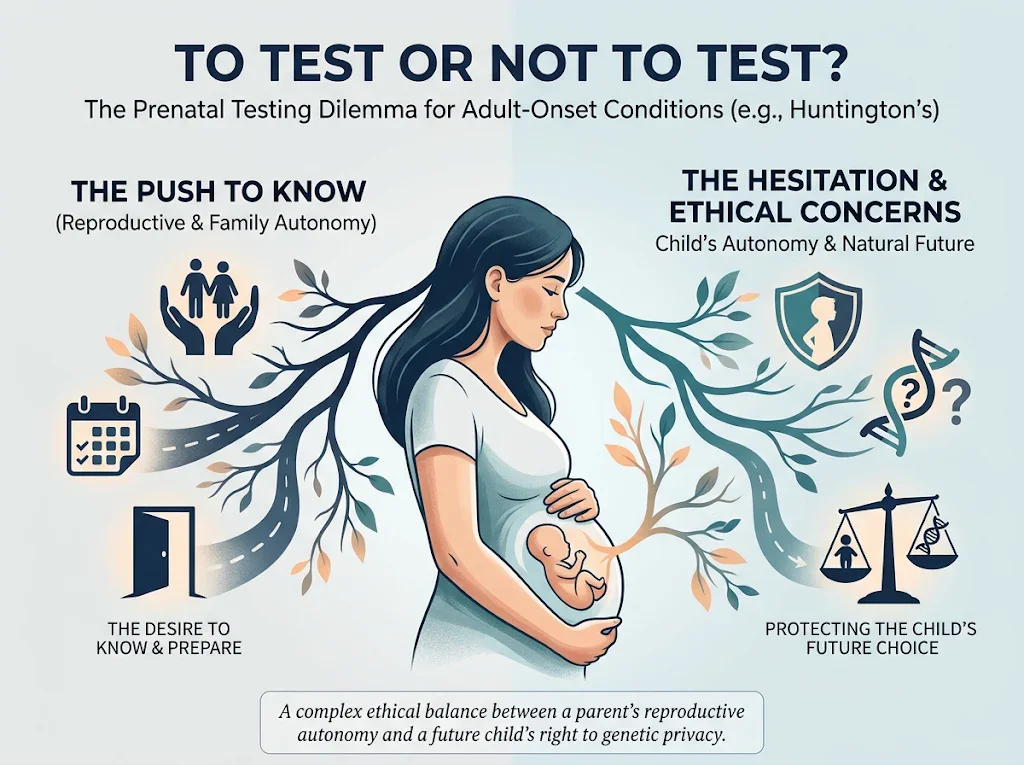
The emergence of advanced genetic testing techniques has expanded prenatal diagnostics beyond conditions manifesting in childhood to those that are adult-onset. This advance prompts pressing ethical and clinical questions, particularly in cases such as Huntington disease (HD), a hereditary neurodegenerative disorder characterized by adult-onset symptoms and inevitable progression. While pediatric genetic testing for adult-onset conditions is generally discouraged to preserve a child’s future autonomy, prenatal testing for such conditions is routinely offered to prospective parents at risk. However, the ethical complexities intensify when expecting parents request prenatal testing but do not plan to take consequential steps such as pregnancy termination, creating a dilemma between protecting the future child’s right to an open future and respecting parental reproductive autonomy.
Highlight
- Pediatric genetic testing for adult-onset conditions like HD is generally contraindicated to respect future autonomy.
- Preimplantation and prenatal genetic testing for adult-onset diseases is increasingly accessible and utilized by at-risk parents.
- Unique ethical tensions arise when parents seek prenatal testing without intending to terminate affected pregnancies.
- Integrating perspectives from obstetrics, pediatrics, parental reasoning, and patient communities enriches understanding of this dilemma.
- Shared decision-making models enhance clinician-family communication and ethical deliberation in prenatal testing counseling.
Background: Huntington Disease and Prenatal Genetic Testing
Huntington disease is an autosomal dominant, progressive, neurodegenerative disorder caused by CAG trinucleotide repeat expansions in the HTT gene. Clinical onset typically occurs in mid-adulthood, averaging between 30 and 50 years of age, with neurological, cognitive, and psychiatric manifestations. Given the current lack of curative treatment, genetic testing is primarily valued for diagnostic confirmation and informed reproductive decision-making.
Pediatric genetic testing for adult-onset conditions like HD is widely discouraged by medical guidelines based on ethical concerns about violating a future child’s autonomy and psychological welfare. However, prenatal genetic testing methods, including preimplantation genetic diagnosis (PGD) and invasive prenatal diagnostics (e.g., chorionic villus sampling or amniocentesis), enable identification of embryos or fetuses with HD mutations. These interventions allow prospective parents to avoid passing on the condition via selective embryo transfer or pregnancy termination.
Nonetheless, dilemmas arise when parents request prenatal testing for HD but do not intend to terminate affected pregnancies, challenging prevailing ethical frameworks.
Study Design and Ethical Perspectives
The article by Lowe et al., published in Pediatrics (2026), centers on a clinical vignette where at-risk prospective parents seek prenatal testing for HD without pregnancy termination plans. The analysis features four commentaries offering multidisciplinary interpretations: obstetric and pediatric ethical distinctions, the influence of parental reasoning on ethical deliberations, insights from an HD community member, and clinician responsibilities in shared decision-making.
The clinical scenario typifies emerging complexities in reproductive genetics, where the traditional dichotomy between prenatal testing with termination intent versus no testing is complicated by parental autonomy and familial contexts.
Key Findings and Commentary
1. Ethical Distinctions from Obstetric and Pediatric Perspectives
From the obstetric standpoint, prenatal testing is a tool empowering parental choice regarding pregnancy continuation, emphasizing reproductive autonomy. In contrast, pediatric ethics prioritize the future child’s right to an open future, generally opposing genetic testing for adult-onset conditions until the child can consent. This case situates prenatal testing without pregnancy termination outside typical practice, suggesting a need to reevaluate ethical guidelines in light of nuanced family decisions.
2. Parental Reason-Giving and Ethical Deliberation
The second commentary underscores the role of parents’ reasons for requesting prenatal testing beyond pregnancy termination. These include psychological preparedness, early planning for future medical needs, and personal meanings attached to knowledge of genetic status. Incorporating parental rationales facilitates a shift from rigid categorical ethics to a more deliberative, contextual approach that respects family values and complexities.
3. Community Perspective: Insights from the Huntington Disease Population
An HD community member’s reflections highlight the diverse lived experiences influencing prenatal testing decisions. Families affected by HD often carry different perceptions of quality of life, burden, and hope, which shape their choices. Recognizing this diversity counters stigmatization and acknowledges that prenatal testing choices are deeply personal and culturally situated.
4. Clinician Obligations and Shared Decision-Making Model
The final commentary advocates for clinicians to adopt process-oriented obligations emphasizing open dialogue, information sharing, and empathetic counseling. Pragmatically, this approach encourages shared decision-making wherein families’ values and preferences inform testing choices. This model balances respect for parental autonomy with safeguarding child welfare and professional ethical standards.
Clinical and Ethical Implications
This multifaceted analysis elucidates critical clinical and ethical implications for prenatal testing of adult-onset genetic conditions:
- Reproductive autonomy: Prospective parents have the right to access prenatal information for diverse reasons beyond pregnancy termination.
- Child autonomy and welfare: Healthcare providers must consider the future child’s right to an open future while respecting parents’ roles.
- Ethical guidelines evolution: Current recommendations against pediatric testing may require adaptation to accommodate varying parental intentions during the prenatal period.
- Importance of counseling: Genetic counseling must be sensitive, individualized, and aligned with shared decision-making principles.
- Community engagement: Incorporating affected families’ perspectives enriches ethical deliberations and clinical practice.
Limitations and Future Research
The analyzed commentaries center primarily on ethical and psychosocial domains and clinical counseling processes rather than empirical outcomes or large-scale studies. Future research could focus on longitudinal follow-up of families who pursue prenatal testing without termination intent for adult-onset conditions to assess psychological impacts, child well-being, and decision satisfaction. Additionally, studies are warranted to refine counseling frameworks and ethical guidelines that integrate diverse cultural and familial values.
Conclusion
The dilemma of prenatal testing for adult-onset genetic conditions such as Huntington disease encapsulates the evolving interface of genetics, ethics, and reproductive autonomy. While protecting a future child’s right to an open future remains a cornerstone principle, recognizing parental autonomy and diverse rationales for testing is crucial. Integrative approaches encompassing obstetric, pediatric, parental, and community perspectives, alongside shared decision-making in clinical practice, offer a balanced path forward. This nuanced discourse advances ethical deliberations and guides sensitive, patient-centered prenatal genetic counseling in the context of adult-onset conditions.
Specialty calculators
For clinical reference; use professional judgment.