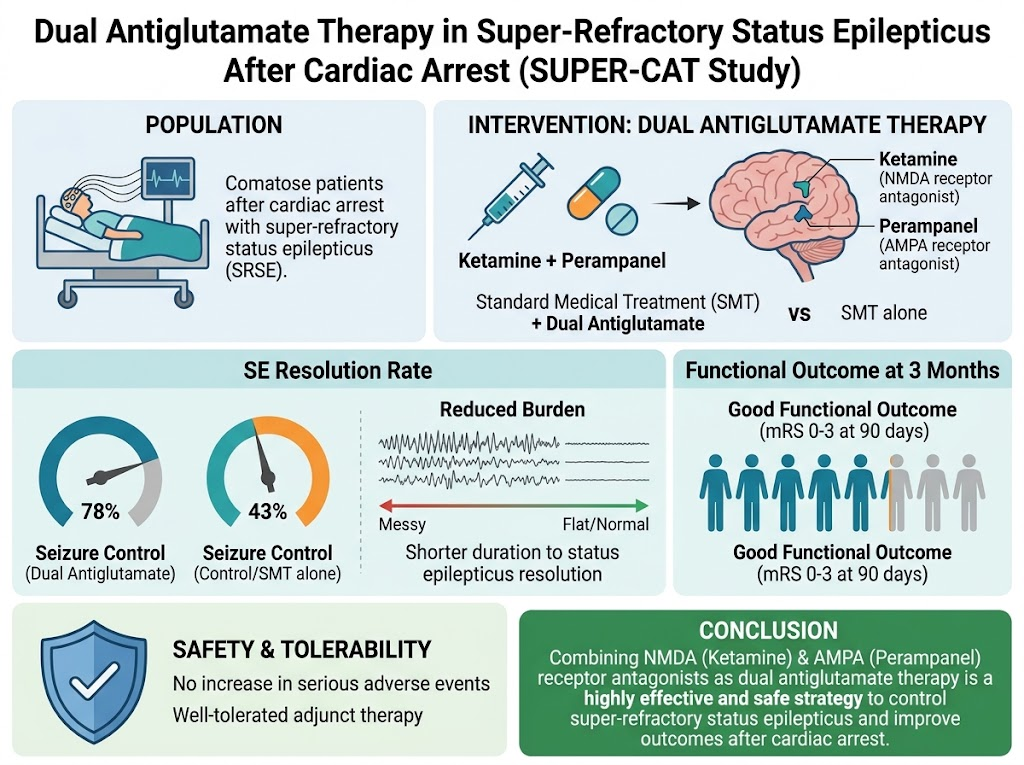
Dual antiglutamate therapy targeting both AMPA and NMDA receptors offers a novel, mechanistically rational approach for managing postanoxic super-refractory status epilepticus (SRSE).
The multicenter SUPER-CAT study demonstrated significantly higher rates of SE resolution and reduced 6-month mortality with combined ketamine and perampanel versus other antiseizure treatments in selected post-cardiac arrest patients.
Improved awakening rates and trends toward better neurological outcomes underscore the potential for enhanced recovery when unfavorable prognostic indicators are absent.
Reversible cholestatic liver injury was more frequent with dual antiglutamate therapy, emphasizing the need for vigilant monitoring during treatment.