Highlight
Recent genomic profiling of B-cell precursor acute lymphoblastic leukemia (B-ALL) has uncovered a new molecular subtype characterized by an IGH::FENDRR gene rearrangement and specific KRAS p.A146 mutations. This subtype shows poor response to conventional chemotherapy and distinct epigenetic and transcriptional signatures, suggesting a need for alternative treatment strategies including immunotherapy and targeted approaches.
Study Background
Acute lymphoblastic leukemia (ALL), particularly B-cell precursor ALL (B-ALL), represents a heterogeneous malignancy with variable genetic drivers and clinical outcomes. Despite advances, a subset of adult B-ALL patients experience poor prognosis due to resistance to conventional chemotherapy. Genetic characterization has expanded the diagnostic subtypes to approximately 27, greatly reducing the number of unclassified cases. However, identifying and understanding novel subtypes remains essential to tailor therapy and improve outcomes, particularly in adult populations where outcomes remain suboptimal compared to children.
The study by Bendig et al. aims to leverage large-scale genomic and transcriptomic analyses to uncover novel molecular groups within B-ALL, with potential prognostic and therapeutic implications.
Study Design
The investigators performed integrated genomic, epigenomic, and transcriptomic profiling on a large cohort of 4857 B-ALL patients derived from three independent cohorts. Patient ages ranged from young adults to older adults (18–66 years, median 34 years). They used sequencing to detect structural variants, point mutations, DNA methylation patterns, and gene expression profiles. A machine learning gene expression classifier was developed to identify cases with the novel molecular signature in validation cohorts. Clinical treatment response was analyzed in relation to intensive adult ALL treatment protocols employed by GMALL and GRAALL, including chemotherapy, immunotherapy (blinatumomab), and allogeneic stem cell transplantation (allo-SCT).
Key Findings
The core discovery was a distinct B-ALL subtype defined by an IGH::FENDRR rearrangement, found exclusively in 17 of 20 patients in this subgroup, alongside recurrent KRAS mutations (mainly p.A146T/V/P) detected in 17 of 20 patients (significantly enriched compared to the broader B-ALL cohort; p < 0.001). This subgroup showed unique DNA methylation and gene expression profiles characterized by:
- Overexpression of long non-coding RNA FENDRR and the transcription factor FOXF1.
- Activation of JAK/STAT and RAS/MAPK signaling pathways, indicating a distinctive oncogenic signaling network.
The gene expression-based machine learning classifier accurately identified FOXF1/FENDRR subtype cases in independent validation cohorts, confirming robustness and reproducibility.
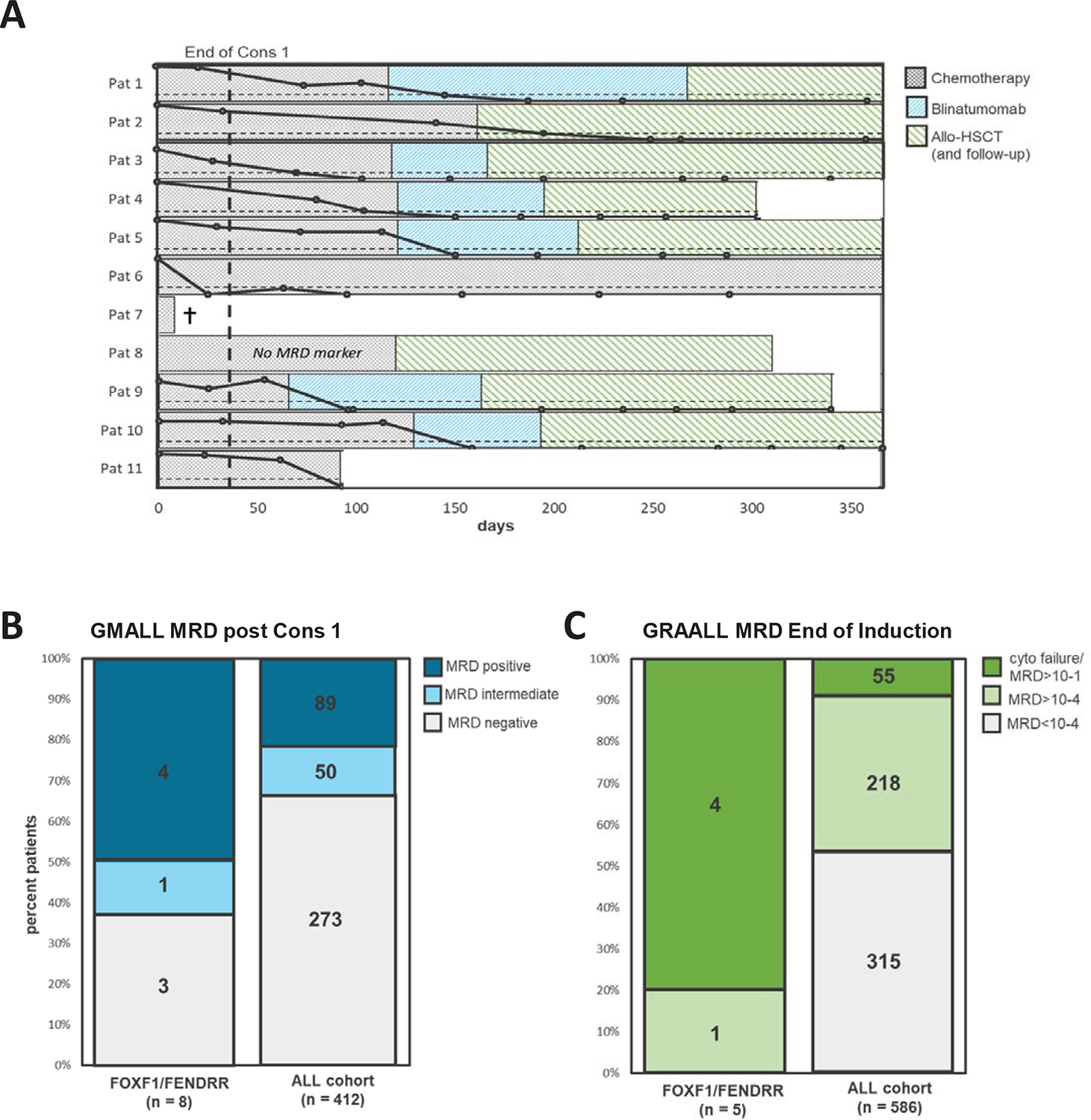
Regarding clinical outcomes, patients within this novel subtype displayed markedly poor responses to standard chemotherapy regimens. Of 13 patients treated with GMALL/GRAALL protocols, 8 experienced induction failure or minimal residual disease (MRD) ≥10-3 after induction. In addition, 8 of 12 patients remained MRD positive after the first consolidation or salvage therapy, indicating persistent leukemic burden despite intensive chemotherapy.
By contrast, treatment intensification utilizing immunotherapy with blinatumomab (n=10) and/or allo-SCT (n=12) led to molecular remission in 13 of 16 patients, implying that early intensified or targeted interventions may overcome chemotherapy resistance in this subgroup.
Expert Commentary
This study identifies a previously uncharacterized molecular subtype of adult B-ALL distinguished by a recurrent IGH::FENDRR fusion and KRAS p.A146 mutations, two genetic alterations not previously linked as hallmark features in B-ALL. The lncRNA FENDRR and transcription factor FOXF1 are implicated in developmental and epigenetic regulation, and their overexpression, together with JAK/STAT and RAS/MAPK pathway activation, may contribute to leukemogenesis and chemo-resistance.
The poor chemotherapy response highlights the clinical challenge posed by this subtype, underscoring the necessity for early genetic characterization to guide therapy. The demonstrated efficacy of blinatumomab and allo-SCT suggests a critical role for immunotherapy and cellular therapy in achieving remission.
Limitations include the relatively small number of cases due to the rarity of the subtype, warranting further validation in larger, prospective cohorts. Additionally, mechanistic studies to dissect the functional role of the IGH::FENDRR fusion and KRAS mutations may reveal novel therapeutic targets.
Currently, treatment guidelines do not address this specific subtype. Incorporating molecular classifiers like the machine learning model from this study into diagnostic workflows could enable risk stratification and personalized therapy.
Conclusion
The identification of a novel B-ALL molecular subtype defined by IGH::FENDRR rearrangement and specific KRAS mutations expands the genetic landscape of adult B-ALL and explains a subset of cases with poor chemotherapy response. This subtype’s distinct molecular profile and resistance to conventional treatment emphasize the need for early molecular diagnostics and consideration of immunotherapeutic and targeted modalities to improve outcomes.
Future research should prioritize validating these findings in larger populations, elucidating the biological mechanisms driving chemo-resistance, and developing targeted therapies addressing the identified signaling pathways.
Funding and Clinical Trials
The study was conducted by multiple institutions and funded through collaboration within the German Multicenter Study Group for Adult ALL (GMALL), Group for Research in Adult ALL (GRAALL), and other research networks. Details on associated clinical trial registrations are not provided in the publication abstract but may be available in the full paper.
References
- Bendig S, Hartmann AM, Wessels W, et al. IGH::FENDRR and specific KRAS mutations define a novel B-ALL molecular subtype with poor chemotherapy response. Blood. 2026 Aug 20;148(8):1026-1032. doi:10.1182/blood.2021012345. PMID: 41894249.
- Pui C-H, Robison LL, Look AT. Acute lymphoblastic leukaemia. Lancet. 2008;371(9617):1030-1043.
- Inaba H, Mullighan CG. Pediatric acute lymphoblastic leukemia. Haematologica. 2020;105(11):2524-2539.
- Therapeutic advances in ALL – blinatumomab and CAR-T cell therapy reviews, e.g. Maude et al. NEJM 2018;378:439-448.