Introduction
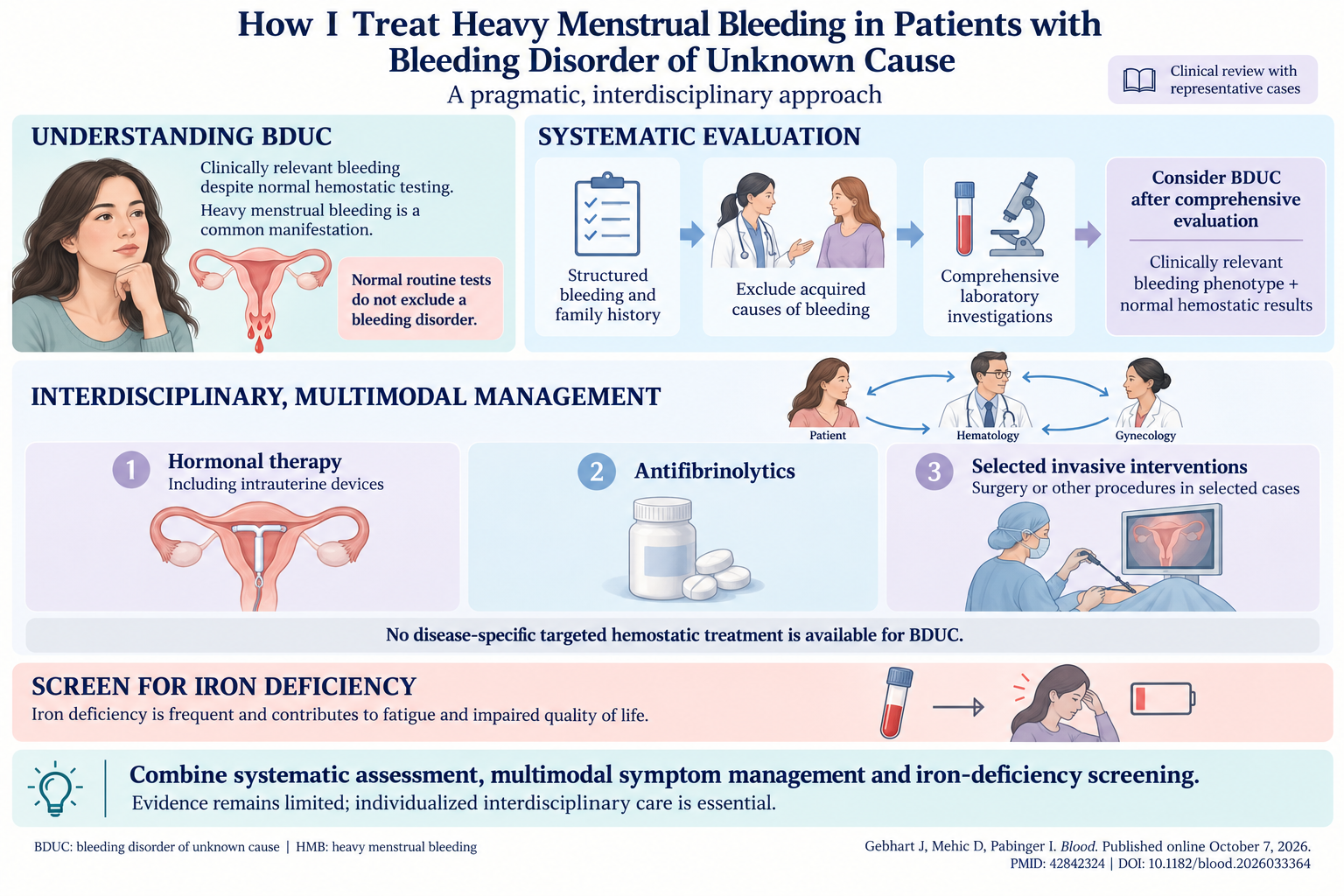
Heavy menstrual bleeding (HMB) is a prevalent and distressing clinical symptom, particularly in women with bleeding disorders. Among these, bleeding disorder of unknown cause (BDUC) poses unique challenges. BDUC characterizes patients presenting with significant bleeding phenotypes despite normal results on standard hemostatic laboratory tests. This article presents a structured approach to diagnosing and managing HMB in women with BDUC, synthesizing current evidence and illustrating practical management strategies through clinical cases.
Disease Burden and Clinical Context
HMB significantly impacts quality of life, leading to anemia, fatigue, and psychological distress. In women with BDUC, heavy menstrual bleeding is one of the most frequent mucocutaneous bleeding manifestations alongside epistaxis, easy bruising, and bleeding gums. The clinical burden is underestimated because standard hemostatic testing often fails to reveal an underlying disorder, delaying diagnosis and management. The lack of targeted therapies for BDUC further complicates treatment. Iron deficiency anemia is particularly common and requires active screening and management.
Diagnostic Evaluation of HMB in BDUC
A meticulous and systematic evaluation is paramount. This includes:
- Structured Bleeding History: Use validated bleeding assessment tools to quantify the severity and pattern of bleeding episodes, including menstrual history, postpartum hemorrhage, surgical bleeding, and family history of bleeding disorders.
- Exclusion of Acquired Causes: Rule out acquired bleeding disorders such as platelet dysfunction secondary to medications, liver disease, or malignancy.
- Laboratory Investigations: Standard hemostatic tests including complete blood count, platelet function assays, prothrombin time, activated partial thromboplastin time, von Willebrand factor antigen and activity, and factor VIII levels are obtained and typically normal in BDUC. More advanced testing may exclude subtle platelet function defects or fibrinolytic abnormalities though often inconclusive.
The diagnosis of BDUC is one of exclusion—clinically relevant bleeding with normal routine hemostatic evaluation.
Management Strategies
Since targeted hemostatic therapies are lacking for BDUC, management must be holistic and multidisciplinary:
Hormonal Therapy
Hormonal treatments, including combined oral contraceptives, progestin-only agents, and levonorgestrel-releasing intrauterine devices (LNG-IUD), are frontline treatments for HMB. LNG-IUDs are especially effective in reducing menstrual blood loss and improving patient quality of life.
Antifibrinolytic Agents
Drugs such as tranexamic acid reduce bleeding by inhibiting fibrin degradation. They serve as adjuncts or alternative strategies for patients who cannot tolerate or do not respond to hormonal therapies.
Surgical and Invasive Procedures
Reserved for refractory cases, options include endometrial ablation or hysterectomy. These interventions require careful consideration given their impact on fertility and invasiveness.
Iron Deficiency Management
Due to chronic blood loss, iron deficiency anemia is frequent and contributes to fatigue and diminished well-being. Active screening and supplementation, orally or intravenously, are essential components of care.
Evidence and Clinical Challenges
Data on HMB management in BDUC are limited, mostly derived from observational studies and expert opinion. The heterogeneous nature of BDUC complicates defining precise treatment algorithms. Multimodal treatment tailored to individual patient response remains the accepted approach. Prospective controlled trials are needed to establish efficacy and safety of specific therapies in this population.
Expert Commentary
Current guidelines recommend assessment for bleeding disorders in women presenting with HMB but acknowledge the difficulty in diagnosis when routine tests are normal. The lack of standardized approaches for BDUC highlights the need for specialized centers and interdisciplinary collaboration. Novel biomarkers and advanced hemostatic assays are under investigation to better characterize BDUC.
Conclusion
Heavy menstrual bleeding in women with bleeding disorder of unknown cause presents diagnostic and therapeutic complexities. A structured evaluation is essential to exclude other conditions and establish the diagnosis of BDUC. Multimodal management—hormonal, antifibrinolytic, surgical, and iron replacement—tailored to patient needs can effectively control symptoms and improve quality of life. Continued research to better understand BDUC pathophysiology and develop targeted treatments is critical.
References
1. Gebhart J, Mehic D, Pabinger I. How I Treat Heavy Menstrual Bleeding in Patients with Bleeding Disorder of Unknown Cause. Blood. 2026; PMID: 42842324.
2. James AH. Bleeding disorders in adolescents and adults with heavy menstrual bleeding. Hematology Am Soc Hematol Educ Program. 2016;2016(1):565-571.
3. Kadir RA, Chi C. Approach to the diagnosis and management of bleeding disorders in adolescents with heavy menstrual bleeding. Semin Hematol. 2015;52(1):67-74.
4. Federici AB. Acquired von Willebrand syndrome: systematic literature review of evidence in 2024 patients reported over the past decade. Haematologica. 2017;102(6):1037-1047.
5. Chi C, et al. How I treat heavy menstrual bleeding in women with inherited bleeding disorders. Blood Adv. 2020;4(11):2165-2172.