Introduction
Biologics, complex drugs derived from living cells, have revolutionized cancer treatment by targeting specific molecular pathways more effectively than traditional chemotherapy. However, their high cost has long posed barriers to patient access and strained healthcare budgets. Biosimilars—highly similar versions of originator biologics with no clinically meaningful differences in safety or efficacy—offer a promising pathway to reduce costs through enhanced market competition.
In the United States, the landscape of cancer biologics changed notably by the end of 2024, with the entry of biosimilars for three pivotal anticancer biologics: bevacizumab, rituximab, and trastuzumab. These agents are widely used in treating various cancers, including breast cancer, lymphoma, and colorectal cancer. Evaluating how biosimilar adoption affects healthcare costs and patient access is essential for clinicians, payers, patients, and policymakers.
Study Objective
This retrospective cohort study aimed to assess market dynamics following biosimilar introduction and to examine the financial implications on both payers—such as commercial insurers and Medicare—and patients receiving bevacizumab, rituximab, or trastuzumab. The primary goal was to evaluate drug prices, market share changes, and out-of-pocket expenses within 12 months of treatment initiation.
Methods and Data Sources
The analysis used data from the Merative MarketScan commercial claims database and the Medicare database, covering July 2019 to December 2024. Patients were categorized based on treatment patterns into four groups:
1. Exclusive biosimilar users
2. Exclusive reference product (originator biologic) users
3. Switchers from reference product to biosimilars
4. Switchers from biosimilars back to reference product
Researchers analyzed the average sales price (ASP), market share of reference products, and both mean monthly payer costs and patient out-of-pocket costs. The analysis period for data interpretation was September 2025 to March 2026.
Patient Cohort Characteristics
The study cohort included 14,655 patients with a mean age of 57 years (standard deviation 13), with 68.1% female. The most common cancer types were breast cancer (35.4%), lymphoma (29.5%), and colorectal cancer (13.6%). Among patients, 59.4% used biosimilars exclusively, 32.5% used only the originator biologics, 6.9% switched from originator to biosimilar, and 1.2% switched back to originator biologics after initial biosimilar use.
Findings: Pricing and Market Share
Following biosimilar entry, the ASP for bevacizumab, rituximab, and trastuzumab originator products decreased on average by 3.8% annually, reflecting price competition pressures. Concurrently, originator biologics lost approximately 30% of their market share annually in commercial insurance markets and 31.5% in Medicare Part B markets.
This significant market shift illustrates strong provider and payer adoption of biosimilars over time. The switch patterns suggest most patients either continued on biosimilars or originators, with a smaller fraction moving between the two.
Financial Implications for Payers and Patients
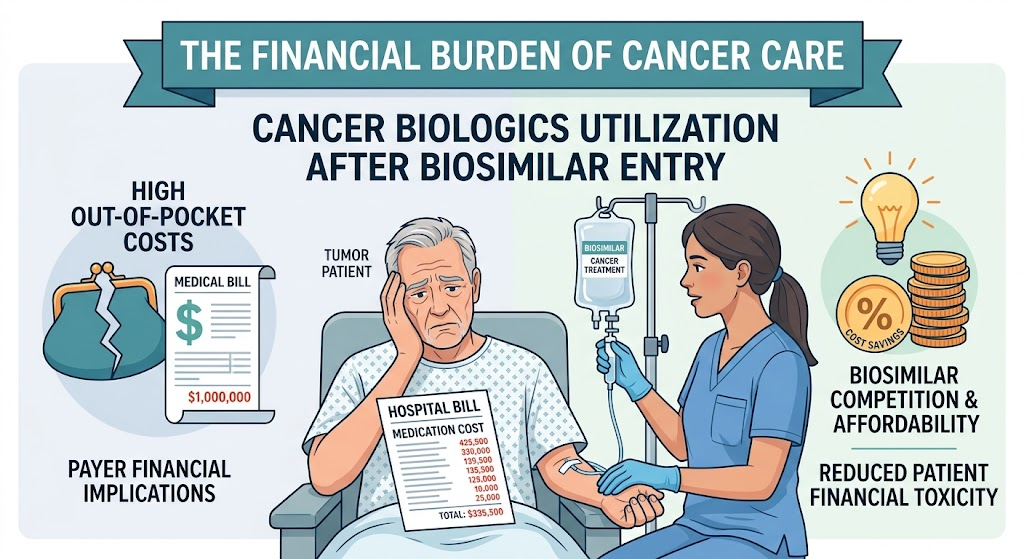
Compared to patients exclusively using originator biologics, those exclusively using biosimilars experienced a mean monthly payer cost reduction of $3,820. Additionally, patient out-of-pocket expenses decreased by an average of $39.50 per month. These reductions highlight substantial economic relief attributable to biosimilar availability.
Lower biosimilar prices and reduced patient costs are particularly relevant for patients with chronic or long-term cancer treatments, where cumulative savings can improve treatment adherence and overall outcomes.
Clinical and Policy Implications
The introduction of biosimilars in oncology marks a critical advancement for healthcare systems striving to balance clinical excellence with affordability. Market competition driven by biosimilars can facilitate broader access to essential biologics, potentially reducing disparities in cancer care.
For payers, sustained biosimilar uptake can translate into significant budgetary savings without compromising treatment efficacy. For patients, reduced out-of-pocket costs may lessen financial toxicity, a growing concern in cancer care that can affect quality of life and treatment continuation.
These findings support ongoing policies encouraging biosimilar adoption, including provider education, streamlined regulatory pathways, and reimbursement incentives.
Limitations and Future Directions
The study’s retrospective design and reliance on claims data limit the ability to assess clinical outcomes or reasons behind switching behavior comprehensively. Further research is warranted to examine long-term effects on treatment efficacy, patient adherence, and overall health outcomes.
Additionally, as more biosimilars for other cancer biologics enter the market, continuous monitoring of economic and clinical impacts is essential to inform best practices.
Conclusion
This cohort study reveals that biosimilar entry for key cancer biologics in the United States is associated with meaningful reductions in drug prices, decreased market share for originator biologics, and lower financial burden for payers and patients. Encouraging biosimilar adoption aligns with goals to enhance access to life-saving therapies while promoting cost-effective cancer care. As oncology care evolves, biosimilars stand as a pivotal element in balancing innovation with sustainability.
Reference
Liu X, Xu X, Lu ZJ, Shih YT. Cancer Biologics Utilization After Biosimilar Entry and Financial Implications For Payers and Patients. JAMA Oncol. 2026 Aug 27:e263128. doi: 10.1001/jamaoncol.2026.3128. Epub ahead of print. PMID: 42658505; PMCID: PMC13522996.