Highlight
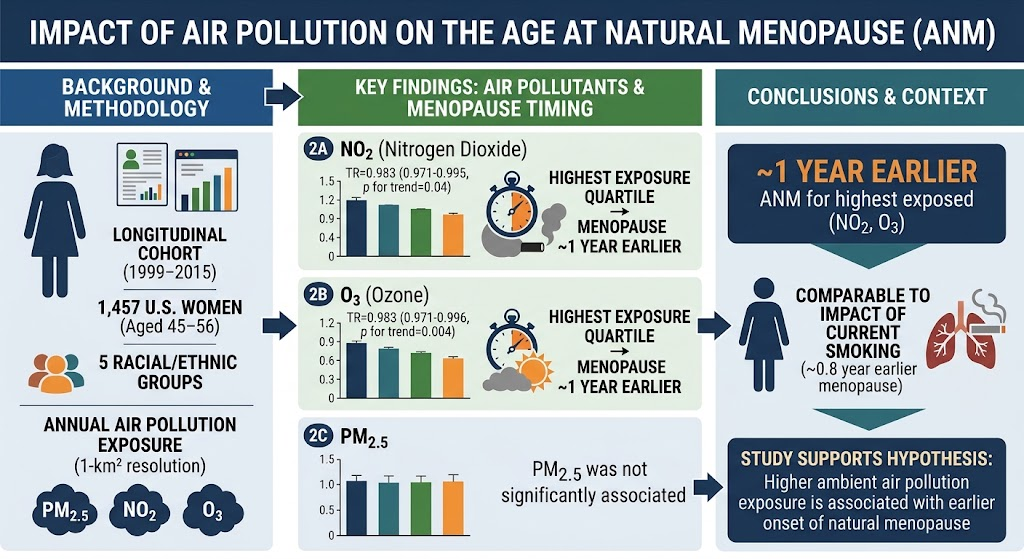
This longitudinal study from the Study of Women’s Health Across the Nation (SWAN) demonstrates that women with the highest exposure to ambient nitrogen dioxide (NO2) and ozone (O3) experience natural menopause approximately one year earlier compared to those with the lowest exposure. The study found no significant association between particulate matter (PM2.5) and age at natural menopause (ANM). The magnitude of earlier menopause linked to air pollution exposure mirrors the effect observed with smoking, with implications for women’s reproductive and overall health.