Highlight
- Participants with chronic rotator cuff tendinopathy successfully adhered to prescribed pain thresholds during a 26-week exercise program.
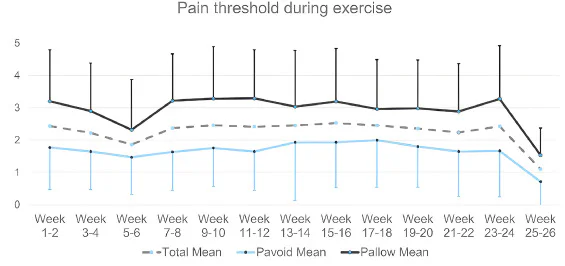
- Exercise pain in the pain-allowed group averaged near the target upper limit, significantly higher than the pain-avoid group, confirming differential pain exposure.
- Completion rates of pain and exercise logbooks declined over time, notably after supervised physiotherapy ended, whereas physiotherapy attendance remained high.
- The findings suggest that guided pain-threshold exercise protocols are feasible and well tolerated in this patient population.
Study Background
Chronic rotator cuff tendinopathy is a common source of shoulder pain and functional impairment characterized by degenerative changes in the tendons of the supraspinatus and infraspinatus muscles. Management often involves physiotherapy with therapeutic exercises aimed at improving tendon health and shoulder function. However, optimal approaches to exercise prescription—particularly regarding pain experienced during exercise—remain contentious. Some protocols advise allowing low levels of pain during exercise, while others emphasize avoiding pain altogether.
Adherence to therapeutic regimens, including exercise intensity and session attendance, strongly influences treatment efficacy. Understanding patient adherence to pain thresholds and exercise protocols is critical for designing effective interventions. This study explored how patients with chronic rotator cuff tendinopathy adhered to two different pain threshold protocols over a 26-week exercise intervention.
Study Design
This investigation used secondary data from a randomized controlled trial (the Pain during Shoulder Exercise trial) conducted in a secondary outpatient care setting. The study enrolled 84 patients diagnosed with chronic (>3 months) supraspinatus/infraspinatus tendinopathy confirmed by ultrasound. Participants were randomized into two groups based on target pain intensity during exercises: a pain-allowed group (PAllow), exercising up to 5 on the Numeric Pain Rating Scale (NPRS), and a pain-avoid group (PAvoid), exercising below 3 on the NPRS.
Both groups underwent a standardized physiotherapy program involving eight scheduled sessions and were required to complete pain and exercise logbooks throughout the 26-week intervention.
Key Findings
Adherence to Pain Thresholds: Mean exercise pain scores were 2.8 ±0.21 in the PAllow group and 1.6 ±0.19 in the PAvoid group, a statistically significant difference (p<.001). This confirms that participants adhered to their assigned pain intensity targets during exercises.
Logbook Completion: Adherence to pain logbook completion declined modestly over time, decreasing from 76% to 68%, while exercise logbook adherence declined from 75% to 61%. No significant differences between groups were observed in logbook completion (p=.847). A notable drop in adherence occurred after week 20, coinciding with the end of supervised physiotherapy sessions.
Physiotherapy Attendance: Seventy-five percent of participants attended at least 6 of the 8 physiotherapy sessions, with no significant difference between the PAllow and PAvoid groups (p=.726). This indicates good overall engagement with supervised care.
The data suggest that patients can maintain adherence to prescribed pain intensity during exercise, even when allowed higher pain thresholds. The declining logbook adherence following the final session highlights challenges of monitoring self-reported outcomes over long-term follow-up without supervision.
Expert Commentary
The study provides valuable insight into adherence patterns within pain-threshold-based exercise programs for chronic rotator cuff tendinopathy. Allowing pain up to moderate levels during exercise is often met with clinician and patient hesitance due to concerns over exacerbating symptoms. However, this trial demonstrates that patients tolerate and adhere to such protocols while maintaining good physiotherapy attendance. This underscores the importance of individualized pain guidance rather than rigid pain avoidance in rehabilitation.
Limitations include reliance on self-reported logbooks, which may decline in accuracy or completeness over time, especially post-supervision. Future research could incorporate digital adherence monitoring or wearable sensors to capture exercise compliance more objectively. Additionally, while adherence was good, the study does not directly report clinical outcome measures here, so linking adherence to efficacy requires further analysis.
From a biological plausibility standpoint, controlled loading within pain limits may promote tendon remodeling and pain desensitization. This study’s adherence data support the feasibility of implementing such biologically informed exercise protocols in clinical settings.
Conclusion
This study demonstrates that patients with chronic rotator cuff tendinopathy can adhere to prescribed pain thresholds during a prolonged exercise intervention. Both pain-allowed and pain-avoidance protocols were feasible, with patients maintaining high physiotherapy session attendance. Although logbook adherence declined after supervised care ceased, overall adherence was favorable, suggesting that pain threshold–guided exercise prescriptions are practical and acceptable for this condition. Continued strategies to support long-term adherence post-therapy supervision are warranted to sustain clinical benefits.
Funding and ClinicalTrials.gov Registration
The original study, Pain during Shoulder Exercise trial, was conducted in a secondary care outpatient clinic setting. Details on funding sources and clinical trial registration were not specified in the evaluated abstract. Further information can be sourced from the trial registry or original publication.
References
- Åxman S, Svensson RB, Cullum C, Magnusson SP, Kjær BH. Adherence to Exercise Intervention Including Pain Threshold, Exercise and Physiotherapy Sessions for Patients With Chronic Rotator Cuff Tendinopathy. Arch Phys Med Rehabil. 2026 Jul 15;107(11):3265-3270. PMID: 42457108.
- Khan KM, Scott A. Mechanotherapy: how physical therapists’ prescription of exercise promotes tissue repair. Br J Sports Med. 2009 Apr;43(4):247-52.
- Lewis JS. Rotator cuff tendinopathy: a model for the continuum of pathology and related management. Br J Sports Med. 2010 Apr;44(13):918-23.
- Lin I, et al. Effects of pain neuroscience education on patients with chronic musculoskeletal pain: a systematic review and meta-analysis. Eur J Pain. 2021 Jan;25(1):85-109.
Specialty calculators
For clinical reference; use professional judgment.