Highlight
- Patients with idiopathic normal pressure hydrocephalus (iNPH) exhibit significant impairments in dynamic balance compared to age-matched controls.
- Composite balance scores and specific Sensory Organization Test (SOT) conditions reveal large effect size deficits, particularly involving visual and vestibular sensory inputs.
- The sensory dysfunctions identified suggest that visual and vestibular impairments contribute substantially to postural instability in iNPH.
Study Background
Idiopathic Normal Pressure Hydrocephalus (iNPH) is a neurological disorder predominantly affecting elderly individuals, characterized by a triad of gait disturbance, cognitive impairment, and urinary incontinence, alongside ventricular enlargement with normal cerebrospinal fluid (CSF) pressure. Among these, gait and balance abnormalities contribute markedly to morbidity, increasing fall risk and consequent disability. However, the postural control deficits and their underlying sensory mechanisms in iNPH remain incompletely understood. Understanding specific sensory contributions to balance impairment could improve diagnostic accuracy and therapeutic targeting.Study Design
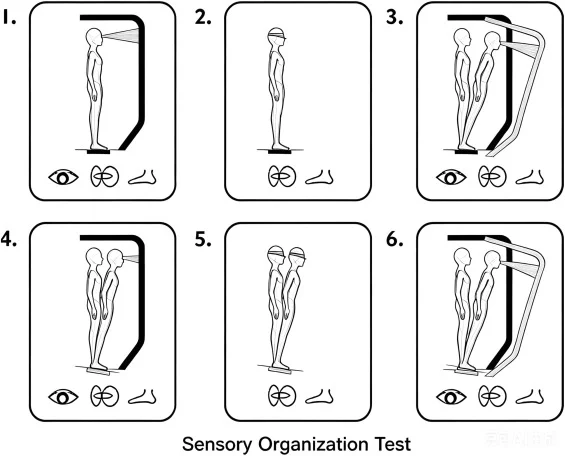
This cross-sectional observational study recruited 44 elderly participants, including 23 patients diagnosed with iNPH and 21 age-matched controls without the condition. Patients were recruited from a general hospital setting, while controls were drawn from the local community. No interventions were performed; the primary objective was to assess postural control status. The primary outcome measure was equilibrium and balance performance assessed using the Sensory Organization Test (SOT) which evaluates reliance on visual, somatosensory, and vestibular inputs during postural control tasks under various sensory conditions. Outcome metrics included a composite balance score and sub-scores for each sensory system involvement (visual, somatosensory, vestibular). Statistical analyses compared group differences and calculated effect sizes (Cohen’s d, r correlations) for clinical relevance.Key Findings
The study demonstrated that patients with iNPH had significantly lower composite balance scores than controls, with a large effect size (Cohen’s d=1.824, P<.001), indicating pronounced global postural instability. Breaking down the SOT conditions, large effect sizes were observed in SOT condition 1 (fixed platform and eyes open; d=1.217, P<.001), suggesting baseline postural control deficits. Further, conditions 4 to 6, which progressively challenge vestibular and visual inputs through platform and visual surround sway manipulation, showed moderate to large effect sizes (r=0.512–0.667, all P<.05), underscoring deficits under dynamic sensory conflict conditions. Sensory-specific analyses revealed significant impairments in both the visual and vestibular sensory scores for the iNPH group, with large effect sizes (visual: r=0.656; vestibular: r=0.502; both P<.05) when compared to controls. Interestingly, somatosensory scores were not highlighted as significantly different, suggesting relatively preserved somatosensory function. In sum, these findings indicate that iNPH patients show substantial deficits in integrating visual and vestibular input needed for balance, contributing to their postural instability and increased fall risk.Expert Commentary
These results align with the clinical observation that gait and postural difficulties in iNPH arise not only from motor dysfunction but also from sensory integration deficits. The selective impairment of visual and vestibular systems could be attributed to periventricular white matter changes and disruption of subcortical pathways involved in sensory processing and sensorimotor integration. The use of the SOT provides a quantitative, objective framework to dissect sensory contributions to balance impairment, which may aid in differentiating iNPH from other neurodegenerative or balance disorders such as Parkinson’s disease or cerebrovascular disease. Limitations include the relatively small sample size, cross-sectional design, and lack of intervention or longitudinal follow-up to correlate sensory deficits with clinical progression or response to shunting. Future studies could explore whether targeted vestibular or visual rehabilitation might mitigate fall risk in iNPH.Conclusion
This study underscores that patients with idiopathic normal pressure hydrocephalus experience notable balance instability characterized by impaired visual and vestibular sensory function. These sensory deficits likely represent key mechanistic contributors to postural control dysfunction and fall susceptibility in this population. Clinicians evaluating gait and balance in elderly patients with ventricular enlargement should consider comprehensive sensory assessment. Integrating sensory testing may enhance diagnostic accuracy and optimize individualized rehabilitation strategies to improve mobility and safety in iNPH.References
1. Duan L, Zheng J, Fang X, Ding J. Balance Stability Characteristics of Individuals with Idiopathic Normal Pressure Hydrocephalus. Arch Phys Med Rehabil. 2026;107(11):3271-3278. doi:10.1016/j.apmr.2026.07.003 2. Oldham MA, Guppy-Coles K, Carr D. Differential diagnosis and evaluation of normal pressure hydrocephalus. Clin Geriatr Med. 2019;35(3):409-422. doi:10.1016/j.cger.2019.04.004 3. Horak FB. Postural orientation and equilibrium: what do we need to know about neural control of balance to prevent falls? Age Ageing. 2006;35 Suppl 2:ii7-ii11. doi:10.1093/ageing/afl077 4. Allali G, Assal F, Kressig RW. Falls in epilepsy: new evaluation paradigms and therapeutic perspectives. Curr Opin Neurol. 2012;25(4):421-426. doi:10.1097/WCO.0b013e328355ede8 5. Stolze H, Klebe S, Zechlin C, Baecker C, Deuschl G. Gait analysis in idiopathic normal pressure hydrocephalus—a comparative study. J Neurol Neurosurg Psychiatry. 2000;68(2):170-176. doi:10.1136/jnnp.68.2.170Specialty calculators
For clinical reference; use professional judgment.