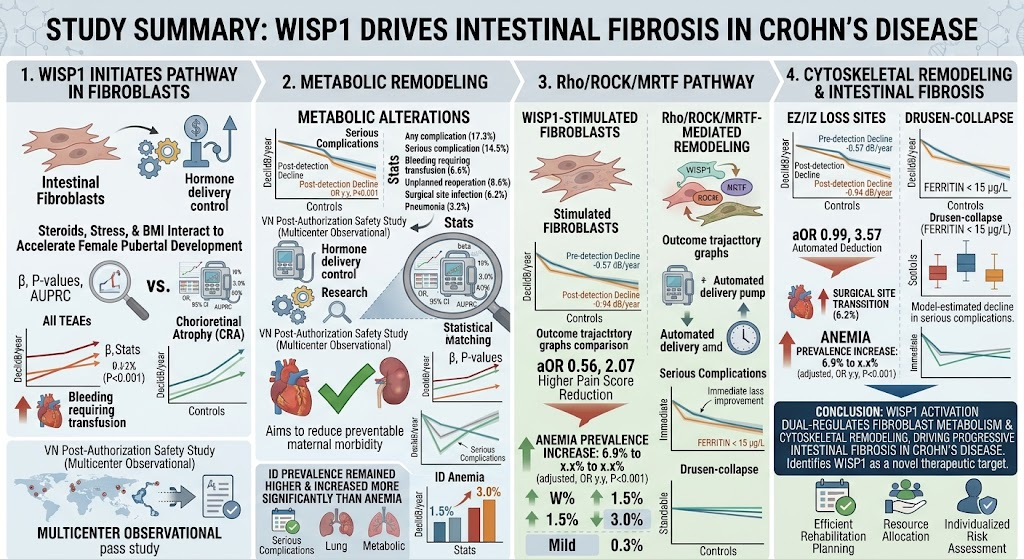
WISP1 expression is markedly increased in fibrotic ileal regions of Crohn’s disease patients, correlating with fibroblast activation and extracellular matrix (ECM) deposition.
WISP1 orchestrates a metabolic switch in intestinal fibroblasts from fatty acid oxidation (FAO) to glycolysis, enhancing oxidative stress, adipokine secretion, and lipid accumulation, which promotes fibrosis.
The pro-fibrotic effect of WISP1 is mediated via the RHO/ROCK/MRTFA signaling pathway that drives cytoskeletal remodeling and ECM synthesis.
Neutralization of WISP1 in a murine fibrosis model attenuates collagen deposition, ECM complexity, inflammation, and MRTF target gene expression, underscoring its potential as a therapeutic target.