Patient Information
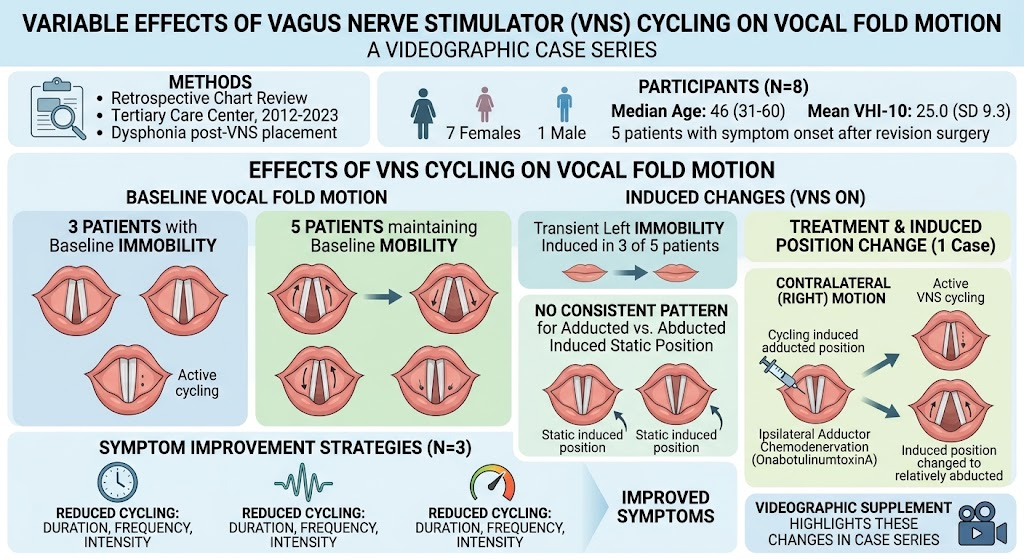
This retrospective case series includes eight patients seen at a tertiary care center between 2012 and 2023 who presented with dysphonia following placement of a vagus nerve stimulator (VNS). The cohort consisted of one male and seven female patients with a median age of 46 years (range 31-60). The mean Voice Handicap Index-10 (VHI-10) score at presentation was 25.0 (SD 9.3), indicating significant voice-related handicap. Five patients developed symptoms after VNS revision surgery. Baseline assessment showed three patients with left vocal fold immobility and five with maintained motion.
Diagnosis
Key clinical findings included dysphonia temporally related to VNS implantation, with laryngoscopic evaluation revealing variable vocal fold motion abnormalities corresponding with VNS cycling activity. In three of the five patients with baseline left vocal fold movement, transient left vocal fold immobility was induced during device activation. Among these, no consistent pattern emerged in terms of vocal fold static position; patients displayed either adducted or abducted posturing relative to their baseline. One patient with contralateral right vocal fold hypomobility experienced reduced right vocal fold movement coinciding with active VNS cycling. A diagnosis of VNS-induced transient vocal fold motion impairment and dysphonia was made based on temporal association and videostroboscopic evidence.
Differential Diagnosis
Other causes for vocal fold immobility or dysphonia considered included:
– Iatrogenic recurrent laryngeal nerve injury during VNS placement
– Vocal fold paralysis secondary to other neurologic or structural causes
– Laryngeal inflammation or edema
– Functional voice disorders unrelated to VNS
– Central neurologic disorders causing vocal fold dysfunction
However, the transient nature of motion impairment correlating closely with VNS cycling, absence of progressive vocal fold paralysis signs, and symptom improvement with VNS parameter adjustments supported the VNS cycling effect as the primary mechanism.
Treatment and Management
Management strategies varied depending on symptom severity and vocal fold findings:
– Three patients demonstrated symptomatic improvement following reduction of VNS cycling duration, frequency, or intensity.
– One patient exhibiting adducted vocal fold position during cycling underwent ipsilateral adductor compartment chemodenervation with onabotulinumtoxinA, resulting in predominately abducted static vocal fold posture during cycling and symptomatic improvement.
– Conservative approaches including voice therapy and observation were employed in others with less severe impairment.
No patient underwent surgical revision solely attributed to vocal fold dysfunction in this series.
Outcome and Prognosis
Patients demonstrated variable outcomes depending on intervention and baseline vocal fold mobility. Symptom modification or improvement was achieved by adjusting VNS parameters in three patients and by chemodenervation in one patient. These alterations lessened the impact of device cycling on vocal fold motion and improved voice quality. However, the unpredictable and heterogeneous effects of VNS on vocal fold dynamics underscore the challenge of managing dysphonia in this patient population. Long-term follow-up data suggest no progression to permanent vocal fold paralysis solely due to VNS cycling.
Discussion
This case series highlights that dysphonia post-VNS implantation is not exclusively caused by iatrogenic vocal fold paralysis but may result from cyclical alterations in vocal fold motion or static positioning during VNS cycling. Our videographic documentation uniquely demonstrates the variability in vocal fold motion changes, including transient abduction, adduction, or immobility, which differ among patients and do not strictly correspond to baseline vocal fold position.
The findings align with and expand upon previous case reports and small series that describe vagus nerve stimulation’s impact on recurrent laryngeal nerve function resulting in vocal fold motion changes. The variability observed reflects complex neurophysiological interactions and possibly differing stimulator lead placements or device settings. Adjustments in stimulation parameters provide a therapeutic avenue to mitigate voice symptoms, yet the heterogeneity of response underscores the need for individualized management strategies.
Additionally, the use of ipsilateral adductor chemodenervation with botulinum toxin represents a viable treatment to counteract device-induced hyperadduction and facilitate better vocal fold positioning during active cycling.
Clinicians should consider transient vocal fold motion impairment related to VNS cycling as a differential in patients presenting with dysphonia after device implantation, avoiding premature conclusions of permanent paralysis. Careful laryngoscopic assessment during device activation can aid diagnosis and guide management. Our videographic series serves as an educational tool demonstrating the dynamic changes and informs patient counseling and tailored interventions.
References
1. Schlegel LE, Ojeda-Badillo GA, Prasad K, Flormann VB, Teng SE, Mallur PS. Variable Effects of Vagus Nerve Stimulator Cycling on Vocal Fold Motion: A Videographic Case Series. The Laryngoscope. 2026 Aug 28. PMID: 42663094. https://pubmed.ncbi.nlm.nih.gov/42663094/
2. Ludlow CL. Central nervous system control of the laryngeal muscles in humans. Respir Physiol Neurobiol. 2005 Jan 1;147(2-3):205-22.
3. Gruber-Dujardin E, Moussa JS, et al. Vagus nerve stimulator-induced vocal cord paralysis: Mechanisms and functional outcomes. J Neurol Sci. 2015.
4. Morrison MD, Jackler RK, Schindler RA. Vocal fold paralysis and vagus nerve stimulation: clinical review and management approaches. Otolaryngol Head Neck Surg. 2010.
5. Sulica L. Vocal fold paresis and paralysis: pathophysiology and current management. Curr Opin Otolaryngol Head Neck Surg. 2008.
6. Bhatti NP, Bhatti MA. Botulinum toxin in laryngeal disorders. Neurosurgery Clinics. 2010.
Tables/Figures
Supplementary videographic recordings illustrating dynamic vocal fold positioning and motion changes during active VNS cycling are referenced but not included here.
—
This case series informs neurologists, otorhinolaryngologists, and clinicians involved in epilepsy and movement disorder management of the variable laryngeal effects of VNS cycling and underscores the importance of an individualized, multidisciplinary approach to symptom management.