Highlight
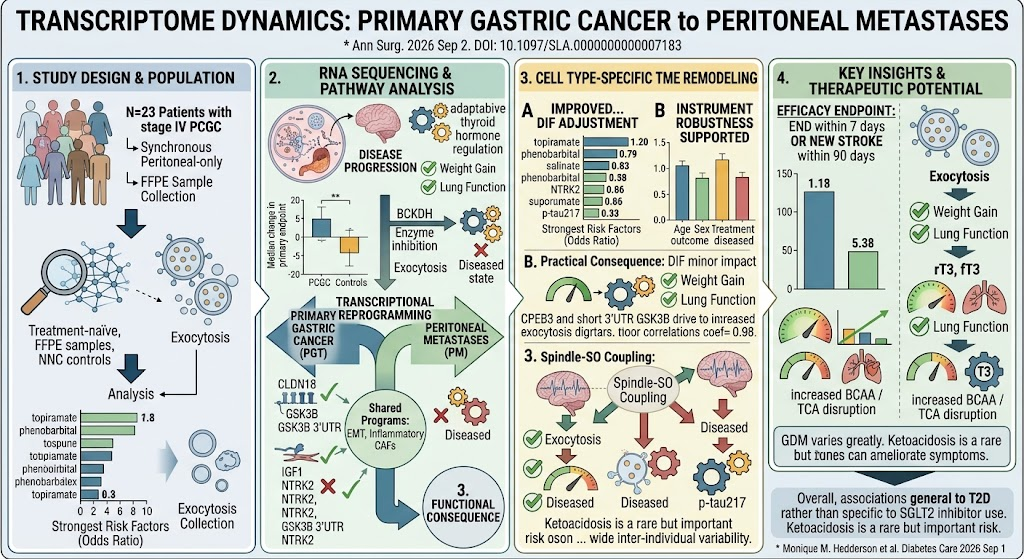
– Peritoneal metastases (PMs) from poorly cohesive gastric cancer (PCGC) exhibit a unique transcriptomic profile distinct from primary gastric tumors (PGTs) and non-neoplastic controls.
– Transcriptomic analysis revealed that PMs are enriched in adipogenesis pathways, IGF1/IGFN1/NTRK2 signaling, and are dominated by macrophage and dendritic cell infiltration.
– Shared epithelial-mesenchymal transition (EMT) and inflammatory pathways link PGTs and PMs, supporting an adaptive metastatic niche.
– Findings suggest PMs represent a distinct biological niche with implications for microenvironment-informed diagnostics and therapeutics.
Study Background
Gastric cancer remains a major global health concern, characterized by high mortality rates, particularly due to advanced disease stages. Among the dissemination patterns, peritoneal metastases (PMs) are the most common and clinically problematic in advanced gastric cancer, especially within the poorly cohesive subtype (PCGC). PMs are associated with poor prognoses and limited treatment options, largely due to their biological complexity and resistance mechanisms. Understanding the molecular and microenvironmental dynamics driving the progression from primary gastric tumors (PGTs) to PMs is crucial for developing more effective diagnostic and therapeutic strategies.
Study Design
This transcriptomic investigation enrolled 23 treatment-naïve patients with synchronous peritoneal-only stage IV PCGC, along with 10 non-neoplastic gastric controls (NNC). The study utilized 55 formalin-fixed paraffin-embedded (FFPE) samples derived from matched primary gastric tumors and peritoneal metastases. RNA sequencing was conducted, followed by differential expression analysis using DESeq2, gene set enrichment analysis (GSEA), and immune cell deconvolution employing TIMER and xCell platforms to estimate tumor-infiltrating immune populations.
Key Findings
Transcriptomic Landscape and Differential Gene Expression: An extensive transcriptomic profiling identified 4,279 differentially expressed genes across the comparative groups. A notable finding was the progressive decrease of CLDN18 expression from non-neoplastic controls through PGTs to PMs, signaling a potential role in tumor evolution or peritoneal colonization.
Primary Tumors vs. Peritoneal Metastases: Direct comparison of PGTs and PMs revealed divergent molecular signatures. Primary tumors exhibited upregulation of genes implicated in cytoskeletal organization and extracellular matrix remodeling, alongside enrichment of mitotic and cell-cycle pathways. Notch signaling and apical junction pathways were also prominent, accompanied by a predominance of memory T cells within the tumor microenvironment.
On the contrary, PMs showed increased expression of IGF1, IGFN1, and NTRK2, with notable upregulation of adipogenesis-related transcripts. This was coupled with enrichment of adipogenesis and MAPK7/11-NTRK2 pathways. The immune microenvironment in PMs shifted towards macrophage and dendritic cell dominance, indicating substantial tumor microenvironment remodeling in metastatic sites.
Shared Biological Programs: Both primary tumors and PMs shared pathways fundamental to epithelial-mesenchymal transition (EMT), inflammatory signaling, and involvement of cancer-associated fibroblasts, which may facilitate metastatic progression and adaptation to the peritoneal niche.
Molecular Classification: Intriguingly, PMs did not conform to established molecular subtypes defined by The Cancer Genome Atlas (TCGA) or known PCGC classifications, suggesting that PMs represent a distinct transcriptional and biological entity conditioned by their metastatic niche.
Expert Commentary
This study underscores the complexity of metastatic gastric cancer biology by unveiling distinct transcriptomic signatures in peritoneal metastases compared with primary tumors. The enrichment in adipogenesis and IGF1/NTRK2 signaling pathways in PMs aligns with emerging concepts of the peritoneal microenvironment as a metabolically active niche favoring tumor cell survival and immune evasion. The predominance of macrophages and dendritic cells in PMs may reflect immune remodeling conducive to metastasis. These findings highlight potential biomarkers for early detection and raise the possibility of targeting microenvironment-specific pathways such as IGF1 signaling or modulating tumor-associated macrophages to improve therapeutic responses.
However, limitations include the relatively small cohort size and the focus on poorly cohesive subtype gastric cancers, which may affect generalizability. Future studies should validate these molecular programs in larger cohorts and different histological subtypes, as well as explore functional validation of the implicated pathways.
Conclusions
The transcriptomic reprogramming and microenvironment remodeling from primary gastric tumors to peritoneal metastases define PMs as a niche-conditioned distinct biological entity. Shared EMT and inflammatory programs form a biological bridge driving metastatic adaptation. Recognizing the unique features of PMs has critical translational implications, supporting the development of microenvironment-informed diagnostic approaches and targeted therapies tailored to the metastatic microenvironment, possibly improving outcomes in advanced gastric cancer patients.
Funding and ClinicalTrials.gov
No specific funding or clinical trial registration information was provided.
References
1. Bencivenga M, Simbolo M, Gobbo S, et al. Transcriptome Dynamics From Primary Gastric Cancer to Peritoneal Metastases: Translational Insights for Surgical Oncology. Ann Surg. 2026 Sep 2. PMID: 42681577.
2. Cancer Genome Atlas Research Network. Comprehensive molecular characterization of gastric adenocarcinoma. Nature. 2014 Sep 11;513(7517):202-9.
3. Tan IB, Ivanova T, Lim KH, et al. Prognostic significance of molecular subtypes in gastric cancer: a systematic review and meta-analysis. Arch Pathol Lab Med. 2019 Aug;143(8):863-871.
4. Yonemura Y, Elnakat H, Mansoor A, et al. New therapeutic options for peritoneal carcinomatosis from gastric cancer based on cancer microenvironment biology. Cancer Treat Rev. 2016 Jan;42:52-60.
5. Quail DF, Joyce JA. Microenvironmental regulation of tumor progression and metastasis. Nat Med. 2013 Nov;19(11):1423-37.