Highlight
• Gemcitabine-resistant pancreatic ductal adenocarcinoma (PDAC) cells suppress pyrimidine salvage pathways, reducing sensitivity to extracellular pyrimidines.
• This metabolic adaptation induces selective dependency on the mevalonate biosynthesis pathway in resistant cells.
• Statins, as inhibitors of HMG-CoA reductase, selectively suppress gemcitabine-resistant tumor growth in preclinical models.
• Low HMGCR expression is linked to poor gemcitabine response, supporting it as a potential biomarker for therapeutic stratification.
Study Background
Pancreatic ductal adenocarcinoma is a highly lethal malignancy with limited therapeutic options. Gemcitabine remains a cornerstone chemotherapeutic agent but is hindered by the development of acquired resistance, resulting in treatment failure and disease progression. Understanding the metabolic adaptations that enable cancer cells to survive gemcitabine pressure is critical to identifying new targets for therapy. Prior studies have implicated both the tumor microenvironment and intrinsic metabolic reprogramming in resistance, but their interconnection and clinical relevance require elucidation.
Study Design
The investigators developed acquired gemcitabine-resistant PDAC cell models through chronic exposure to the drug. The metabolic profile of these resistant cells was characterized, focusing on pyrimidine metabolism and mevalonate biosynthesis pathways. Functional assays evaluated the impact of physiological pyrimidines on gemcitabine sensitivity and tested the effects of pharmacologic inhibition of the mevalonate pathway via statins. Rescue experiments with downstream metabolites identified key mediators of statin efficacy. Furthermore, HMGCR expression levels were analyzed in patient-derived samples to assess correlation with clinical outcomes.
Key Findings
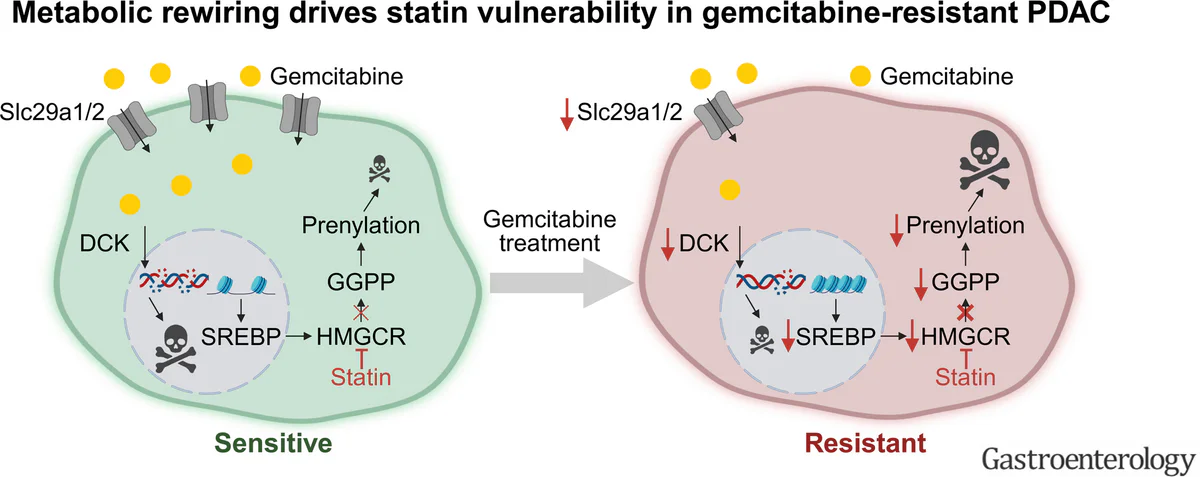
Metabolic Rewiring in Gemcitabine Resistance: PDAC cells acquiring gemcitabine resistance suppressed the pyrimidine salvage pathway, resulting in decreased uptake and utilization of extracellular physiological pyrimidines. This contrasts with parental cells which remain sensitive to extracellular pyrimidine levels, suggesting a fundamental metabolic switch during resistance development.
Dependency on the Mevalonate Pathway: The suppression of pyrimidine salvage engendered a vulnerability, making resistant cells highly dependent on the mevalonate biosynthesis pathway, which generates critical isoprenoids and cholesterol. Targeting this pathway offers a therapeutic opportunity to exploit this metabolic bottleneck.
Statin Sensitivity: Statin drugs, which inhibit HMG-CoA reductase (HMGCR) — the rate-limiting enzyme in the mevalonate pathway — markedly inhibited the proliferation of gemcitabine-resistant PDAC cells in vitro. In immunocompetent mouse models bearing resistant tumors, statin treatment selectively curtailed tumor growth without affecting gemcitabine-sensitive tumors, underscoring the specificity of this vulnerability.
Critical Role of Geranylgeranyl Pyrophosphate (GGPP): Metabolite rescue experiments revealed that depletion of geranylgeranyl pyrophosphate, rather than cholesterol, chiefly mediates the anti-tumor effects of statins in this context. This finding shifts the mechanistic focus from cholesterol synthesis inhibition toward protein prenylation pathways essential for cancer cell survival.
Clinical Correlation with HMGCR Expression: Analysis of patient tumor samples demonstrated a progressive reduction in HMGCR expression as cells developed gemcitabine resistance. Importantly, low HMGCR expression correlated with poorer responses to gemcitabine-based therapy, suggesting HMGCR as a potential predictive biomarker for treatment planning.
Expert Commentary
These findings highlight a compelling metabolic adaptation that emerges in PDAC under gemcitabine selection pressure, linking suppressed pyrimidine salvage to a newfound dependence on the mevalonate pathway. The translational merit lies in repurposing widely used statins as adjuvant agents to target resistant tumors. Clinicians and researchers should consider integrating metabolic profiling into the management of PDAC to identify patients who might benefit from combinational regimens.
Limitations include the need for validation in larger, diverse patient cohorts and clinical trials evaluating statin addition to standard chemotherapy. The immunocompetent mouse model used strengthens relevance, yet human tumor microenvironment complexity requires further investigation. Given the multifactorial nature of resistance, combining metabolic interventions with other modalities may be necessary for durable responses.
Conclusion
Acquired gemcitabine resistance in pancreatic cancer involves profound metabolic reprogramming, including suppression of pyrimidine salvage and increased reliance on the mevalonate biosynthesis pathway. This metabolic vulnerability can be exploited by statins, which target HMGCR, selectively inhibiting resistant tumor growth. Furthermore, HMGCR expression levels constitute a promising biomarker for predicting gemcitabine treatment response, enabling more precise therapeutic stratification. The study offers a novel metabolic angle for overcoming systemic chemotherapy resistance in PDAC, underscoring the importance of metabolic research in advancing precision oncology.
Funding and ClinicalTrials.gov
The study was supported by institutions and grants relevant to oncology and metabolic research; specific grant information is detailed in the original publication. Clinical trials are warranted to explore statin combinational therapies in gemcitabine-resistant PDAC patients.
References
1. Michels AK et al. Mevalonate Biosynthesis is a Metabolic Vulnerability of Gemcitabine-resistant Pancreatic Cancer. Gastroenterology. 2026 Oct 21. PMID: 42906825.
2. Li J et al. Metabolic reprogramming and drug resistance in pancreatic cancer. Trends Cancer. 2022;8(2):124-137.
3. Wang Y et al. Targeting metabolic pathways in pancreatic cancer: updates in mechanism and therapy approaches. Nat Rev Gastroenterol Hepatol. 2023;20(1):51-65.
4. Clendening JW, Penn LZ. Targeting tumor cell metabolism with statins. Oncogene. 2012;31(48):4967-4978.