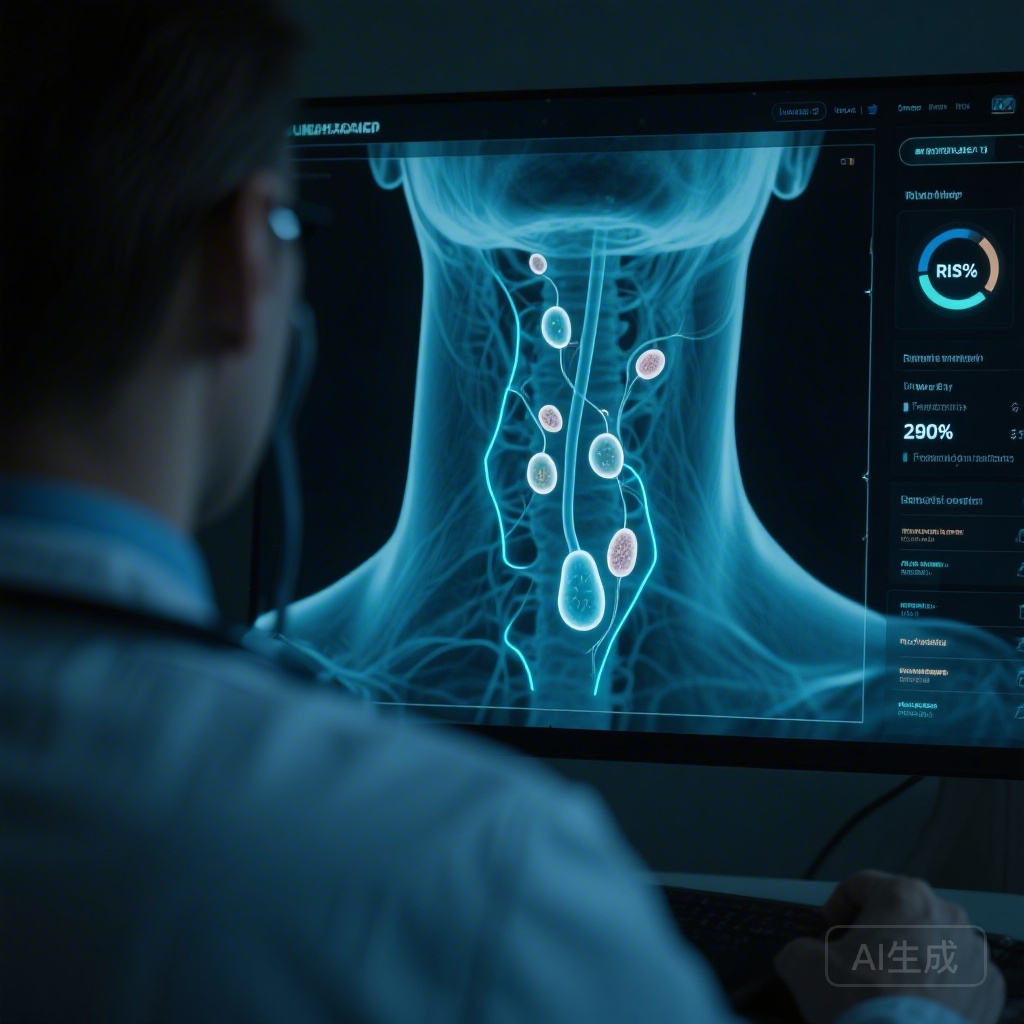
AI-Driven Detection of Extranodal Extension Outperforms Radiologists in Predicting Outcomes for HPV-Positive Oropharyngeal Cancer

AI-Driven Detection of Extranodal Extension Outperforms Radiologists in Predicting Outcomes for HPV-Positive Oropharyngeal Cancer

A single-center study demonstrates that an AI pipeline for CT-based lymph node segmentation and extranodal extension classification significantly improves prognostic accuracy for HPV-positive oropharyngeal cancer compared to traditional radiological assessment, identifying high-risk patients more effectively.

AI-Driven Decision Support for Antibiotic Switching: Why Clinicians Value Caution Over Speed

AI-Driven Decision Support for Antibiotic Switching: Why Clinicians Value Caution Over Speed

A randomized multimethod study reveals that while AI clinical decision support systems for antibiotic switching are well-received, their primary influence is reinforcing conservative prescribing. The study underscores that usability and clinical evidence outweigh the importance of AI explanations at the point of care.
Mobile Health Management Model Slashes Gestational Diabetes Incidence by Nearly 45% in High-Risk Pregnancies

Mobile Health Management Model Slashes Gestational Diabetes Incidence by Nearly 45% in High-Risk Pregnancies

A randomized controlled trial demonstrates that an mHealth management model using the Better Pregnancy app significantly reduces GDM incidence, improves glycemic control, and enhances maternal self-efficacy among high-risk pregnant women, providing a scalable solution for modern obstetric care.
AI-Based OCT Analysis Outperforms Human Experts in Predicting Outcomes from Non-Culprit Lesions: Insights from the PECTUS-AI Study

AI-Based OCT Analysis Outperforms Human Experts in Predicting Outcomes from Non-Culprit Lesions: Insights from the PECTUS-AI Study

The PECTUS-AI study demonstrates that AI-based identification of thin-cap fibroatheromas using OCT provides superior prognostic value for cardiovascular events compared to manual analysis, particularly when assessing the entire imaged coronary segment, offering a standardized approach to identifying high-risk patients.
Predicting Post-Hepatectomy Liver Failure with the PILOT Architecture: Integrating Liver Regeneration Biomarkers and Time-Phased Machine Learning

Predicting Post-Hepatectomy Liver Failure with the PILOT Architecture: Integrating Liver Regeneration Biomarkers and Time-Phased Machine Learning

The novel PILOT machine learning architecture integrates time-phased perioperative data and regeneration-associated biomarkers to predict post-hepatectomy liver failure within six hours of surgery, significantly outperforming traditional clinical models and enabling early personalized risk stratification.
Precision Rehabilitation: Machine Learning Reveals Why ‘Early Mobilization’ Fails Some ICU Patients While Saving Others

Precision Rehabilitation: Machine Learning Reveals Why ‘Early Mobilization’ Fails Some ICU Patients While Saving Others

A secondary analysis of the TEAM trial using machine learning demonstrates that enhanced early mobilization in mechanically ventilated patients has highly individualized effects, ranging from a 34% mortality reduction to a 39% increase in risk, depending on baseline clinical characteristics.
Standardizing the Digital Signal: How an Ontology of Early Warning Signs Can Predict Cytokine Release Syndrome

Standardizing the Digital Signal: How an Ontology of Early Warning Signs Can Predict Cytokine Release Syndrome

This article explores a landmark mixed-methods study establishing a digital biomarker ontology for the early detection of Cytokine Release Syndrome (CRS). By identifying core physiological markers, researchers aim to transform immunotherapy safety through continuous monitoring and predictive modeling.

AI-Driven Imaging Decision Support Doubles Thrombectomy Rates in Real-World Stroke Care

A large-scale prospective study across England's NHS reveals that AI imaging software significantly boosts endovascular thrombectomy rates for acute stroke patients. Implementation was associated with a 100% relative increase in treatment at evaluation sites, highlighting AI's potential to bridge gaps in emergency neurointerventional care.