Real-World Implementation of RTS,S/AS01E Malaria Vaccine Reduces Severe Malaria by 58%: Evidence from the EPI-MAL-003 Phase 4 Study

Real-World Implementation of RTS,S/AS01E Malaria Vaccine Reduces Severe Malaria by 58%: Evidence from the EPI-MAL-003 Phase 4 Study

This interim analysis of the phase 4 EPI-MAL-003 study demonstrates that the RTS,S/AS01E malaria vaccine significantly reduces severe malaria, malaria-related hospitalizations, and all-cause hospitalizations in real-world clinical settings across Ghana, Kenya, and Malawi, supporting its widespread public health utility.
High-frequency Oscillatory Ventilation in Near‑Term and Term Infants: Inconclusive Benefit and Possible Increased Mortality — What the 2025 Cochrane Update Tells Clinicians

High-frequency Oscillatory Ventilation in Near‑Term and Term Infants: Inconclusive Benefit and Possible Increased Mortality — What the 2025 Cochrane Update Tells Clinicians

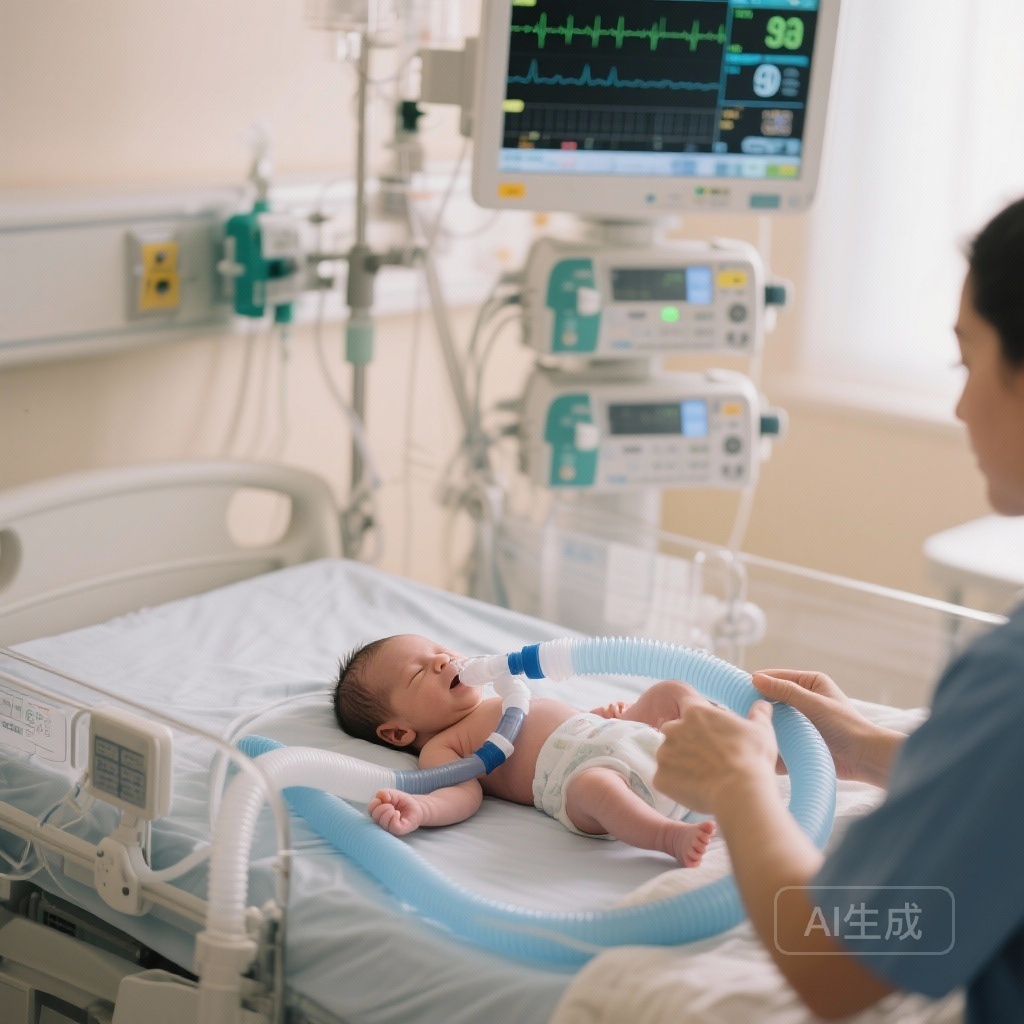
A 2025 Cochrane update (3 RCTs, 368 infants) finds very low- to low-certainty evidence that HFOV neither clearly reduces treatment failure nor pulmonary air leak and may increase mortality versus conventional ventilation in term/near‑term infants with severe pulmonary dysfunction.
Epinephrine Timing and Dosing in Pediatric In‑Hospital Cardiac Arrest: Mixed Signals — improved ROSC but unclear survival benefit

Epinephrine Timing and Dosing in Pediatric In‑Hospital Cardiac Arrest: Mixed Signals — improved ROSC but unclear survival benefit

Recent multicenter studies show earlier and more frequent epinephrine in pediatric in‑hospital cardiac arrest increases ROSC and shortens CPR, but does not consistently improve survival to discharge or favorable neurologic outcome. Evidence supports rapid epinephrine for hemodynamics and ROSC; survival effects remain uncertain.
Pediatric In‑Hospital Cardiac Arrest: Why Adult Resuscitation Lessons Don’t Fully Translate — Airway, Epinephrine, and the Limits of Training

Pediatric In‑Hospital Cardiac Arrest: Why Adult Resuscitation Lessons Don’t Fully Translate — Airway, Epinephrine, and the Limits of Training

Recent multicenter studies show declining intra‑arrest intubation, no clear harm from intubation after time‑dependent matching, unclear benefit of epinephrine before defibrillation, and no survival gain from intensive point‑of‑care CPR training—highlighting pediatric physiology and knowledge gaps.