Highlight
- Sapablursen, an antisense oligonucleotide, targets transmembrane serine protease 6 (TMPRSS6), upregulating hepcidin and restricting iron availability in polycythemia vera (PV).
- In the phase 2a IMPRSSION trial, sapablursen significantly reduced phlebotomy frequency and improved symptom burden in phlebotomy-dependent PV patients.
- The treatment was generally safe and well tolerated, with mostly mild-to-moderate adverse events including anemia and fatigue.
Study Background and Disease Burden
Polycythemia vera is a myeloproliferative neoplasm characterized by clonal proliferation of erythroid precursors, resulting in erythrocytosis. Elevated red blood cell mass increases blood viscosity and carries a substantial risk of thrombosis—an important cause of morbidity and mortality in PV. Current cornerstone management includes serial phlebotomy to reduce hematocrit, alongside cytoreductive therapies when indicated. However, frequent phlebotomy may be burdensome and is associated with iron deficiency, fatigue, and recurrent treatments, highlighting the unmet need for therapies that better control erythrocytosis with improved patient tolerability.Hepcidin, a key regulator of systemic iron homeostasis, suppresses intestinal iron absorption and macrophage iron release. In PV, low hepcidin levels contribute to increased iron availability, facilitating excessive erythropoiesis. Sapablursen is a novel antisense oligonucleotide designed to inhibit TMPRSS6, a negative regulator of hepcidin, thereby increasing endogenous hepcidin levels and limiting iron availability for red blood cell production. This mechanistic approach offers an innovative strategy to mitigate erythrocytosis biologically rather than through removal of blood volume alone.
Study Design
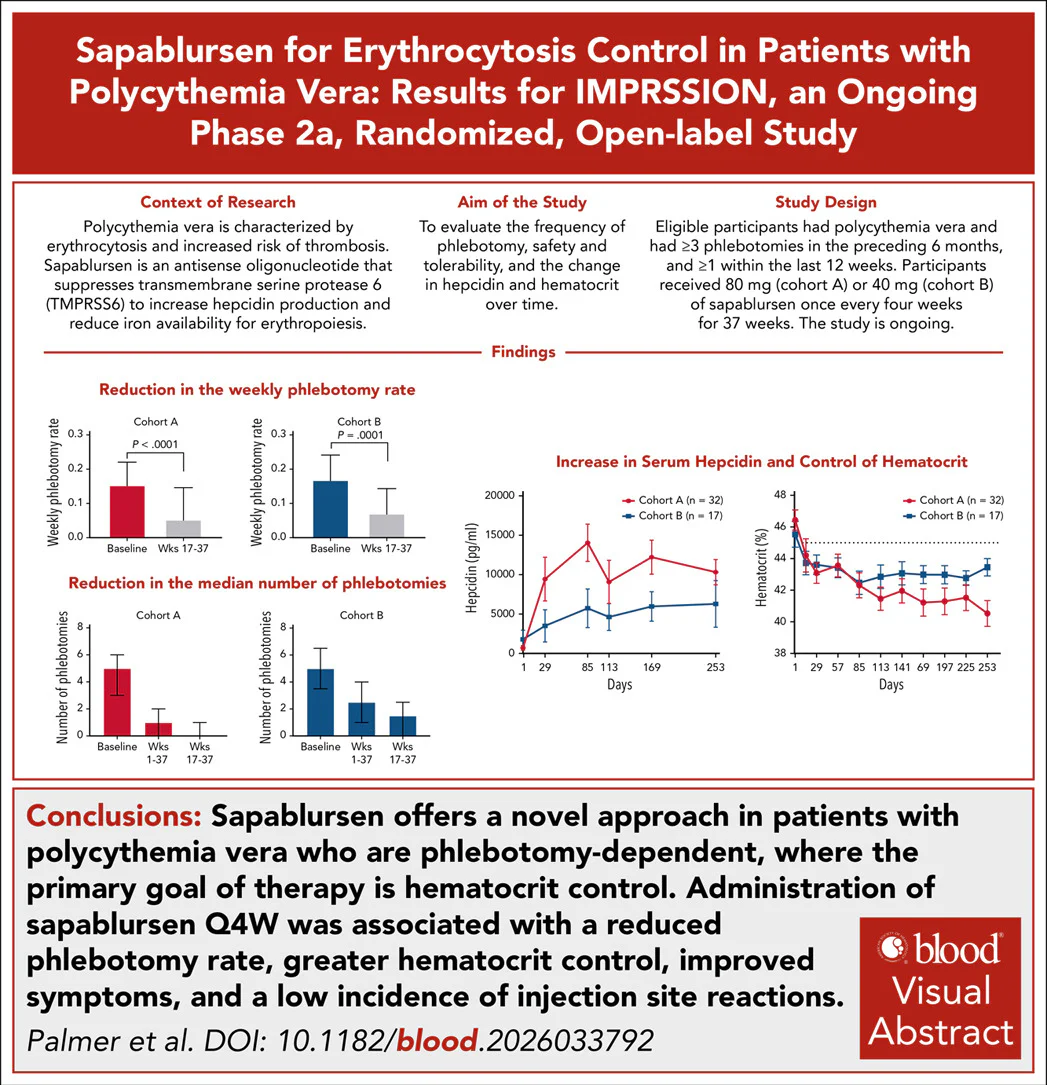
IMPRSSION is an ongoing, randomized, open-label phase 2a clinical trial evaluating the efficacy and safety of sapablursen in patients with phlebotomy-dependent polycythemia vera. Eligible patients required regular phlebotomies to maintain hematocrit control at baseline.Participants were allocated into two cohorts receiving different sapablursen dosages via subcutaneous injection every four weeks: Cohort A received 120 mg or 80 mg, and Cohort B received 40 mg. The primary efficacy endpoint measured was the reduction in phlebotomy frequency from baseline to an assessment window spanning weeks 17 to 37. Secondary endpoints included changes in symptom burden, assessed by the myeloproliferative neoplasm-symptom assessment form (MPN-SAF), and safety outcomes.
Key Findings
The trial enrolled 49 patients who received at least one dose of sapablursen and were included in the efficacy analysis set: 32 in Cohort A and 17 in Cohort B. Baseline characteristics showed mean weekly phlebotomy rates of 0.15 ± 0.07 in Cohort A and 0.17 ± 0.07 in Cohort B.Treatment with sapablursen resulted in a marked reduction in weekly phlebotomy frequency from baseline to weeks 17-37, with a mean decrease of -0.10 (95% CI: -0.13 to -0.07; P < .0001) in Cohort A and -0.10 (95% CI: -0.14 to -0.06; P = .0001) in Cohort B. Functionally, median phlebotomies dropped from 5.0 over 26 weeks at baseline to 0 in Cohort A and 1.5 in Cohort B during the 20-week efficacy evaluation period.
Symptom improvement was reflected in the MPN-SAF total symptom score with a significant mean reduction of -6.21 points (95% CI: -10.56 to -1.85; P = .0052) in Cohort A, whereas Cohort B showed a non-significant -2.71 point change (95% CI: -8.33 to 2.91; P = .34).
Safety profiles were favorable, with most adverse events graded as mild or moderate. Anemia and fatigue were the most commonly reported side effects. There were no unexpected safety signals, and overall sapablursen was well tolerated during the study period.
Expert Commentary
The IMPRSSION trial provides novel proof-of-concept evidence that pharmacologically increasing hepcidin through TMPRSS6 inhibition can reduce erythrocytosis and phlebotomy requirements in PV. This mechanism offers a complementary approach to existing cytoreductive agents and phlebotomy, addressing an important clinical gap for patients who require frequent blood removal.The observed symptom improvement in the higher-dose cohort further underscores the potential for sapablursen to enhance quality of life by alleviating iron deficiency-related fatigue and associated symptoms. However, the open-label design and relatively small sample size limit definitive conclusions on efficacy and long-term safety. Larger, placebo-controlled studies with longer follow-up are warranted to confirm these findings and explore impacts on thrombotic risk and disease progression.
From a mechanistic standpoint, targeting TMPRSS6 to elevate hepcidin is a biologically rational strategy given the central role of iron in erythropoiesis. This approach may also avoid some toxicities linked with traditional cytoreductive therapies. It will be important to monitor potential anemia exacerbation, as increased hepcidin can reduce iron availability systemically.
Incorporation of patient-reported outcomes and further biomarker studies will help to elucidate which patients may benefit most from sapablursen therapy.
Conclusion
Sapablursen demonstrates promising efficacy by significantly reducing the need for phlebotomies and improving symptom burden in patients with phlebotomy-dependent polycythemia vera. Its novel mechanism of modulating iron metabolism via TMPRSS6 inhibition and hepcidin upregulation represents an innovative therapeutic strategy in managing erythrocytosis. Favorable safety and tolerability profiles support further clinical development. Ongoing investigation through larger randomized controlled trials is needed to establish long-term benefits and define its role in PV treatment algorithms.Funding and Trial Registration
This study was supported by the IMPRSSION investigators and collaborators. The trial was registered at ClinicalTrials.gov under identifier NCT05143957.References
Palmer JM, How J, Bose P, et al. Sapablursen for erythrocytosis control in patients with polycythemia vera. Blood. 2026 Nov 12;148(20):2477-2488. PMID: 42611791. https://pubmed.ncbi.nlm.nih.gov/42611791/ Additional literature on hepcidin regulation, TMPRSS6 function, and current PV management guidelines can provide further context on this emerging therapeutic approach.Specialty calculators
For clinical reference; use professional judgment.