Highlight
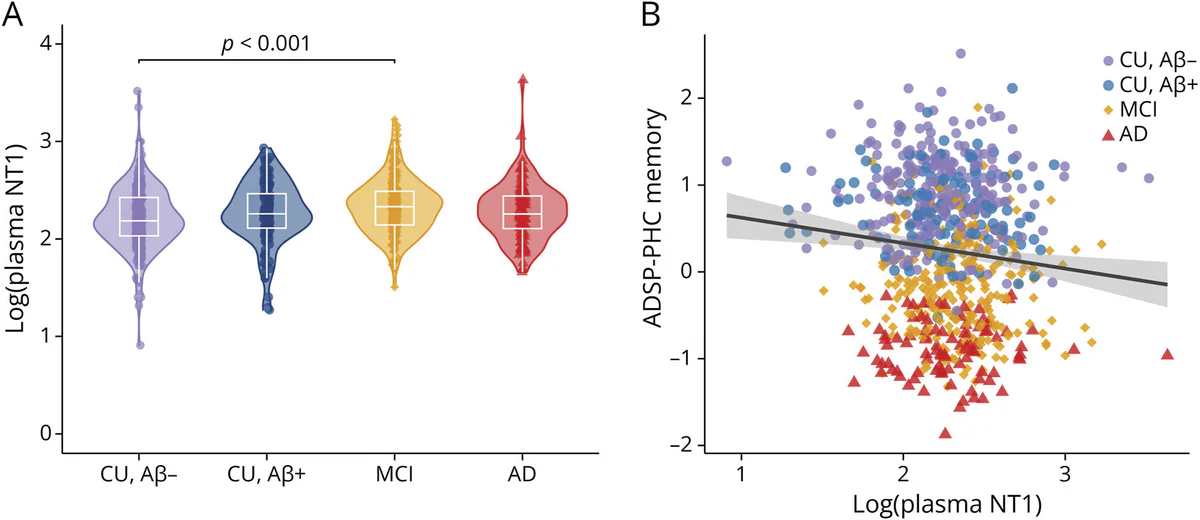
1. Elevated plasma N-terminal tau (NT1) levels are significantly associated with mild cognitive impairment and Alzheimer’s disease.
2. NT1 levels correlate cross-sectionally and longitudinally with cognitive decline, especially memory, executive function, and language domains, moderated by amyloid-beta (Aβ) pathology.
3. Higher NT1 concentrations predict hippocampal atrophy over time, with this neurodegeneration mediating the relationship between NT1 and memory decline.
4. NT1 shows strong associations with established plasma markers of neurodegeneration such as phosphorylated tau isoforms and neurofilament light chain, indicating its potential as a noninvasive biomarker in Alzheimer’s disease (AD).
Study Background
Alzheimer’s disease remains a leading cause of dementia worldwide, characterized pathologically by extracellular amyloid-beta plaques and intracellular neurofibrillary tangles composed predominantly of hyperphosphorylated tau protein. Early and precise detection of pathological changes is essential for timely intervention and monitoring disease progression. Traditionally, cerebrospinal fluid (CSF) biomarkers and neuroimaging modalities such as positron emission tomography (PET) and magnetic resonance imaging (MRI) have been used to detect amyloid and tau accumulation, as well as neurodegeneration. However, these methods are costly, invasive, or not easily accessible.
Blood-based biomarkers offer an attractive alternative, being less invasive and more scalable for broad clinical and research use. The N-terminal tau fragment (NT1), a recently identified plasma biomarker, represents a promising candidate for detecting tau pathology and predicting cognitive decline in AD. This study investigates the clinical and biomarker associations of plasma NT1 levels in the well-characterized Alzheimer’s Disease Neuroimaging Initiative (ADNI) cohort.
Study Design
This observational study included 755 participants from the ADNI cohort, with an average age of 72.9 years and balanced sex distribution (50% female). Participants were systematically assessed with plasma NT1 measurements using the Quanterix Simoa HD-X platform, alongside amyloid-beta (Aβ)-PET imaging, MRI measures of hippocampal volume, and clinical dementia ratings. Additional plasma assays using NULISA for phosphorylated tau isoforms, and tau PET imaging, were performed in subsets of participants.
Cross-sectional and longitudinal relationships between plasma NT1 levels and cognitive performance across multiple domains (memory, executive function, language) were evaluated using linear regression and linear mixed-effects models, adjusting for demographic and clinical covariates. Multivariable Cox regression examined the risk of progression to mild cognitive impairment (MCI) or AD based on baseline NT1 levels. Mediation analysis assessed whether hippocampal atrophy mediated the association between NT1 and memory decline, while Spearman correlations explored associations between NT1 and other fluid and imaging biomarkers.
Key Findings
Plasma NT1 concentrations were significantly higher in individuals with MCI or AD compared to cognitively normal controls (adjusted beta = 0.09, p = 1.98 × 10⁻⁴). Cross-sectional analysis revealed that elevated NT1 was associated with poorer memory performance (beta = -0.25, p = 0.005). Moreover, amyloid-beta pathology significantly moderated NT1’s association with cognitive decline across several domains: memory (beta = -0.17, p = 0.022), executive function (beta = -0.24, p = 0.004), and language (beta = -0.21, p = 0.006).
NT1 levels inversely correlated with hippocampal volume at baseline (beta = -264.49 mm3, p = 0.036) and predicted accelerated hippocampal atrophy longitudinally (beta = -42.00 mm3 per year, p = 0.013). Mediation analysis demonstrated that hippocampal atrophy accounted for approximately 70% of the effect of baseline NT1 on memory decline (indirect effect beta = -0.082, p = 0.003), underscoring neurodegeneration as a mechanistic link.
Plasma NT1 showed robust positive correlations with other plasma biomarkers of AD pathology, including NULISA-based brain-derived phosphorylated tau isoforms (pTau181, pTau217, pTau231; all p < 5.01 × 10⁻⁶), Simoa-based pTau181 (p < 4.51 × 10⁻¹⁵), and neurofilament light chain (NfL) (p < 5.34 × 10⁻⁷), highlighting its convergent validity with established neurodegeneration indicators.
Expert Commentary
The current findings importantly support plasma NT1 as a sensitive biomarker reflecting amyloid-dependent tau pathology and subsequent neurodegeneration in Alzheimer’s disease. The mediation of cognitive decline by hippocampal atrophy aligns with the known pathological cascade where tau pathology promotes neurodegeneration leading to memory impairment. This biomarker’s strong association with multiple plasma tau isoforms and NfL further substantiates its potential as a noninvasive tool for early diagnosis and disease tracking.
Nonetheless, as an observational study within ADNI, which is a well-selected research cohort, limitations include generalizability to more diverse populations and the need for replication in independent cohorts. Longitudinal follow-up to determine NT1’s predictive accuracy for clinical progression and responsiveness to therapeutic interventions remains essential for translating this biomarker into clinical practice.
Conclusion
Plasma N-terminal tau (NT1) demonstrates significant associations with cognitive impairment, amyloid pathology, hippocampal neurodegeneration, and other plasma biomarkers in Alzheimer’s disease. Its minimally invasive nature and robust biomarker profile suggest NT1 has promising clinical utility for identifying individuals at risk for AD and monitoring disease progression, potentially informing prognosis and future therapeutic strategies.
Funding and ClinicalTrials.gov
This study was conducted within the Alzheimer’s Disease Neuroimaging Initiative (ADNI), supported by multiple NIH grants and foundations. Details can be found at ClinicalTrials.gov identifier: NCT00106899.
References
1. Rao Y, Liu L, Ostaszewski BL, et al. Association Between Plasma N-Terminal Tau, Cognitive Decline, and Neurodegeneration in the ADNI Cohort. Neurology. 2026;107(10):e218564. doi:10.1212/WNL.0000000000000056
2. Jack CR Jr, Bennett DA, Blennow K, et al. NIA-AA Research Framework: Toward a biological definition of Alzheimer’s disease. Alzheimers Dement. 2018;14(4):535-562.
3. Ashton NJ, Janelidze S, Al Khoury N, et al. Plasma pTau231: a new biomarker for incipient Alzheimer’s disease pathology. Acta Neuropathol. 2021;141(5):709-724.
Specialty calculators
For clinical reference; use professional judgment.