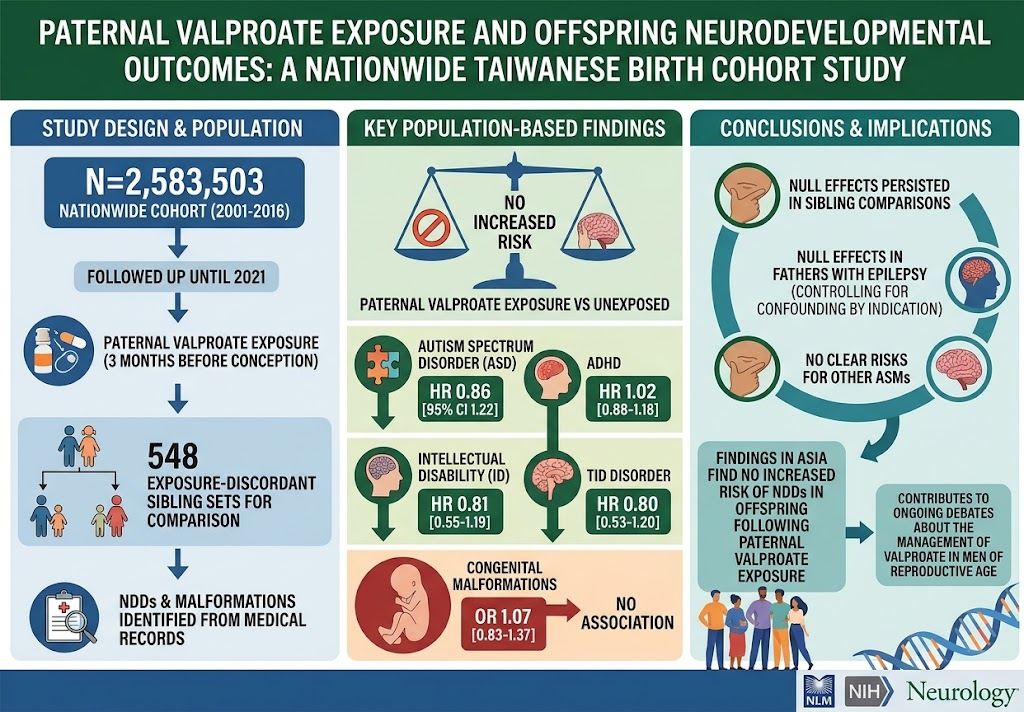
Large, population-based data indicate no increased risk of neurodevelopmental disorders or congenital malformations in offspring following paternal valproate exposure during spermatogenesis.
Prior studies have established maternal valproate use is associated with significant teratogenic risk, notably congenital malformations and neurodevelopmental impairment, highlighting a gender-specific exposure risk.
Sibling-comparison analyses help control for genetic and environmental confounders, strengthening the validity of findings that paternal valproate exposure lacks detectable offspring risk.
Comprehensive care for reproductive-age men with epilepsy should consider these findings, although continued vigilance and additional research remain warranted.