Highlight
This secondary analysis of the SOUL randomized clinical trial highlights the benefits of oral semaglutide in reducing the total burden of major cardiovascular events in high-risk type 2 diabetes patients. Key points include:
1. Oral semaglutide reduces first and subsequent 3-point major adverse cardiovascular events (3-P MACE) compared to placebo.
2. The addition of oral semaglutide lowers combined cardiovascular events plus non-cardiovascular deaths.
3. The trial confirms the sustained cardiovascular benefit over a median follow-up of approximately 4 years.
4. Adverse events leading to treatment discontinuation were higher but manageable in the semaglutide group.
Study Background
Cardiovascular disease remains the leading cause of morbidity and mortality among people with type 2 diabetes, particularly those with established atherosclerotic cardiovascular disease (ASCVD) or chronic kidney disease (CKD). Despite advances in standard care, residual risk of recurrent major adverse cardiovascular events persists. Glucagon-like peptide-1 receptor agonists (GLP-1 RAs), such as semaglutide, have shown cardiovascular benefits, but most data focus on first events only. Understanding the effects on both first and subsequent cardiovascular events is essential to fully quantify clinical benefits and inform therapeutic strategies for high-risk populations.
Study Design
This investigation is a prespecified secondary analysis of the SOUL trial, a large, double-blind, placebo-controlled, event-driven phase 3b randomized clinical trial. Conducted internationally at 444 centers across 33 countries, 9650 participants with type 2 diabetes and established ASCVD and/or CKD were randomized 1:1 to receive once-daily oral semaglutide (up to 14 mg) or matching placebo, alongside standard of care therapies. The median follow-up was 49.5 months. The primary aim of this secondary analysis was to evaluate the effect of oral semaglutide on total (first and subsequent) 3-P MACE — defined as nonfatal myocardial infarction, nonfatal stroke, and cardiovascular death — and to assess the broader impact on 3-P MACE plus non-cardiovascular death.
Key Findings
The analysis included 9650 participants (median age 66 years, 71.1% male) evenly distributed between treatment groups.
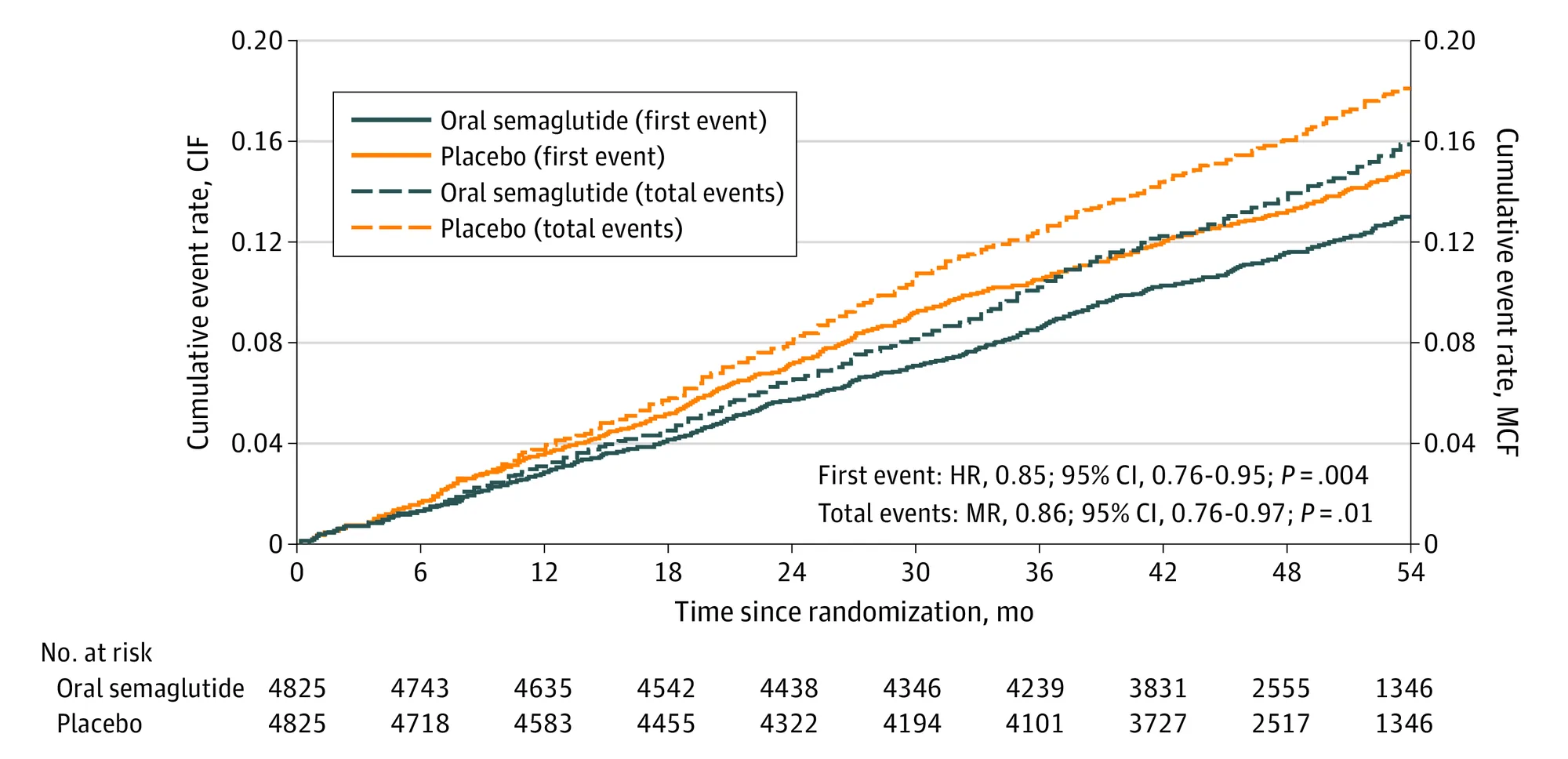
Among patients treated with oral semaglutide, a total of 683 3-P MACE events were documented, consisting of 579 first events and 104 subsequent events. In contrast, the placebo group experienced 791 total events, with 668 first and 123 subsequent events.
The results showed a statistically significant reduction in the total 3-P MACE with oral semaglutide compared to placebo, with a mean event ratio of 0.86 (95% CI, 0.76–0.97; P = .01). This indicates a 14% relative reduction in the total burden of major cardiovascular events.
When expanding the endpoint to include non-cardiovascular deaths, the semaglutide group had 910 events compared to 1048 events in the placebo group. The mean event ratio here was 0.87 (95% CI, 0.79–0.95; P = .004), further supporting a beneficial effect on overall morbidity and mortality.
In terms of safety, adverse events leading to treatment discontinuation occurred more frequently in the semaglutide group (15.5%) compared to placebo (11.6%), consistent with known tolerability profiles of GLP-1 receptor agonists.
Expert Commentary
This secondary analysis provides important evidence reinforcing oral semaglutide’s cardiovascular protective effects in a contemporary population with high cardiovascular risk due to type 2 diabetes and coexistent vascular or renal disease. By capturing both initial and recurrent events, the analysis offers a more comprehensive assessment of clinical benefit that better reflects real-world disease burden and patient experience.
The 14% reduction in total 3-P MACE events is clinically meaningful, considering that recurrent events contribute substantially to morbidity, healthcare utilization, and mortality. The use of oral semaglutide may thus translate into improved long-term cardiovascular outcomes and reduced healthcare burden.
From a mechanistic perspective, GLP-1 receptor agonists exert favorable effects on glycemic control, blood pressure, weight, and possibly direct vascular protection through anti-inflammatory and anti-atherogenic pathways.
Notably, the increased rates of treatment discontinuation due to adverse events, primarily gastrointestinal, call for continued attention to patient selection, dose titration, and management of side effects to optimize adherence.
Limitations include the trial’s exclusion of patients without established atherosclerotic or renal disease, which may limit generalizability to broader diabetes populations. Further studies might explore longer-term impacts and real-world effectiveness across diverse patient groups.
Conclusion
The SOUL trial’s secondary analysis robustly demonstrates that oral semaglutide reduces both first and subsequent major cardiovascular events among patients with type 2 diabetes and high cardiovascular risk. These findings underscore oral semaglutide’s role in comprehensive cardiovascular risk mitigation, translating into a meaningful reduction in the total burden of cardiovascular morbidity and mortality. Incorporation of oral semaglutide into therapeutic regimens may improve clinical outcomes and quality of life for this high-risk population, pending individualized risk-benefit assessment.
Funding and Clinical Trial Registration
The trial was funded by Novo Nordisk and registered on ClinicalTrials.gov under identifier NCT03914326.
References
Marx N, Deanfield JE, Mulvagh SL, et al; SOUL Study Group. First and Subsequent Major Cardiovascular Events With Oral Semaglutide in High-Risk Type 2 Diabetes: A Secondary Analysis of the SOUL Randomized Clinical Trial. JAMA Cardiol. 2026 Nov 11. PMID: 43013292.
Marso SP, Bain SC, Consoli A, et al. Semaglutide and Cardiovascular Outcomes in Patients with Type 2 Diabetes. N Engl J Med. 2016;375(19):1834-1844.
Kowalski A, Stylianou K, Nonaka N, et al. Cardiovascular outcomes of GLP-1 receptor agonists in type 2 diabetes: Systematic review and meta-analysis of randomized clinical trials. Diabetes Obes Metab. 2023;25(2):456-464.
Specialty calculators
For clinical reference; use professional judgment.