Morgagnian cataracts are associated with profound visual loss and frequent lens-induced intraocular pressure elevation.
High rates of intraoperative complications, including posterior capsule rupture and zonular weakness, are common in these advanced cataracts.
Despite complex surgical challenges, half of operated eyes achieve best-corrected visual acuity (BCVA) of 20/40 or better postoperatively.
Cataract extraction reduces intraocular pressure (IOP), although many eyes remain reliant on ongoing IOP-lowering medications.
Study Background
Morgagnian cataract represents a rare form of hypermature cataract characterized by liquefaction of the cortical matter and sinking of the dense nucleus within the capsular bag. This advanced stage of cataract maturation results in significant visual decline and predisposes the eye to complications such as secondary lens-induced glaucoma due to inflammatory spillage of lens proteins and phacolytic obstruction of the trabecular meshwork. Moreover, zonular weakness and capsular fragility complicate surgical management, posing risks of vitreous loss and intraocular lens (IOL) displacement. Despite its clinical significance, few large-scale studies have characterized the clinical features and surgical outcomes of Morgagnian cataracts in modern settings.
Study Design
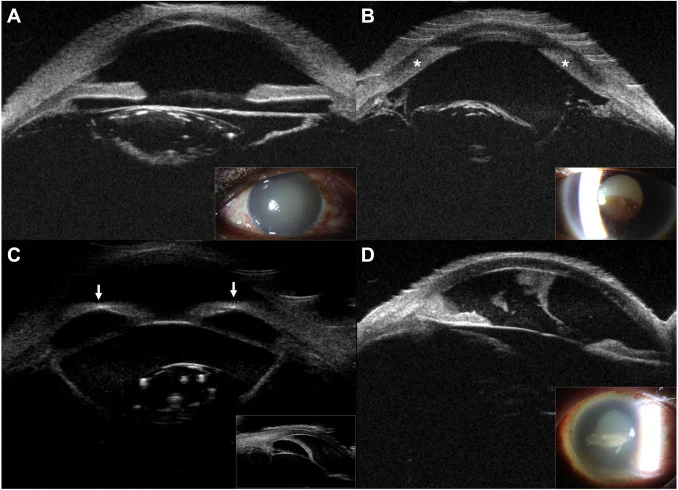
This retrospective cohort study evaluated 50 eyes from 50 adult patients diagnosed with Morgagnian cataracts at a tertiary academic referral center in the United States between October 2015 and August 2026. Medical records were reviewed to collect data on demographics, ocular findings including imaging, surgical approaches, intraoperative and postoperative complications, IOL fixation methods, best-corrected visual acuity (BCVA), and intraocular pressure (IOP). Surgical techniques included phacoemulsification, manual small-incision cataract surgery, and pars plana lensectomy with vitrectomy. Main outcomes focused on surgical management strategies, complication rates, postoperative BCVA, and IOP control.
Key Findings
The majority of eyes (86%) presented with severe vision loss classified as hand motions or worse, indicating advanced disease burden. Mean presenting IOP was elevated at 25.8 ± 16.2 mmHg, with nearly half of eyes demonstrating lens-induced IOP elevation and 38% developing lens-induced glaucoma. Zonular weakness was identified in 42% of eyes undergoing imaging evaluation.
Surgery was performed in 80% of eyes. Initial surgical approaches favored phacoemulsification (75%), with smaller proportions undergoing manual small-incision cataract surgery or pars plana lensectomy with vitrectomy. Intraoperative complications were common, occurring in 35% of surgeries, with posterior capsule rupture accounting for 20%. Notably, only 40% of eyes received an in-the-bag IOL implantation, reflecting challenges in maintaining capsular integrity.
Visual outcomes were significantly improved postoperatively, with mean BCVA enhancing from 2.39 ± 0.58 logMAR preoperatively (approximately counting fingers to hand motions vision) to 0.68 ± 0.81 logMAR (approximately 20/100), and 50% of eyes achieving 20/40 or better. Mean IOP decreased significantly from baseline to one month post-surgery, although half of the operated eyes continued requiring IOP-lowering medications, underscoring persistent glaucomatous risk.
Expert Commentary
Morgagnian cataracts pose unique surgical challenges due to liquefied cortex, dense free-floating nucleus, and zonular insufficiency. The high complication rates, especially posterior capsule rupture, emphasize the importance of thorough preoperative assessment and surgical planning. Techniques such as capsular tension rings or alternative IOL fixation methods may be necessary to address zonular instability. Despite these hurdles, the favorable visual outcomes in half of patients highlight that timely, individualized surgery can meaningfully restore vision.
The persistence of IOP elevation in many eyes post-extraction may reflect irreversible trabecular damage or coexisting glaucomatous optic neuropathy, necessitating continued medical therapy and careful postoperative monitoring. The study’s retrospective design, relatively small sample size, and single tertiary center setting may limit broader generalizability, but it provides critical real-world insights into this infrequently studied cataract subtype.
Conclusion
Morgagnian cataracts commonly present with profound visual impairment, secondary intraocular hypertension, and compromised zonular integrity, leading to increased surgical complexity and intraoperative risk. Nevertheless, well-executed cataract extraction improves vision in a substantial proportion of patients and reduces IOP, albeit often requiring ongoing medical management. Ophthalmologists should anticipate surgical challenges inherent to these eyes, counsel patients accordingly, and tailor surgical strategies based on detailed preoperative evaluation. Further prospective studies with larger cohorts and standardized protocols could better define optimal management and long-term outcomes for this cataract variant.
Funding and Trial Registration
No funding or clinical trial registration information was provided in the original report.
References
1. Kang S, Wallace RT, Gedde SJ, et al. Morgagnian Cataract: Clinical Features, Surgical Management, and Outcomes. Am J Ophthalmol. 2026 Oct 23. doi:10.1016/j.ajo.2026.10.023. PMID: 42918530.
2. Sahu DK, Tripathy K. Hyper mature Morgagnian cataract: a case report and review of literature. J Clin Exp Ophthalmol. 2013;4:309.
3. Jonas JB, Aung T, Bourne RR, Bron AM, Ritch R, Panda-Jonas S. Glaucoma. Lancet. 2017 May 20;389(10086): 2193-2203.
4. Wagoner MD, Cox TA, Ariyasu RG, Jacobs DS, Klose GK. Management of the subluxed cataract. Ophthalmol Clin North Am. 2006 Dec;19(4): 229-42.