Background
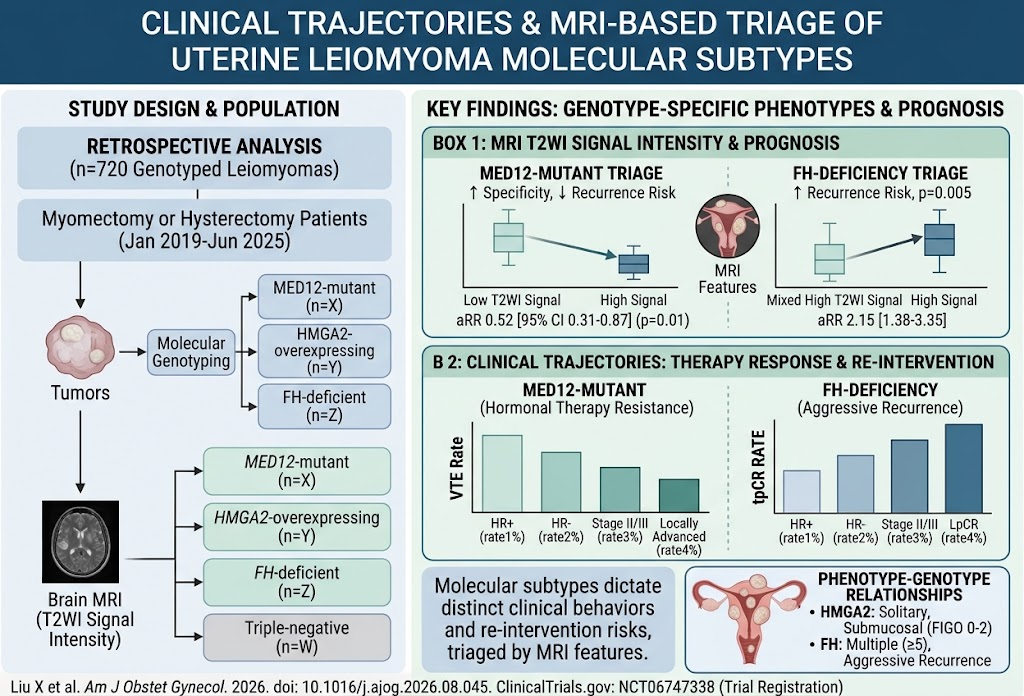
Uterine leiomyomas, commonly known as fibroids, are benign smooth muscle tumors of the uterus affecting a large proportion of premenopausal women worldwide. These tumors contribute significantly to gynecologic morbidity including abnormal bleeding, pelvic pain, and infertility, representing a major clinical and economic burden. Despite their prevalence, the molecular heterogeneity underlying leiomyomas has compounding yet underutilized clinical implications. Recent advances have identified distinct molecular subtypes characterized primarily by mutations or aberrant gene expression in MED12, HMGA2, fumarate hydratase (FH), or triple-negative genotypes. However, integration of these molecular drivers into daily surgical practice, prognostication, and medical management remains limited. Furthermore, noninvasive imaging features such as T2-weighted magnetic resonance imaging (T2WI) signals have been explored for phenotypic correlations but lack robust validation in clinical triage and outcome prediction. This study by Liu et al. seeks to bridge these gaps by combining molecular genotyping, pharmacogenomic response assessment, and imaging biomarkers to better stratify uterine leiomyoma management pathways.