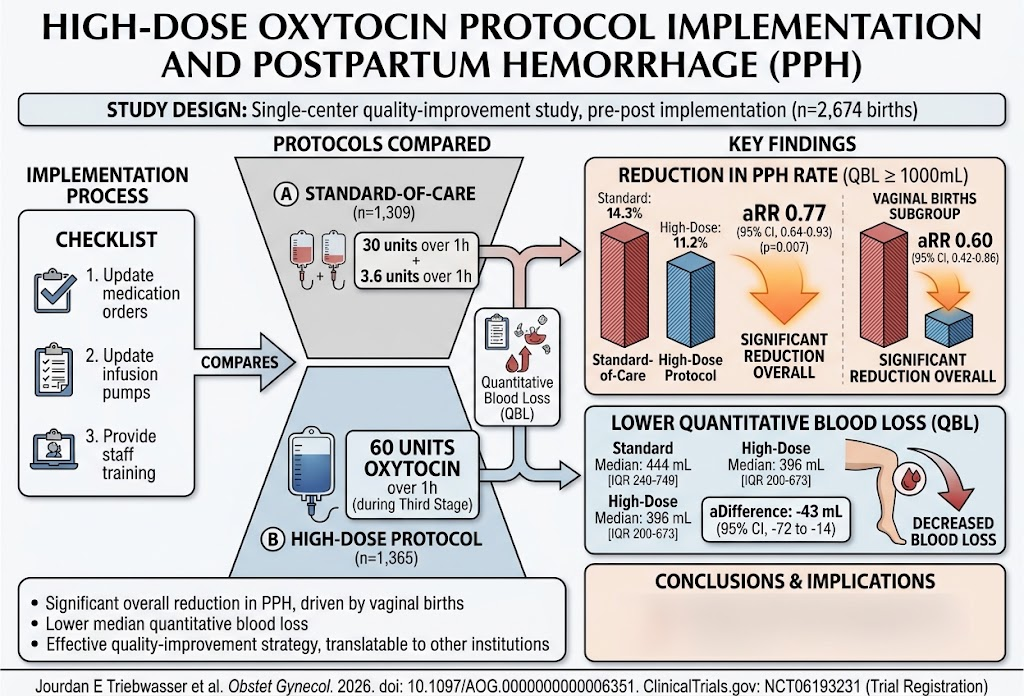
Highlight
- Implementation of a high-dose oxytocin protocol (60 units/hour) during third-stage labor was associated with a significant reduction in postpartum hemorrhage (PPH).
- The reduction in PPH was most notable in vaginal deliveries compared to cesarean births.
- The study utilized quantitative blood loss measurement, improving the accuracy of bleeding assessment.
- The protocol change involved comprehensive updates including medication orders, infusion pumps, and staff training.
Study Background
Postpartum hemorrhage remains a leading cause of maternal morbidity and mortality worldwide. Oxytocin administration during the third stage of labor is a mainstay intervention to promote uterine contraction and reduce bleeding. However, optimal dosing strategies vary widely, and evidence comparing high-dose regimens to standard protocols is limited. This study addresses the unmet clinical need to optimize oxytocin administration protocols for effective PPH prevention while maintaining safety.
Study Design
This single-center quality-improvement study evaluated the impact of transitioning from a standard oxytocin protocol to a high-dose protocol during the third stage of labor. The study period spanned January 1 to July 6, 2024, dividing deliveries into preimplementation and postimplementation cohorts. The standard protocol consisted of 30 units over 1 hour followed by 3.6 units over 1 hour, whereas the high-dose protocol delivered 60 units over 1 hour.
Patients with recorded quantitative blood loss (QBL) were included, excluding those with placenta accreta spectrum or gestational age under 24 weeks. The primary endpoint was postpartum hemorrhage defined as QBL ≥1000 mL. Secondary endpoints included median quantitative blood loss levels. Adjusted relative risks (aRRs) for PPH were computed using Poisson regression with robust error variance, and quantile regression models assessed median differences in blood loss. Subgroup analyses by mode of delivery were pre-specified.
Key Findings
Among 2,674 births analyzed (1,309 pre- and 1,365 postimplementation), the high-dose oxytocin protocol was associated with a significant reduction in PPH incidence (11.2% vs 14.3%; aRR 0.77; 95% CI, 0.64–0.93), reflecting a 23% relative risk reduction. Median QBL also decreased by 43 mL (from 444 mL to 396 mL; 95% CI, −72 to −14 mL) after protocol change.
Subgroup analysis demonstrated that the reduction in PPH was driven predominantly by patients with vaginal births, where PPH incidence declined from 8.5% to 5.2% (aRR 0.60; 95% CI, 0.42–0.86) with a median blood loss reduction of 33 mL (317 mL vs 266 mL; 95% CI, −65 to −1 mL). Conversely, the decrease in PPH after cesarean birth was smaller and statistically nonsignificant (23.4% vs 21.8%; aRR 0.89; 95% CI, 0.71–1.11).
The implementation required meticulous updates to medication orders and infusion devices, alongside staff training to ensure adherence and safety. Notably, the study used QBL rather than estimated blood loss, enhancing measurement precision and reliability.
Expert Commentary
The observed benefit of a high-dose oxytocin protocol in reducing PPH after vaginal delivery aligns with the drug’s mechanism in promoting sustained and effective uterine contractions post-delivery, thereby controlling uterine bleeding. The lack of significant benefit following cesarean sections could reflect differing uterine contractility dynamics and surgical hemostatic measures inherent in operative delivery.
While the study is a quality-improvement project rather than a randomized controlled trial, it demonstrates pragmatic clinical utility in a real-world setting. The large sample size and quantitative blood loss monitoring strengthen confidence in the findings. However, the single-center design and exclusion of specific high-risk patients may limit generalizability. Further multicenter randomized studies would solidify evidence and explore safety profiles and possible adverse effects.
Conclusion
Transitioning to a high-dose oxytocin protocol during the third stage of labor significantly reduces postpartum hemorrhage rates, especially among vaginal deliveries. This strategy provides a valuable, implementable approach for obstetric units aiming to improve maternal outcomes. Adoption of high-dose oxytocin should be accompanied by staff education and protocol standardization to ensure safe and effective clinical practice. Additional research is warranted to confirm findings and assess applicability across diverse settings.
Funding and Clinicaltrials.gov
The study was conducted as a quality-improvement initiative and did not list external funding sources. Clinical trial registration was not applicable.
References
- Triebwasser JE, Keil E, Bailey JM, Arnolds DE, Feldkamp D, Stout MJ, Campbell EJ. High-Dose Oxytocin Protocol Implementation and Postpartum Hemorrhage. Obstetrics and Gynecology. 2026;148(3):309-313. PMID: 42314181.
- American College of Obstetricians and Gynecologists. Practice Bulletin No. 183: Postpartum Hemorrhage. Obstet Gynecol. 2017;130(4):e168-e186.
- Butwick AJ, et al. Quantitative blood loss measurement in obstetric hemorrhage: how accurate and feasible? Curr Opin Anesthesiol. 2018;31(3):289-295.
- Westhoff G, et al. Oxytocin during the third stage of labor: current practice and recommendations. Am J Obstet Gynecol. 2013;209(5):417-423.