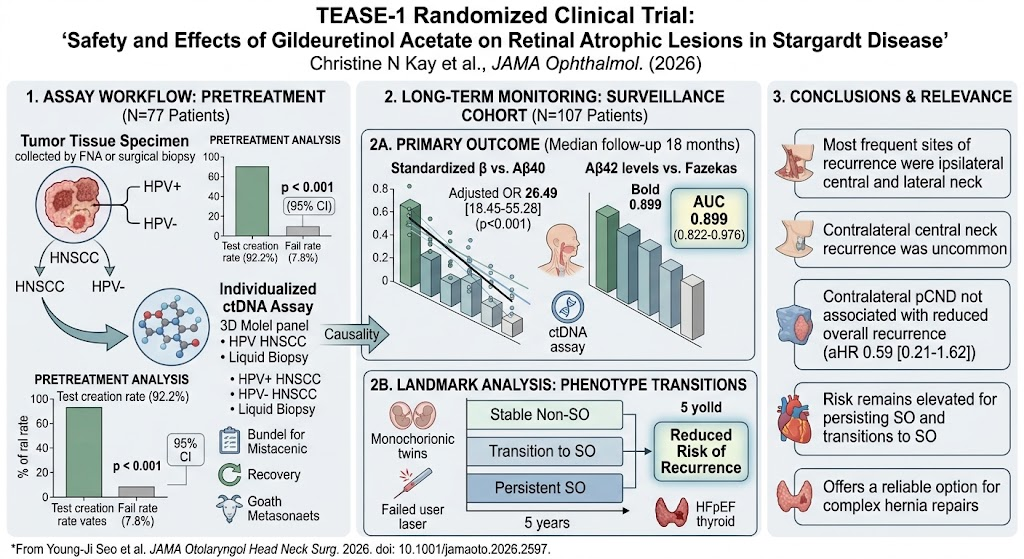
Gildeuretinol acetate administration demonstrated a statistically significant reduction in the growth rate of retinal atrophic lesions in Stargardt disease (STGD), with a 21.6% relative reduction over 24 months compared to untreated cases.
The TEASE-1 trial confirmed an acceptable safety profile for oral gildeuretinol acetate, with adverse events primarily mild or moderate and no treatment-related serious adverse events.
Integrating data from randomized and natural history cohorts offers a robust understanding of STGD lesion progression and therapeutic impact.
Further research is needed to clarify the clinical significance of lesion growth reduction and to explore long-term functional outcomes.