Highlights
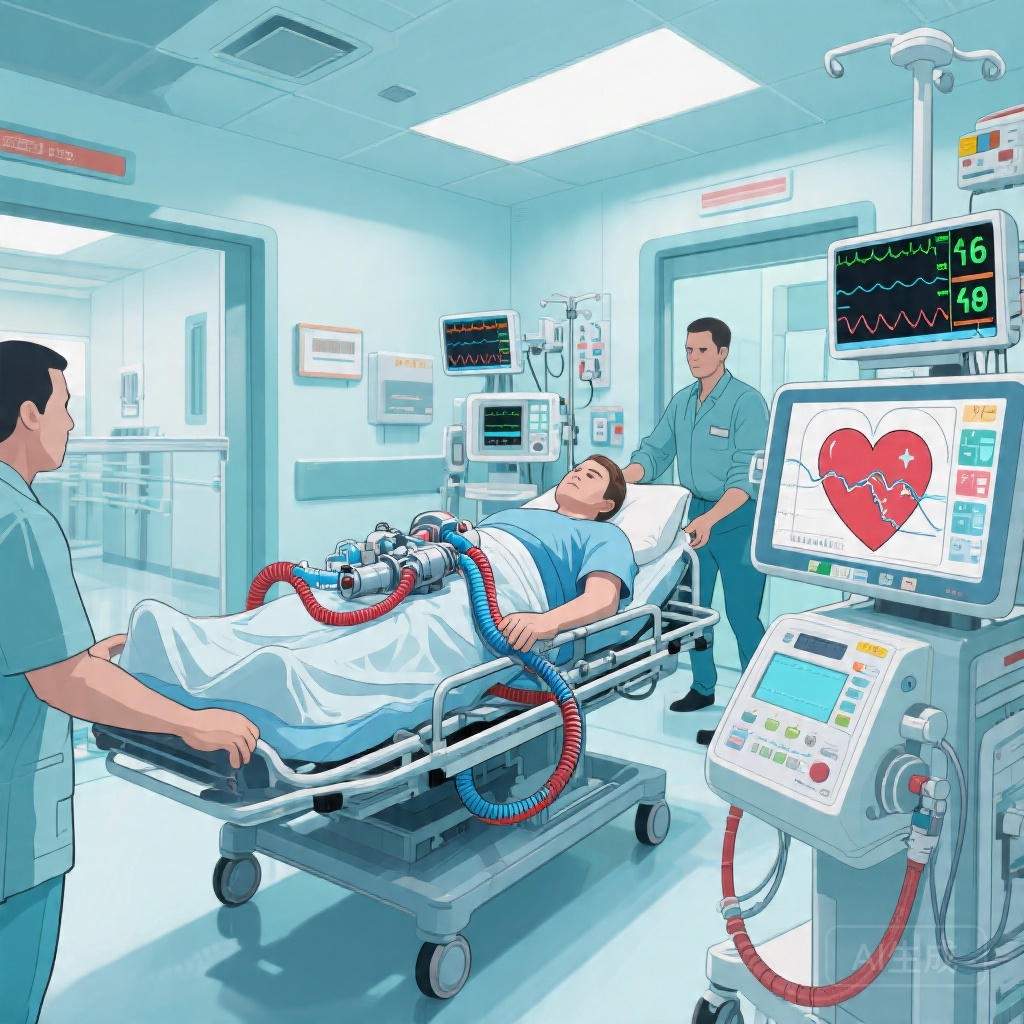
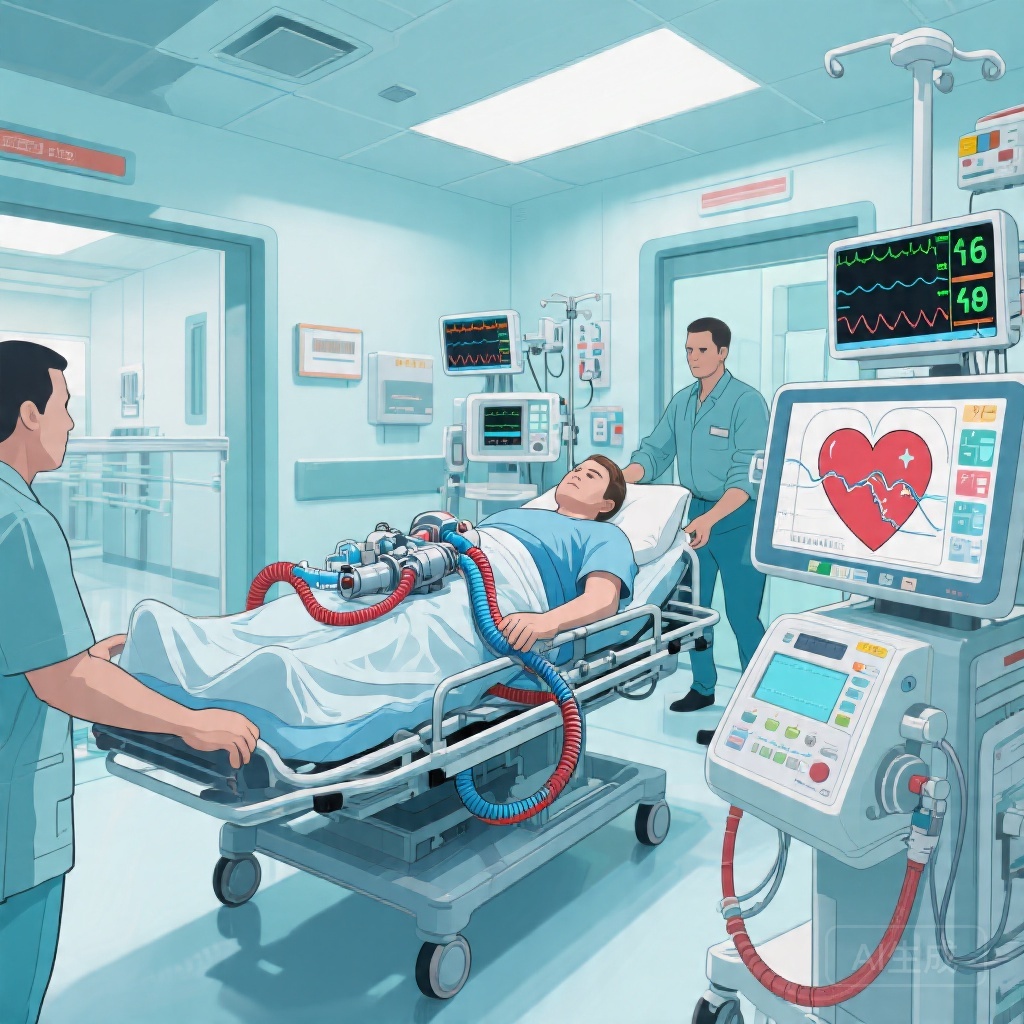
This single-center observational analysis of 398 patients reveals critical insights into temporary mechanical circulatory support (tMCS) placement patterns in cardiogenic shock care. Key findings include that patients initially implanted at regional referral centers experienced device-related adverse events at more than double the rate of hub center patients, with significantly higher rates of bleeding, hemolysis, and vascular injury. While unadjusted mortality was markedly elevated in referred patients, adjustment for cardiogenic shock severity eliminated statistical significance, suggesting that patient acuity rather than implantation site may drive outcomes.
Background: The Landscape of Cardiogenic Shock Management
Cardiogenic shock remains one of the most challenging clinical scenarios in cardiovascular medicine, characterized by inadequate cardiac output leading to end-organ hypoperfusion despite adequate filling pressures. In recent years, temporary mechanical circulatory support devices have emerged as increasingly utilized tools to stabilize patients in cardiogenic shock, providing hemodynamic support while allowing time for recovery or definitive therapy such as durable ventricular assist device implantation or heart transplantation.
The contemporary approach to cardiogenic shock has evolved toward centralized care models, with specialized hub centers developing expertise in managing the most complex cases. Regional referral centers often initiate temporary mechanical support in critically ill patients before facilitating transfer to these specialized centers for ongoing management. However, the implications of this practice pattern on device-related complications and patient outcomes have remained largely unexplored.
Device-related adverse events represent a significant concern in the tMCS population. These complications range from bleeding and hemolysis to vascular injury and limb ischemia, potentially impacting patient survival and resource utilization. Understanding whether the site of initial device implantation influences these outcomes has critical implications for healthcare system design and patient triage decisions.
Study Design and Patient Population
This observational analysis, conducted at a single large-volume cardiogenic shock center, examined all patients receiving temporary mechanical circulatory support for cardiogenic shock between August 2021 and August 2024. Patients were stratified based on the location of initial tMCS device placement, with comparison made between those receiving devices at the study institution (hub center) versus those transferred from regional referral centers with devices already in place.
The study evaluated multiple endpoints including adjudicated device-related adverse events, mortality, and a composite of unfavorable outcomes defined as death before discharge, heart transplantation, or durable left ventricular assist device placement. DRAE rates were calculated as events per patient-week of tMCS support to account for varying duration of device utilization.
Baseline characteristics were carefully documented, with particular attention to markers of cardiogenic shock severity and the occurrence of cardiac arrest prior to or during initial tMCS placement. Multivariable logistic regression models were employed to adjust for baseline differences, with sequential models examining the impact of cardiogenic shock severity and cardiac arrest on observed associations.
Key Findings: Device-Related Complications and Clinical Outcomes
Of the 398 patients included in the analysis, 77% received initial tMCS placement at the hub center while 23% were transferred from regional referral centers with devices already implanted. This distribution reflects the significant volume of referred patients managed at specialized cardiogenic shock centers.
Patients transferred from regional referral centers presented with more advanced cardiogenic shock and were significantly more likely to have experienced cardiac arrest prior to device placement. This baseline difference in illness severity is essential context for interpreting subsequent outcome comparisons.
Device-Related Adverse Events:
The prevalence of any device-related adverse event was substantially higher among regional referral center-implanted patients compared to hub center-implanted patients (64% versus 33%, P<0.05). Specific complications demonstrated consistent patterns:
The bleeding complications occurred in 29% of referral center-implanted patients versus 12% of hub center-implanted patients. Hemolysis was documented in 30% of referred patients compared to 18% of those receiving devices at the hub center. Vascular injury, including arterial dissection, perforation, or pseudoaneurysm formation, was observed in 22% of referral center-implanted patients versus only 5% of hub center-implanted patients. All differences achieved statistical significance.
When examining event rates normalized to time on support, the overall DRAE rate was 0.33 events per patient-week. Regional referral center-implanted patients demonstrated a numerically higher rate at 0.65 events per patient-week compared to 0.24 events per patient-week in hub center-implanted patients.
Mortality and Unfavorable Outcomes:
Unadjusted in-hospital mortality demonstrated a marked difference between groups. Patients receiving initial tMCS at regional referral centers had an odds ratio of 2.52 (95% CI, 1.52-4.18; P<0.001) for in-hospital death compared to hub center-implanted patients. Similarly, the composite of unfavorable outcomes showed an odds ratio of 2.55 (95% CI, 1.52-4.27; P<0.001) for referral center-implanted patients.
However, adjustment for baseline characteristics attenuated these associations substantially. After controlling for differences in patient demographics, comorbidities, and hemodynamic parameters, the odds ratio for in-hospital mortality decreased but remained statistically significant. Critically, after further adjustment for cardiogenic shock severity and cardiac arrest occurrence, neither in-hospital mortality (odds ratio 1.72; 95% CI, 0.95-3.12; P=0.07) nor unfavorable outcomes (odds ratio 1.60; 95% CI, 0.87-2.92; P=0.13) achieved statistical significance.
This sequential adjustment analysis suggests that the observed differences in outcomes between implantation sites may be largely mediated by the greater illness severity of patients transferred from regional centers rather than by factors related to the site of care itself.
Expert Commentary: Interpreting the Evidence
The findings from this study highlight several important considerations for cardiogenic shock care delivery. The substantially higher device-related adverse event rates among referral center-implanted patients deserve careful interpretation. While the raw data demonstrate concerning differences in bleeding, hemolysis, and vascular complications, these events occurred in the context of more critically ill patients requiring emergency intervention at referring facilities.
Several factors may contribute to the observed differences in device-related complications. Regional referral centers may have less experience with tMCS device implantation and management given the lower volume of such cases. Additionally, the urgency of implantation in patients with active cardiac arrest or profound shock may lead to less optimal technique or patient selection. Finally, transport-related factors including patient manipulation and potential device manipulation during transfer could contribute to complications.
The survival analysis presents a nuanced picture. The crude mortality difference is striking, with referred patients experiencing more than double the unadjusted risk of in-hospital death. However, the attenuation of this difference after severity adjustment suggests that selection bias plays a major role in apparent outcome differences. Patients stable enough to be transferred from regional centers to hub centers represent a selected population, yet even accounting for available severity markers, residual confounding likely persists.
Limitations of this analysis include its single-center design, which may limit generalizability to other healthcare systems with different referral patterns or hub center capabilities. The observational nature precludes causal inference, and unmeasured confounders may influence results. Additionally, the study examined a relatively contemporary time period, and practice patterns may evolve as experience with tMCS devices accumulates across healthcare settings.
The clinical implications extend to triage decision-making, with the data suggesting that while hub centers may achieve better outcomes, this advantage may relate more to patient selection than to center-specific care quality. Nevertheless, the higher complication rates in referred patients warrant attention to optimization of transfer protocols and potentially earlier transfer before device implantation when feasible.
Conclusion and Future Directions
This observational analysis provides important insights into contemporary temporary mechanical circulatory support practice patterns in cardiogenic shock care. The association between referral center implantation and higher device-related adverse event rates, combined with the attenuation of mortality differences after severity adjustment, suggests a complex interplay between patient factors, care setting, and outcomes.
Key takeaways for clinical practice include recognition that patients transferred from regional referral centers carry a higher burden of complications, potentially reflecting both patient acuity and care setting factors. Hub centers should anticipate elevated complication rates in referred patients and allocate resources accordingly. Transfer protocols may benefit from emphasis on early transfer before tMCS initiation when patient stability permits, while acknowledging that many patients require immediate mechanical support at presenting facilities.
Future research should examine optimal timing of transfer, the impact of hub center volume on outcomes, and strategies to reduce device-related complications across care settings. Multi-center studies would enhance generalizability, and prospective registries could capture detailed information on complication etiology and prevention strategies.
The study adds to growing evidence supporting the concentration of complex cardiogenic shock care in specialized centers while highlighting the need for collaborative relationships between hub centers and referring facilities to optimize patient outcomes across the spectrum of cardiogenic shock severity.
Funding and Study Registration
This observational analysis was conducted at a single cardiogenic shock center. Specific funding sources were not detailed in the available abstract. The study did not require clinical trial registration given its retrospective observational design.
References
Patel ZA, Ospina MK, Mittelstaedt R, et al. Device-Related Adverse Events and Outcomes in Patients With Temporary Mechanical Circulatory Support Placed at Referral Centers Versus Cardiogenic Shock Hub Centers: An Observational Analysis. Circulation. Heart failure. 2026-04-13:e013742. PMID: 41969084.


![持続する線維芽細胞の活性化が心不全の進行を予測:[68Ga]FAPI-46 PET/MRIは虚血性および非虚血性心筋症の異なるパターンを明らかにする](https://news.medxy.ai/wp-content/uploads/2026/04/d43c8ff0-6629-4944-bc15-78efd79810d7-2-600x600.jpg)