Highlight
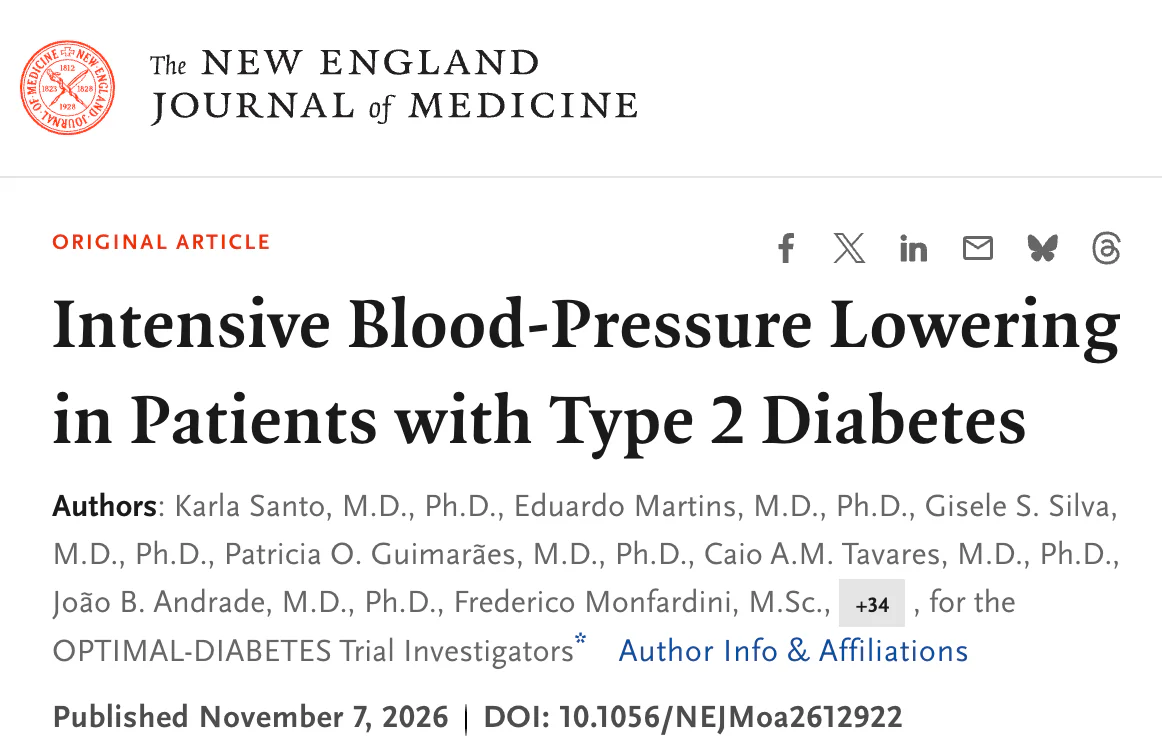
A recent large-scale randomized trial involving patients with type 2 diabetes and elevated cardiovascular risk compared intensive systolic blood pressure (SBP) lowering (<120 mm Hg) with standard therapy (<140 mm Hg). Over 4 years, no statistically significant reduction in major cardiovascular events was observed in the intensive therapy group, and serious adverse event rates were similar between groups.
This study provides critical insights into optimal blood pressure targets in high-risk diabetes populations, challenging the benefit of aggressive lowering beyond current guideline targets.
Study Background
Hypertension is highly prevalent among patients with type 2 diabetes and is a major contributor to the elevated risk of cardiovascular morbidity and mortality seen in this population. Optimal blood pressure management is crucial to reduce complications such as myocardial infarction, stroke, heart failure, and cardiovascular death. However, the ideal systolic blood pressure target in these patients remains debated, with some guidelines recommending intensification to less than 130 mm Hg and others endorsing less stringent targets below 140 mm Hg.
Previous trials, including the ACCORD BP study, suggested potential cardiovascular benefits with intensive blood pressure control but yielded mixed outcomes. Consequently, uncertainty persists regarding the degree to which intensive lowering of systolic blood pressure improves cardiovascular outcomes specifically in patients with type 2 diabetes and high cardiovascular risk.
Study Design
This multicenter, open-label, randomized controlled trial was conducted in Brazil and enrolled 9476 ethnically diverse patients with type 2 diabetes, elevated blood pressure, and high cardiovascular risk. Participants were randomized approximately in half (4745 to intensive therapy, 4731 to standard therapy) to receive blood pressure management aiming either for a systolic target below 120 mm Hg (intensive therapy) or below 140 mm Hg (standard therapy).
Patients were followed for a median duration of 4 years. The primary composite endpoint included death from cardiovascular causes, nonfatal myocardial infarction, nonfatal stroke, or hospitalization for unstable angina or heart failure. Regular blood pressure measurements ensured adherence to intervention targets.
Key Findings
The mean age was 64.7 years with 62% women included, reflecting a broad age and sex distribution. During follow-up—excluding the initial 3 months—the mean systolic blood pressure achieved was 121.8 mm Hg in the intensive group and 135.4 mm Hg in the standard group, demonstrating effective separation of treatment targets.
Regarding primary outcomes, 286 patients (6.0%) in the intensive therapy group and 315 patients (6.7%) in the standard therapy group experienced a major cardiovascular event. This yielded a hazard ratio (HR) of 0.90 (95% confidence interval (CI), 0.77 to 1.06; P = 0.20), indicating no statistically significant difference.
Serious adverse events occurred at similar frequencies between groups—14.9% in the intensive group versus 14.6% in the standard group—mitigating concerns of increased harm with more aggressive treatment.
These data suggest that while intensive lowering to below 120 mm Hg is achievable and safe, it did not confer a significant reduction in major cardiovascular events compared to standard targets below 140 mm Hg among this high-risk diabetic population.
Expert Commentary
This trial adds valuable evidence to the evolving understanding of blood pressure management in type 2 diabetes. While controlling hypertension remains core to mitigating vascular complications, this study did not show clear incremental benefit by targeting SBP below 120 mm Hg. The trial’s strengths include its large sample size, diverse population, and rigorous randomized design.
It aligns with accumulating data suggesting that benefits of intensive blood pressure control may plateau or be marginal beyond moderate targets, highlighting the importance of individualized treatment considerations. Moreover, the comparable rates of serious adverse events reassure clinicians about the safety of both strategies under careful management.
Limitations include the open-label design and relatively short follow-up, which may affect long-term event detection. Also, subgroup analyses or meta-analyses integrating these results with prior trials like ACCORD BP could further elucidate patient groups who might benefit most.
Conclusion
In conclusion, among patients with type 2 diabetes and elevated cardiovascular risk, this large randomized trial demonstrated that targeting systolic blood pressure below 120 mm Hg did not significantly reduce major cardiovascular outcomes compared to a standard target below 140 mm Hg. Both intensive and standard approaches had similar safety profiles.
These findings support current guidelines recommending blood pressure targets below 140 mm Hg in most patients with type 2 diabetes, and they caution against overtreatment. Future investigations should explore personalized approaches accounting for patient characteristics, comorbidities, and risk profiles to optimize blood pressure management strategies.
Funding and Trial Registration
This study was funded by Hospital Israelita Albert Einstein and the Brazilian Ministry of Health. The clinical trial is registered at ClinicalTrials.gov under the identifier NCT04040634.
References
1. Santo K, et al. Intensive Blood-Pressure Lowering in Patients with Type 2 Diabetes. N Engl J Med. 2026 Nov 7; PMID: 43001746.
2. ACCORD Study Group. Effects of Intensive Blood-Pressure Control in Type 2 Diabetes Mellitus. N Engl J Med. 2010;362:1575-1585.
3. American Diabetes Association. Standards of Medical Care in Diabetes—2024. Diabetes Care. 2024;47(Suppl 1):S1–S194.
4. Whelton PK, et al. 2017 ACC/AHA Hypertension Guideline. J Am Coll Cardiol. 2018;71(19):e127-e248.
Specialty calculators
For clinical reference; use professional judgment.