Introduction
People with disabilities often face significant challenges accessing healthcare services, including oral health care. Oral health is a critical component of overall health, influencing nutrition, speech, quality of life, and systemic diseases. Despite this, disparities persist in dental care utilization, especially in preventive services, among individuals with disabilities. Understanding these disparities is essential for developing targeted interventions to improve oral health outcomes in this vulnerable population.Study Background
Disabilities affect a considerable proportion of the working-age population in the United States and are associated with unique barriers to healthcare, such as physical accessibility, communication difficulties, and insufficient provider training. The burden of untreated oral diseases may be higher among people with disabilities, potentially reflecting both increased need and decreased access to effective preventive dental care. Prior studies have reported lower utilization of preventive dental services in this group, but comprehensive analyses comparing dental provider types and specific dental services between adults with and without disabilities have been limited.Study Design and Methodology
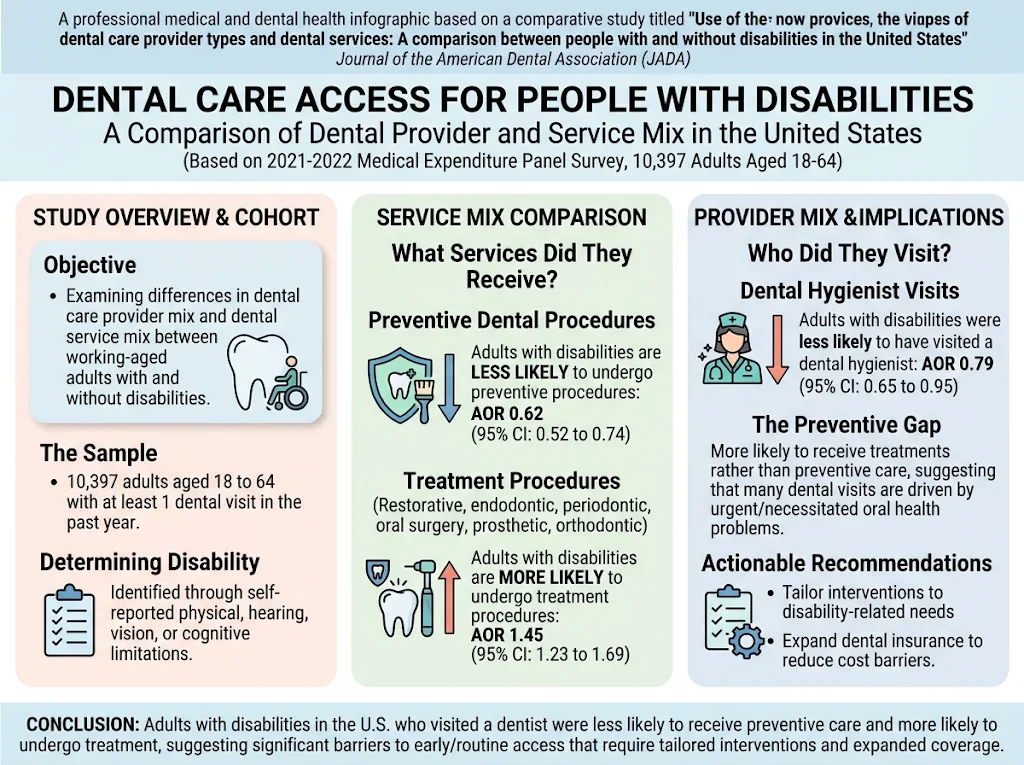
This investigation analyzed data from the 2021–2022 Medical Expenditure Panel Survey (MEPS), a nationally representative dataset collecting detailed health service utilization information. The study population included 10,397 adults aged 18 to 64 who had reported at least one dental visit in the preceding year. Disability status was defined based on self-reported physical, hearing, vision, or cognitive limitations. The analysis focused on two principal outcomes: the types of dental care providers visited, categorized as general dentists, dental hygienists, and dental specialists; and the mix of dental services received, classified into preventive procedures and treatment procedures. Treatment procedures encompassed restorative, endodontic, periodontic, oral surgery, prosthetic, and orthodontic services. Using weighted multiple logistic regression analyses, the authors examined associations between disability status and dental care utilization patterns, adjusting for potential confounders.Key Findings
The study uncovered notable differences between adults with and without disabilities in dental care utilization patterns: – Preventive Dental Services: Adults with disabilities had significantly lower odds of receiving preventive dental procedures compared to their non-disabled counterparts (adjusted odds ratio [AOR] 0.62; 95% confidence interval [CI], 0.52–0.74). – Treatment Procedures: Conversely, adults with disabilities were more likely to undergo treatment-focused dental procedures (AOR 1.45; 95% CI, 1.23–1.69), suggesting they presented with more advanced oral health issues requiring intervention. – Dental Care Providers: Those with disabilities were less likely to have visited dental hygienists (AOR 0.79; 95% CI, 0.65–0.95), professionals who typically provide preventive care, such as cleanings and oral hygiene education. These findings collectively suggest that adults with disabilities who do attend dental care are more often engaged due to existing oral health problems, rather than routine prevention.Expert Commentary and Interpretation
This study substantiates longstanding concerns regarding the oral health disparities faced by people with disabilities. The reduced receipt of preventive services among this group may be a consequence of multiple intertwined factors, including physical and communicative access barriers, provider preparedness, and socioeconomic determinants such as insurance coverage and cost. The lower engagement with dental hygienists further highlights limited preventive care access, as hygienists play an essential role in early disease detection and patient education. The higher prevalence of treatment services reflects potentially delayed care, leading to more complex dental needs. Limitations of the study include reliance on self-reported disability status and dental service utilization, which may introduce reporting biases. Additionally, the cross-sectional nature precludes causal inferences; however, these robust national survey data provide vital insights for public health strategy.Clinical and Public Health Implications
To address these inequities, a multipronged approach is essential: – Tailored Interventions: Dental practices should implement accommodations for physical and cognitive disabilities, including accessible facilities and communication aids. – Provider Education: Enhanced training for dental professionals regarding the needs of patients with disabilities can improve care quality and comfort. – Insurance and Policy Reforms: Expanded dental insurance coverage and cost-reduction programs specifically targeting people with disabilities could reduce barriers to preventive care. – Preventive Care Emphasis: Early and regular preventive dental visits are crucial to mitigate the progression of oral diseases and reduce reliance on extensive treatment.Conclusion
The analysis of 2021–2022 MEPS data reveals significant disparities in dental care utilization between adults with disabilities and those without, with a marked reduction in preventive services and increased treatment requirements among the disabled population. These findings emphasize the need to prioritize accessible, preventive-focused dental care and insurance reforms to enhance oral health equity. Future research should explore interventions tailored to specific disability types and investigate long-term oral health outcomes.References
1. Luo H, Grant FT, Moon S, Wright W, Moss ME. Use of dental care provider types and dental services: A comparison between people with and without disabilities in the United States. J Am Dent Assoc. 2026;157(11):1358-1367. 2. Centers for Disease Control and Prevention. Disability and Health Overview. https://www.cdc.gov/ncbddd/disabilityandhealth/disability.html 3. National Institute of Dental and Craniofacial Research. Oral Health in America: Advances and Challenges. J Dent Res. 2021;100(13):1335-1343. 4. Palacios C, et al. Barriers to oral health care for people with disabilities: A systematic review. Spec Care Dentist. 2020;40(4):422-434.Specialty calculators
For clinical reference; use professional judgment.