Highlight
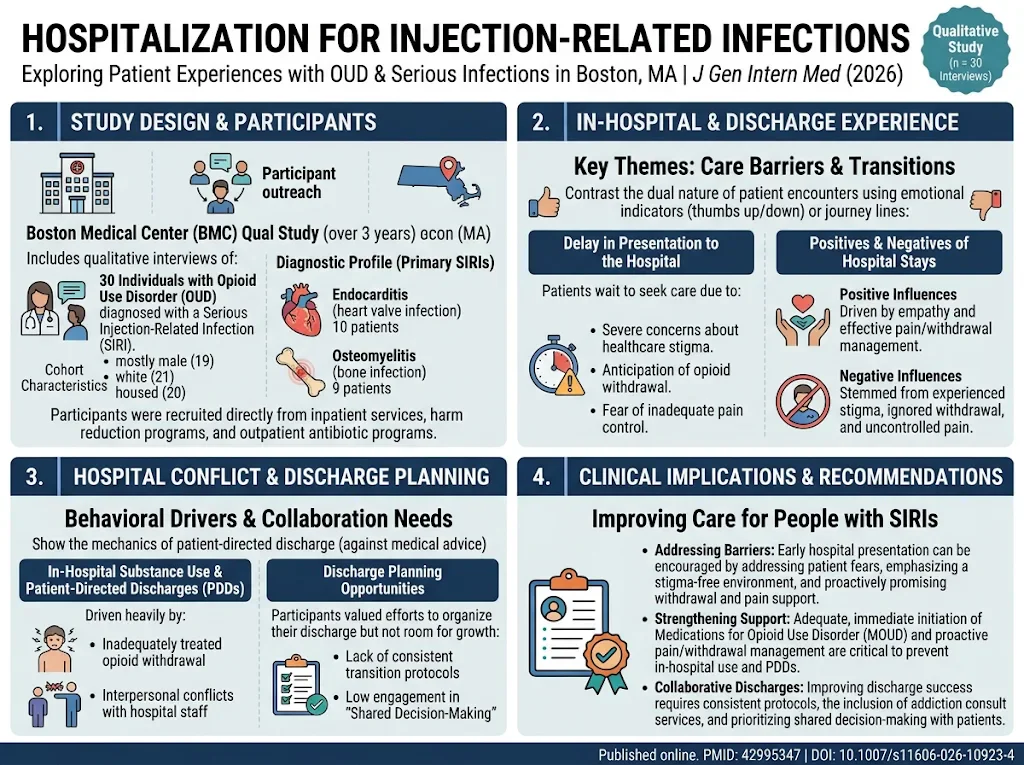
This study identifies four key themes in hospitalization experiences among individuals with opioid use disorder (OUD) treated for serious injection-related infections (SIRIs): delays in hospital presentation due to stigma and withdrawal fears; the impact of empathy and symptom management on inpatient experience; the drivers and consequences of in-hospital substance use and patient-directed discharges; and the importance of discharge planning with shared decision-making to improve care continuity.
Study Background
The ongoing opioid overdose epidemic in the United States has contributed to a rise in serious injection-related infections (SIRIs), including endocarditis, osteomyelitis, abscesses, and other invasive infections. These conditions are associated with significant morbidity, extensive healthcare costs, and prolonged hospital stays. SIRIs often affect people with opioid use disorder, a population facing complex medical and psychosocial challenges during hospitalization. Despite advances in linking patients to medications for opioid use disorder (MOUD) during SIRI hospitalizations, there remain gaps in understanding patient experiences that could guide improved inpatient treatment protocols and post-discharge care.
Study Design
This qualitative study was conducted over three years, concluding in 2022, in Boston, Massachusetts. Individuals with diagnosed OUD and a qualifying SIRI—including endocarditis and osteomyelitis—were recruited from inpatient hospital services, harm reduction programs, and outpatient parenteral antibiotic therapy (OPAT) programs. A total of 30 participants, predominantly male and white and majority housed, participated. Researchers used semi-structured interviews supplemented by brief surveys to collect detailed personal accounts of hospitalization experiences and care transitions. Transcriptions underwent inductive coding with thematic analysis to identify key patient-centered themes.
Key Findings
Four principal themes emerged from participant narratives, shedding light on the multifaceted barriers and facilitators relevant to care:
1. Delay in Hospital Presentation
Participants frequently delayed seeking hospital care for serious infections due to concerns about stigma, fear of untreated withdrawal symptoms, and inadequate pain control. These delays potentially exacerbate morbidity by postponing necessary interventions.
2. Inpatient Experience Influenced by Empathy and Symptom Management
Positive hospitalization experiences correlated strongly with compassionate care from medical staff and effective management of opioid withdrawal and pain. Conversely, negative experiences were reported when stigma, poorly managed withdrawal, and uncontrolled pain prevailed, contributing to distress and dissatisfaction.
3. Drivers of In-Hospital Substance Use and Patient-Directed Discharges (PDDs)
The persistence of withdrawal symptoms and conflict with healthcare providers were commonly cited reasons for in-hospital substance use and premature patient-initiated discharges. Such occurrences disrupt treatment continuity and complicate infection management, elevating risk for adverse outcomes.
4. Discharge Planning and Opportunities for Improvement
Participants valued efforts toward discharge planning but identified variability in protocol consistency and insufficient shared decision-making as areas needing enhancement. Effective discharge strategies, including integration of MOUD and patient involvement in treatment choices, were recognized as practical means to support recovery and prevent readmission.
Expert Commentary
The findings provide crucial patient-centered insights into the lived experiences of a vulnerable population navigating hospital care for SIRIs. The emphasis on reducing stigma and prioritizing withdrawal and pain management aligns with current best practices endorsed by addiction medicine guidelines. However, the study also highlights persistent systemic challenges such as insufficient staff training in addiction care and the need for standardized protocols. Incorporating shared decision-making not only respects patient autonomy but potentially improves adherence and outcomes. Although qualitative and based on a relatively small cohort from a single urban center, these findings carry implications for hospital policies beyond Boston and underscore the importance of integrated addiction and infectious disease care models.
Conclusion
This qualitative exploration elucidates critical themes shaping hospitalization experiences for people with OUD suffering from SIRIs. Addressing stigma, ensuring empathetic care, managing withdrawal effectively, and facilitating shared decision-making during inpatient treatment and discharge planning emerge as key strategies to improve patient satisfaction, reduce premature discharges, and optimize recovery. Broader implementation and standardization of MOUD during hospitalizations, combined with educational initiatives to combat stigma among healthcare providers, are essential next steps. Future research should explore scalable interventions across diverse healthcare settings to reduce the burden of SIRIs and support this high-risk population.
Funding and ClinicalTrials.gov
The study did not report specific funding sources or clinical trial registration.
References
1. Marks LR, Mateusz E, et al. Injection Drug Use–Associated Infectious Diseases; in: UpToDate. 2024.
2. Wakeman SE, et al. Inpatient Management of Opioid Use Disorder with Infectious Complications. JAMA Netw Open. 2023;6(2):e225587.
3. Tsui JI, et al. Patient Perspectives on Strategies to Improve Care of Serious Injection-Related Infections. Clin Infect Dis. 2022;75(3):560-567.
4. Substance Abuse and Mental Health Services Administration (SAMHSA). Medications for Opioid Use Disorder. Treatment Improvement Protocol (TIP) Series 63. 2023.
5. Barocas JA, et al. Patient-directed Discharges among Individuals with Substance Use Disorders: Impact on Outcomes. Clin Infect Dis. 2020;71(8):2173-2179.
Specialty calculators
For clinical reference; use professional judgment.