Highlight
– Lung cancer screening rates among Veterans declined sharply at the onset of the COVID-19 pandemic and required over two years to recover, remaining suboptimal by mid-2023.
– Median tumor size at diagnosis decreased in non-screened eligible Veterans during the pandemic, suggesting altered disease detection patterns.
– Lung cancer diagnosis rates among Veterans were lower than expected based on pre-pandemic trends, possibly indicating delayed or missed diagnoses.
– Screening participants maintained stable, smaller tumor sizes at diagnosis throughout the pandemic.
Study Background
Lung cancer remains the leading cause of cancer-related mortality in the United States, underscoring the importance of early detection strategies such as low-dose computed tomography (CT) screening. The COVID-19 pandemic precipitated widespread disruptions in healthcare services globally, including cancer screening programs. Such interruptions have raised concerns about delayed diagnoses, changes in tumor characteristics at presentation, and ultimately, impacts on mortality. Veterans, as a distinct and aging population with a higher prevalence of smoking history and comorbidities, constitute a critical demographic for lung cancer surveillance within the Veterans Affairs (VA) healthcare system. Understanding how the pandemic influenced lung cancer screening uptake, diagnostic rates, and tumor burden at detection in this group is pivotal for planning recovery strategies and mitigating future adverse outcomes.
Study Design
This retrospective cohort study evaluated lung cancer screening and diagnosis trends among Veterans using the VA healthcare system from January 2017 through June 2023. Two main cohorts were defined: (1) Veterans eligible for lung cancer screening based on established criteria and (2) all VA healthcare users regardless of screening eligibility. The study compared outcomes during the pre-pandemic period (January 2017–February 2020) with those during the pandemic period (March 2020–June 2023). The primary variables included lung cancer screening rates, lung cancer diagnosis rates, utilization of chest CT imaging, and tumor size at diagnosis.
Key Findings
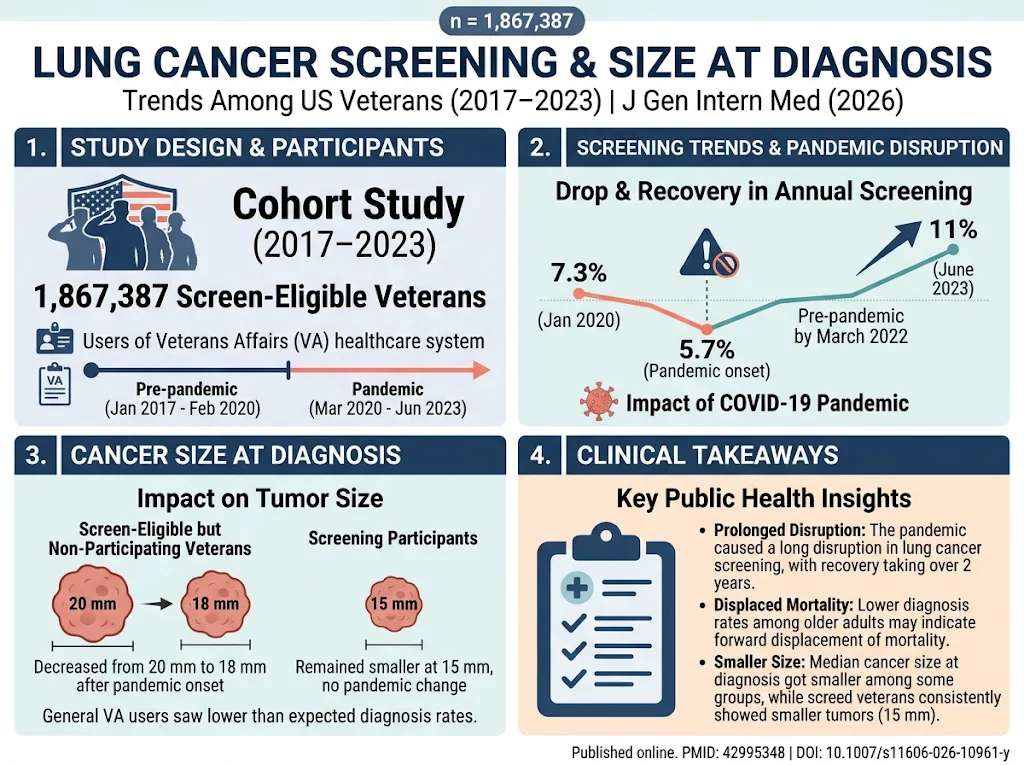
Screening Rates: Among the 1,867,387 Veterans eligible for lung cancer screening, the annual screening rate sharply decreased from 7.3% in January 2020 to 5.7% shortly after the pandemic onset. The screening rate showed a gradual recovery, surpassing pre-pandemic levels by March 2022, and reaching 11% in June 2023. Despite recovery, overall screening participation remained low relative to the eligible population.
Tumor Size at Diagnosis: For Veterans eligible but not participating in lung cancer screening, the median tumor size at diagnosis decreased from 20 mm (95% CI 19–20 mm) pre-pandemic to 18 mm (95% CI 16–19 mm) after the pandemic began. This suggests possible shifts in disease detection, potentially reflecting changes in healthcare-seeking behavior or diagnostic pathways during the pandemic. In contrast, among Veterans who participated in screening, median tumor size remained smaller (15 mm) and stable throughout both periods.
Lung Cancer Diagnosis Rates and CT Scan Utilization: Across the entire VA user population, the rate of lung cancer diagnoses during the pandemic was lower than expected when extrapolated from pre-pandemic trends. While the study did not report CT scan utilization rates in detail, the reduced diagnosis aligned temporally with decreased screening and possible reductions in diagnostic imaging. Notably, the decreased lung cancer diagnosis rates were more apparent in older Veterans, raising concerns about delayed or missed diagnoses potentially contributing to a forward shift in lung cancer mortality.
Expert Commentary
This study robustly illustrates the prolonged disruption to lung cancer screening services amid the COVID-19 pandemic and highlights concerning changes in diagnostic practices and outcomes. The observed decline in lung cancer diagnoses coupled with reduced screening rates raise alarms about potential underdiagnosis and delayed tumor detection, which could ultimately worsen cancer-related mortality. The smaller median tumor size observed in non-screened Veterans might reflect earlier diagnosis in those who did seek medical care but may also be influenced by selection bias or changes in diagnostic thresholds.
These findings underscore the importance of prioritizing the restoration and expansion of lung cancer screening programs, particularly in high-risk populations such as Veterans. Moreover, the data argue for enhanced outreach and education to overcome ongoing barriers to screening participation, including pandemic-related healthcare apprehensions. Integration of telehealth and mobile screening units may be potential solutions to increase accessibility.
Limitations include the observational design, potential confounding factors related to healthcare utilization changes during the pandemic, and the lack of detailed analysis of stage at diagnosis or outcomes beyond tumor size. Additionally, extrapolation of these findings to the non-Veteran population requires caution given the unique demographic and clinical characteristics of Veterans.
Conclusion
The COVID-19 pandemic had a sustained adverse impact on lung cancer screening engagement among US Veterans, with a prolonged recovery period that extended beyond two years. Despite recovery in screening rates, participation remains below optimal levels, posing ongoing challenges to early lung cancer detection. The observed decrease in lung cancer diagnoses and shifts in tumor size at diagnosis highlight potential delays in disease detection with implications for morbidity and mortality. Continued efforts to restore and innovate lung cancer screening delivery are essential to mitigate the pandemic’s long-term consequences on lung cancer outcomes in this vulnerable population.
Funding and Clinical Trials
No specific clinical trial number is applicable as this was a retrospective cohort study analyzing VA healthcare system data. Information regarding study funding sources was not provided.
References
1. Korves C, Smith J, Neupane N, et al. A Cohort Study of Lung Cancer Screening and Size at Diagnosis 2017-2023: Trends Among US Veterans. J Gen Intern Med. 2026 Nov 6. PMID: 42995348.
2. National Comprehensive Cancer Network. NCCN Clinical Practice Guidelines in Oncology: Lung Cancer Screening. Version 1.2023.
3. Kuderer NM, Lam AP, et al. Impact of the COVID-19 pandemic on cancer diagnosis and care: Medical and public health perspectives. Cancer. 2022;128(2):274-284.
4. Harris PA, et al. Lung cancer screening during the COVID-19 pandemic: challenges and opportunities. J Thorac Oncol. 2021;16(7):1122-1129.
Specialty calculators
For clinical reference; use professional judgment.