Highlight
- Adverse pregnancy outcomes, such as infant death and multiple complications, are linked to decreased postpartum contraceptive use.
- Experiencing infant death notably reduces the likelihood of postpartum contraception use.
- Adverse outcomes are associated with a higher selection of permanent contraception methods among contraceptive users.
- Findings emphasize the critical need for patient-centered counseling to support reproductive goals after challenging pregnancy experiences.
Study Background
Postpartum contraception is crucial in optimizing reproductive health and spacing pregnancies to improve maternal and infant outcomes. Women who experience adverse pregnancy outcomes—including maternal hypertension, gestational diabetes, preterm birth, prolonged infant hospitalization, or infant death—may have unique needs and challenges regarding contraceptive use. Existing literature suggests that such complications could influence contraceptive decision-making, but comprehensive population-level analyses have been limited. Understanding how adverse outcomes affect postpartum contraceptive uptake and method choice is essential for designing supportive, patient-centered family planning services.
Study Design
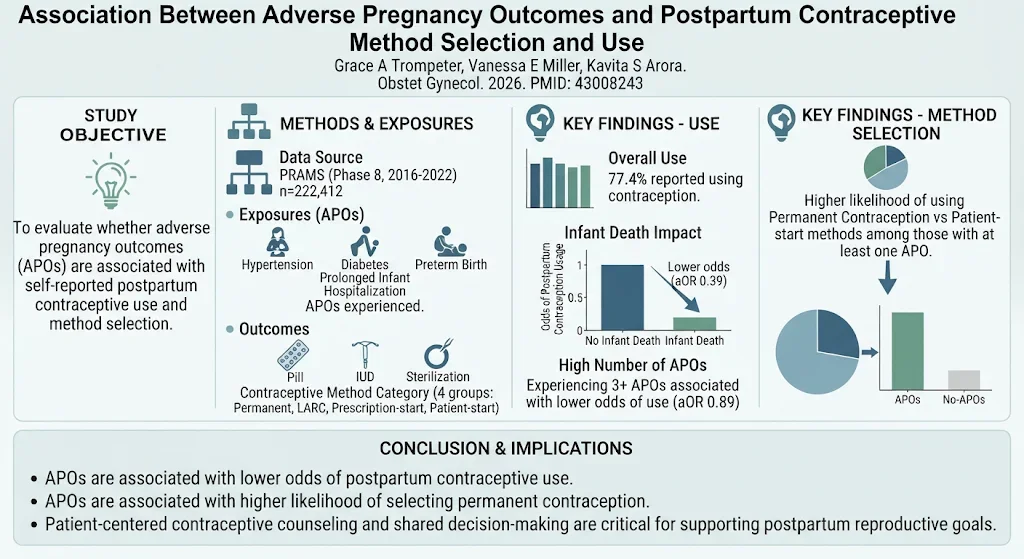
This investigation is a secondary analysis of data from the Pregnancy Risk Assessment Monitoring System (PRAMS) phase 8, encompassing surveys collected between 2016 and 2022. The large cohort included 222,412 postpartum individuals. The primary exposures assessed were adverse pregnancy outcomes: maternal hypertension, diabetes, preterm birth, prolonged infant hospitalization, and infant death. Postpartum contraceptive use was the main outcome, categorized into four groups based on clinical engagement required for the method: permanent contraception, long-acting reversible contraception (LARC), prescription-start methods (patch, ring, pill, injectable), and patient-start methods (condoms, natural family planning, withdrawal, abstinence).
Multivariable logistic regression models adjusted for demographic and clinical factors were applied to determine the association between adverse pregnancy outcomes and postpartum contraception use. Among those using contraception, multinomial logistic regression analyzed whether adverse outcomes influenced the choice of contraceptive method.
Key Findings
Overall, 32.7% of participants reported at least one adverse pregnancy outcome. Contraceptive use was reported by 77.4% of the sample. Key results include:
- Contraceptive use decreased with increasing adverse outcomes: Individuals experiencing three or more adverse pregnancy outcomes had a statistically significant lower likelihood of using contraception postpartum (adjusted odds ratio [aOR] 0.89; 95% confidence interval [CI], 0.82–0.97).
- Infant death strongly associated with reduced contraceptive use: Those experiencing infant death exhibited substantially lower odds of postpartum contraceptive use (aOR 0.39; 95% CI, 0.33–0.46) compared to those without infant death.
- No significant associations: Gestational diabetes, hypertension, preterm birth, and prolonged infant hospitalization were not associated with differences in contraceptive use.
- Adverse outcomes influence method selection: Among contraceptive users, having at least one adverse outcome increased the likelihood of selecting permanent contraception over patient-start methods.
Expert Commentary
This analysis provides important population-level insights into reproductive behaviors following complicated pregnancies. The finding that infant death markedly decreases postpartum contraceptive use may reflect complex psychosocial and emotional factors, including grief and altered reproductive intentions. It underscores the need for sensitive, individualized counseling that addresses emotional health and reproductive goals after loss.
The association of adverse outcomes with greater permanent contraception uptake suggests that some patients may opt for definitive fertility control after experiencing adverse events. Clinicians should ensure comprehensive counseling that balances medical indications with patient preference and supports informed decision-making.
Limitations include reliance on self-reported data and the observational nature of the study, which cannot establish causality. Moreover, detailed psychosocial factors influencing contraceptive decisions were not captured. Nonetheless, the large, diverse cohort and weighted analyses enhance the generalizability of findings.
Conclusion
This study highlights the complex relationship between adverse pregnancy outcomes and postpartum contraceptive behaviors. Experiencing multiple negative outcomes and infant death is associated with lower odds of using contraception after birth, while adverse outcomes also shift contraceptive choice toward permanent methods among users. These findings call for strengthened, patient-centered postpartum contraceptive counseling—recognizing the emotional and reproductive nuances following adverse pregnancy events—to support women in safely achieving their reproductive goals.
Future research should explore underlying psychosocial mechanisms and evaluate interventions that integrate mental health support with reproductive care to optimize postpartum contraceptive use and satisfaction.
Specialty calculators
For clinical reference; use professional judgment.