Highlights
- Out-of-area psychiatric admissions in children and adolescents are associated with increased emergency department (ED) presentations and non-mental health hospital admissions up to 60 months after discharge.
- Socio-demographic factors including ethnicity, diagnosis, previous hospitalizations, and state care status further influence health service utilization post-discharge.
- The disruption of family and local service continuity due to out-of-area admissions may contribute to increased long-term health system burden.
- Integrated care approaches, targeted interventions, and improved service coordination are critical to optimizing long-term outcomes for this vulnerable population.
Background
Severe mental illness requiring hospitalization in children and adolescents is linked to poor subsequent physical, mental, and social outcomes. Despite policy preferences for local admission in Child and Adolescent Mental Health Services (CAMHS), out-of-area admissions remain prevalent, often due to lack of local bed availability or specialist service needs. These out-of-area admissions entail longer lengths of stay and heightened family burden due to geographical separation, but their impacts on subsequent patterns of health-care utilization have been incompletely understood. Recent comprehensive analyses leveraged linked mental health and national health datasets to elucidate these associations over extended follow-up.
Key Content
Out-of-Area Admissions and Subsequent Health Service Use
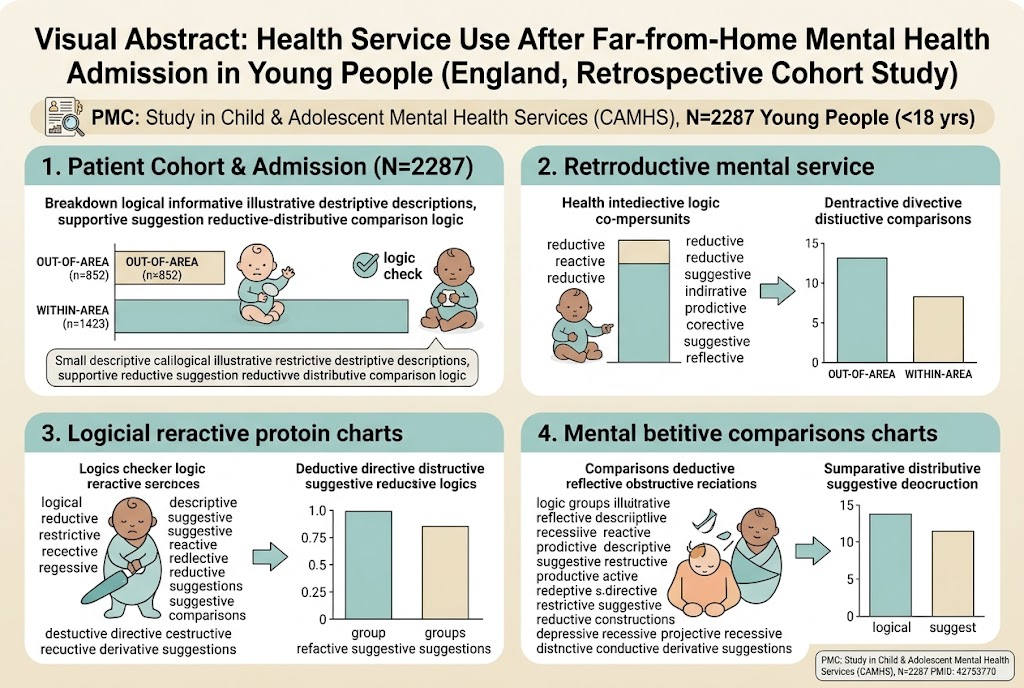
The landmark retrospective cohort study by Holland et al. (2026) investigated 2287 young people (50 miles or >60 minutes from home) or within-area.
Key findings included:
- Out-of-area admission was independently associated with a modest but statistically significant increase in emergency department presentations over 60 months post-discharge (adjusted hazard ratio [HR] 1.13, 95% CI 1.001-1.26).
- A similar increase was observed for non-mental health-related general hospital admissions at 60 months (adjusted HR 1.12, 95% CI 1.0001-1.26), but no significant association emerged for mental health-related hospital admissions.
- Confounder adjustment accounted for demographics, diagnostic category, prior health service utilization, and state care status, highlighting robust associations.
These findings suggest that geographic dislocation through out-of-area admission may disrupt local healthcare relationships, leading to increased reliance on acute services beyond mental health specialties.
Influence of Sociodemographic and Clinical Factors
Additional factors independently associated with increased ED and hospital use included ethnic minority status, a history of prior hospitalizations, primary psychiatric diagnoses, and being in the care of the state. These factors likely reflect complex vulnerabilities and systemic disparities requiring nuanced intervention approaches.
Related Evidence on Youth Mental Health Service Utilization and Outcomes
Complementary studies underline the challenges faced by youth with severe mental illness:
- A study on psychiatric emergency services utilization found repeat visits were common after initial encounters, with inpatient admission at index visits reducing the risk of subsequent ED presentations (Psychiatr Serv, 2026), emphasizing the predictive value of hospital utilization patterns.
- Studies from Australia and Canada highlight the heightened risk of psychiatric crises and treatment engagement difficulties in vulnerable youths, including those with borderline personality disorder or perinatal mental illness (Aust NZ J Psychiatry, 2026; Lancet Child Adolesc Health, 2026).
- Socioeconomic disparities influencing risk of psychiatric hospital admission and repeat self-harm events have been reported in large population cohorts, reinforcing the importance of addressing social determinants in mental healthcare (Int J Soc Psychiatry, 2026; Soc Psychiatry Psychiatr Epidemiol, 2026).
Mechanistic and Translational Implications
Disruption of family support and local care continuity through out-of-area admissions may exacerbate psychosocial stress and hinder timely follow-up care. This spatial separation may impair engagement with community services, medication adherence, and early identification of relapse signs, thereby increasing acute health service use. Mechanistically, increased all-cause hospitalizations suggest broader health vulnerabilities and possible reduced access to integrated care.
Expert Commentary
Out-of-area admission to CAMHS wards represents a complex clinical and systemic challenge. Although unavoidable in some settings due to structural limitations, these admissions may inadvertently contribute to fragmented care and adverse longitudinal outcomes. The modest increased hazard ratios for emergency and non-mental health hospital presentations, while statistically significant, highlight the cumulative effect of service fragmentation on young peoples’ health trajectories.
Current guidelines emphasize local, integrated care and family involvement to optimize outcomes in youth mental health. There is a critical need for policies promoting adequate local bed capacity and enhanced care coordination for patients admitted out of area. Outreach programs and shared-care models could mitigate risks identified in out-of-area populations. Improved data linkage between mental health and physical health services, as exemplified in the reported study, is invaluable for service evaluation and planning.
Underlying social determinants such as ethnicity, socioeconomic status, and state care placement require targeted attention to reduce inequities. Moreover, heightened utilization of general hospital services reflects interplay between mental health and physical comorbidities, aligning with findings from survivorship cohorts and chronic mental illness populations.
Limitations of available evidence include possible residual confounding, challenges in capturing patient-reported outcomes, and generalizability to other healthcare systems. Future prospective studies should explore causal pathways and intervention effects.
Conclusion
Children and adolescents admitted to mental health inpatient services far from home exhibit increased subsequent utilization of emergency and general hospital services, particularly for non-mental health reasons, over a 5-year span. This underscores an urgent need for enhanced service integration, family-centered care strategies, and capacity building to minimize out-of-area placements. Addressing systemic and social vulnerabilities that compound these risks is paramount. Continued research should aim to inform targeted interventions optimizing long-term outcomes for this vulnerable population.
References
- Holland J, Sayal K, Jewell A, Colling C, Downs J. Health service use of young people after mental health admission far from home: a retrospective cohort study in England. Lancet Child Adolesc Health. 2026 Sep 17. doi:10.1016/S2352-4642(26)00187-2. PMID: 42753770.
- Caddell C et al. Repeat psychiatric emergency services utilization among youths across emergency department and alternative settings. Psychiatr Serv. 2026;77(6):533-540. doi:10.1176/appi.ps.20250446. PMID:41813633.
- Sayal K, Downs J. Mental health outcomes among long-term survivors of childhood, adolescent and young adult cancer: a Scottish population-based cohort study. Psychooncology. 2026;35(6):e70529. doi:10.1002/pon.70529. PMID: 42323734.
- Pirkis J et al. Risk factors for repeat self-harm hospitalisation following hospital admissions for suicidal ideation and self-harm among Aboriginal and non-Aboriginal people: a retrospective cohort study using linked administrative data. Soc Psychiatry Psychiatr Epidemiol. 2026 Sep;61(9):1727-1738. doi:10.1007/s00127-026-03065-9. PMID:41758224.