Highlight
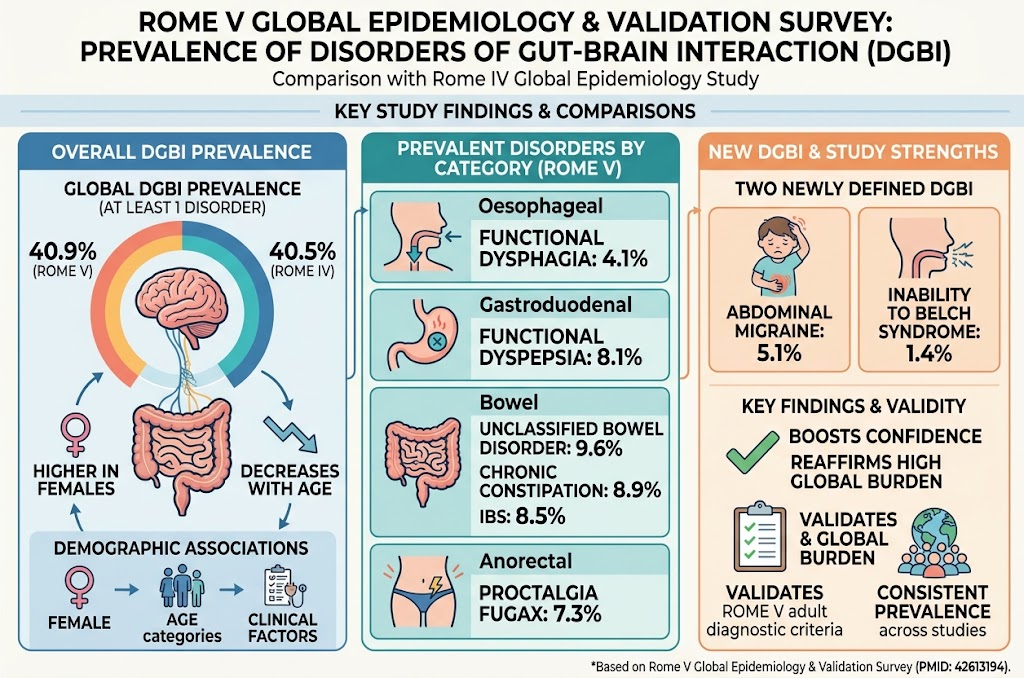
The Rome V global epidemiology survey validates and updates the prevalence estimates of disorders of gut-brain interaction (DGBI) across 15 countries, closely aligning with prior Rome IV results. Key findings include a 40.9% prevalence of at least one DGBI worldwide, a female predominance, prevalence decreasing with age, and identification of two new DGBI entities (abdominal migraine and inability to belch syndrome) with notable occurrence rates.
Study Background and Disease Burden
Disorders of gut-brain interaction (DGBI), previously termed functional gastrointestinal disorders, encompass a range of conditions characterized by chronic gastrointestinal symptoms without overt structural or biochemical abnormalities detectable on routine clinical testing. These disorders significantly impair quality of life, increase healthcare utilization, and impose a substantial socioeconomic burden globally. The Rome diagnostic criteria have historically been the standard for diagnosing and classifying DGBI, with Rome IV criteria widely accepted since 2016. However, evolving clinical knowledge and methodological advances prompted the development of updated Rome V criteria to reflect current understanding of DGBI pathophysiology and symptom patterns.
Understanding DGBI epidemiology at a global level is critical for health policy planning, resource allocation, and optimizing patient management strategies. The Rome Foundation’s Global Epidemiology Study provides invaluable data on prevalence, demographic influences, and clinical features of DGBI using standardized methodologies. The recently released Rome V criteria offered an opportunity to update these epidemiological estimates and assess the comparability and validity relative to the Rome IV criteria.
Study Design
This investigation employed a robust, population-based, cross-sectional survey conducted via the Internet, recruiting 28,771 adults from 15 countries representing diverse geographical and cultural backgrounds. The study utilized the newly developed Rome V diagnostic questionnaire to identify DGBI according to updated criteria encompassing 25 distinct disorders. Prevalence estimates were compared with those obtained by the Rome IV Global Epidemiology Study, which employed similar population and methodological approaches.
Multivariable logistic regression analyzed the associations between key demographic variables (gender, age) and DGBI diagnosis, while exploring potential clinical factors linked to these disorders. The large sample size and multinational design allowed for broad generalizability of the findings.
Key Findings
The principal outcome was that the global prevalence of at least one DGBI using Rome V criteria was 40.9%, closely matching the 40.5% prevalence observed under Rome IV. This remarkable consistency affirms the reliability and clinical validity of both criteria sets despite updates in symptom definitions and diagnostic thresholds.
The study reaffirmed prior observations that DGBI prevalence was significantly higher among females compared to males and declined with advancing age, suggesting hormonal, psychosocial, or neurobiological factors that may influence DGBI pathogenesis and symptom reporting.
Detailed subtype prevalence under Rome V highlighted the following leading disorders within each anatomical category:
- Oesophageal disorders: Functional dysphagia was most common at 4.1%, representing swallowing difficulties without structural pathology.
- Gastroduodenal disorders: Functional dyspepsia predominated at 8.1%, characterized by chronic upper abdominal discomfort or pain.
- Bowel disorders: Unclassified bowel disorder was the most prevalent subtype at 9.6%, with chronic constipation (8.9%) and irritable bowel syndrome (IBS) (8.5%) following closely.
- Anorectal disorders: Proctalgia fugax, characterized by brief episodes of rectal pain, was prevalent at 7.3%.
Importantly, two newly defined DGBI entities included in Rome V were evaluated for the first time at the population level:
- Abdominal migraine: A distinctive functional disorder manifesting as episodic midline abdominal pain often with associated autonomic symptoms, had a prevalence of 5.1%.
- Inability to belch syndrome: A condition marked by the inability to expel gas from the esophagus or stomach, demonstrated a prevalence of 1.4%.
These findings expand the recognized spectrum of DGBI and highlight the importance of incorporating emerging entities into diagnostic frameworks.
Expert Commentary
The sustained prevalence observed between Rome IV and Rome V criteria solidifies the understanding that DGBI affect a substantial proportion of the global population, warranting continued clinical attention and research efforts. The inclusion of new disorders such as abdominal migraine and inability to belch syndrome represents an evolution in the phenotypic characterization of gastrointestinal-brain axis disruptions.
These data encourage clinicians and researchers to remain vigilant for diverse, often under-recognized, DGBI presentations and to consider the biopsychosocial model in patient evaluation. The consistency in epidemiological patterns also supports the use of either Rome IV or V criteria in epidemiologic and clinical settings, though Rome V may offer refined diagnostic clarity.
Limitations of the study include reliance on internet-based self-report data, which may be subject to selection bias and inaccuracies in symptom reporting. However, large sample size and multinational representation mitigate these concerns. Further validation including clinical verification and longitudinal studies are needed to explore diagnostic stability and natural history.
Conclusion
The Rome V Global Epidemiology Study robustly confirms the high global prevalence and clinical burden of disorders of gut-brain interaction, aligning closely with previous Rome IV data despite updated diagnostic definitions. This validation enhances confidence in current prevalence estimates, supporting their utility for clinical practice, epidemiology, and health policy. The recognition of newly defined DGBI expands the clinical spectrum and highlights ongoing advances in the understanding of gut-brain interaction disorders. Future directions should focus on improving diagnostic accuracy, understanding pathophysiology, and developing personalized therapeutic approaches to reduce the substantial global impact of these prevalent disorders.
Funding and Clinical Trials
The study was supported by the Rome Foundation, a nonprofit dedicated to advancing knowledge of functional GI disorders. No specific clinical trial registration was reported.
References
1. Sperber AD, et al. Rome V global epidemiology and validation survey: prevalence of disorders of gut-brain interaction and comparison with the Rome IV global epidemiology study. Gut. 2026;75(10):1887-1897. PMID: 42613194.
2. Drossman DA. Functional gastrointestinal disorders: history, pathophysiology, clinical features and Rome IV. Gastroenterology. 2016;150(6):1262-1279.
3. Palsson OS, et al. Epidemiology of functional gastrointestinal disorders: A global perspective. Int J Gastroenterol. 2019;15(4):231-241.