Highlight
This retrospective study spanning over two decades highlights: 1) a notable change in the microbiological profile of acute postcataract endophthalmitis, with decreased coagulase-negative staphylococci and increased Enterococcus faecalis and Gram-negative bacteria; 2) a significant rise in cefuroxime and methicillin resistance among bacterial isolates, including multidrug-resistant staphylococci; 3) milder clinical severity at presentation in the recent cohort compared to historical cases; 4) the critical importance of ongoing microbiological surveillance to inform empiric therapy and prophylaxis strategies.
Study Background
Postcataract endophthalmitis (PCE) is a severe, vision-threatening complication following cataract surgery, caused by intraocular infection. Despite advances in prophylactic and surgical techniques reducing its incidence, PCE remains a clinical challenge due to its potentially devastating outcomes. The microbial etiology and antimicrobial susceptibility patterns can vary temporally and geographically, affecting treatment success. A detailed understanding of evolving pathogen profiles and resistance trends is essential to optimize empiric treatment protocols and prophylactic regimens aiming to preserve vision.
Study Design
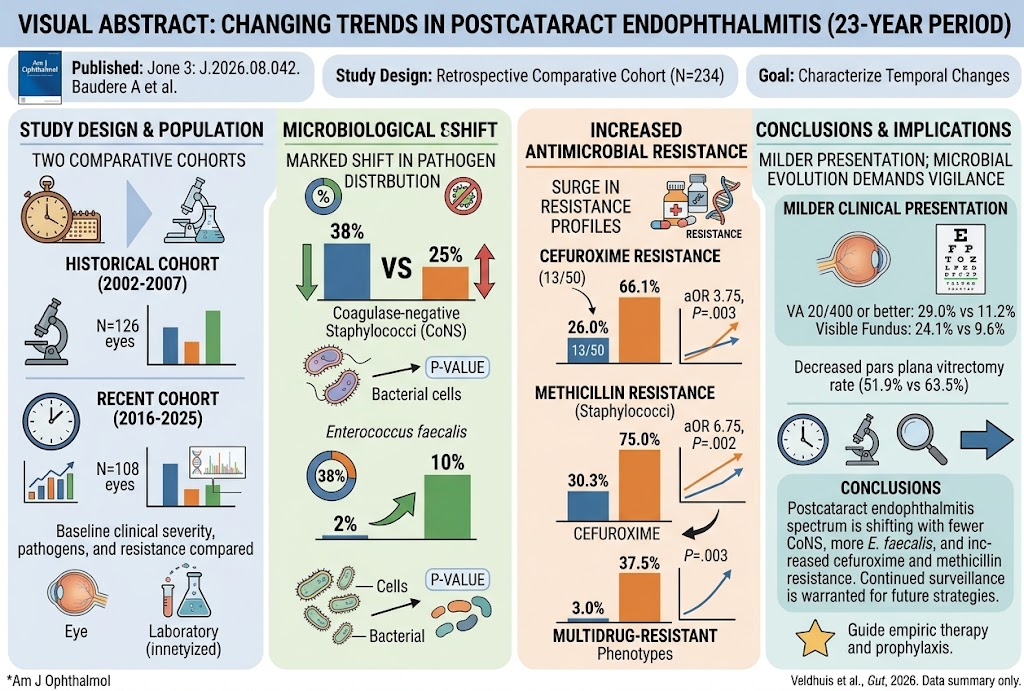
This was a retrospective comparative cohort study analyzing 234 eyes of 234 patients diagnosed with acute PCE within six weeks of cataract surgery, treated at two French tertiary referral centers. The patients were divided into two cohorts: a historical cohort (126 eyes, 2002-2007) and a recent cohort (108 eyes, 2016-2025). Microbiological assessment utilized conventional cultures as well as 16S ribosomal RNA polymerase chain reaction (PCR) on aqueous and vitreous samples. Antimicrobial susceptibility testing focused on cefuroxime and methicillin resistance among staphylococci, along with multidrug resistance profiles. Baseline clinical severity parameters, including visual acuity and fundus visibility, were compared.
Key Findings
Microbiological Identification Rates and Spectrum: Bacterial identification was achieved in 67.5% of cases in the historical cohort versus 58.3% in the recent cohort. The spectrum of causative bacteria shifted significantly over the 23-year interval. Coagulase-negative staphylococci, historically predominant (38%), decreased to 25% in recent cases. Conversely, Enterococcus faecalis increased fivefold from 2% to 10%, and Gram-negative bacteria representation more than doubled (from 3.1% to 7.3%).
Antimicrobial Resistance Trends: Resistance to cefuroxime, a commonly used prophylactic agent in cataract surgery, rose markedly from 26.0% to 66.1% among tested isolates (adjusted odds ratio [OR] 3.75, 95% confidence interval [CI] 1.59-8.82; P = .003). Methicillin resistance among staphylococci showed a dramatic increase from 30.3% to 75.0% (adjusted OR 6.75, 95% CI 1.99-22.83; P = .002). Moreover, multidrug-resistant phenotypes among staphylococci surged from 3.0% to 37.5% (P = .003).
Clinical Presentation and Management: Eyes in the recent cohort exhibited milder clinical severity at presentation: 29.0% had visual acuity better than or equal to 20/400 versus 11.2% in the historical group; visible fundus was noted in 24.1% versus 9.6%. The proportion of eyes undergoing pars plana vitrectomy decreased from 63.5% to 51.9%, reflecting differences in clinical severity or management approaches.
Limitations: The retrospective design limits causal inference, and incomplete antimicrobial susceptibility data may have influenced resistance estimates. Nonetheless, the large sample size and inclusion of molecular diagnostics strengthen the findings.
Expert Commentary
This comprehensive temporal analysis underscores evolving microbial epidemiology and antimicrobial resistance in postcataract endophthalmitis. The decreased prevalence of coagulase-negative staphylococci, traditionally the most common causative agents, coupled with rising Enterococcus faecalis and Gram-negative infections, suggests changing microbial ecology possibly influenced by shifts in perioperative prophylaxis, surgical technique, or hospital environment. Of notable concern is the steep increase in cefuroxime and methicillin resistance, which challenges the efficacy of established prophylactic antibiotics and standard empiric therapies.
The study’s observation of milder clinical presentations in recent years could relate to earlier diagnosis, improved surgical techniques, or pathogen virulence changes. However, the increased presence of multidrug-resistant organisms demands vigilance. These findings align with broader trends in antimicrobial resistance globally and highlight the need for tailored prophylactic strategies, including consideration of alternative agents or adjunctive treatments.
Ophthalmologists and infection control specialists should prioritize routine microbiological surveillance and susceptibility testing to adapt empirical treatment protocols accordingly. Integration of molecular diagnostics like 16S rRNA PCR increases pathogen detection sensitivity and may be instrumental in guiding personalized care. Future prospective studies are warranted to confirm these trends and evaluate the impact of novel prophylactic and therapeutic approaches on patient outcomes.
Conclusion
Over a 23-year period, the microbiological spectrum and antimicrobial resistance patterns in acute postcataract endophthalmitis have changed substantially, characterized by reduced coagulase-negative staphylococci occurrence and increased Enterococcus faecalis and Gram-negative bacteria. Antimicrobial resistance, notably to cefuroxime and methicillin, has escalated, raising concerns for current prophylactic and empiric treatment regimens. The clinical presentation has generally become milder, potentially reflecting earlier detection and evolving pathogen virulence. These findings emphasize the critical need for continuous microbiological surveillance to guide empiric therapy and update prophylactic strategies to mitigate this sight-threatening complication effectively.
Funding and Clinical Trials
The study did not specify funding sources or clinical trial registration.
References
- Baudere A, Maurin M, Dot C, et al. Changing Trends in the Microbiological spectrum and clinical presentation of Postcataract Endophthalmitis over a 23-year period. Am J Ophthalmol. 2026 Sep 3. doi:10.1016/j.ajo.2026.09.003. PMID: 42692132.
- Durand ML. Bacterial and fungal endophthalmitis. Clin Microbiol Rev. 2017 Apr;30(2):597-613. doi:10.1128/CMR.00113-16.
- ESCRS Endophthalmitis Study Group. Prophylaxis of postoperative endophthalmitis following cataract surgery: results of the ESCRS multicenter study and identification of risk factors. J Cataract Refract Surg. 2007 Jun;33(6):978-88.