Highlight
- GLP-1 receptor agonists (GLP-1 RAs) significantly reduce weight, glycemic indices, lipid parameters, and blood pressure in heart transplant (HT) recipients with type 2 diabetes mellitus (T2DM).
- GLP-1 RAs are generally safe and well tolerated in this population, with low discontinuation rates despite some gastrointestinal side effects.
- Minimal changes in immunosuppressant drug levels occurred, with no episodes of acute graft rejection during one-year follow-up after GLP-1 RA initiation.
- These findings endorse GLP-1 RAs as a promising therapeutic option for managing post-transplant diabetes and related cardiometabolic risks in HT recipients.
Study Background: Clinical Context and Unmet Needs
Heart transplantation remains a vital intervention for end-stage heart failure but is frequently complicated by metabolic disorders post-operatively, particularly type 2 diabetes mellitus (T2DM). T2DM prevalence after heart transplantation is high, influenced by immunosuppressive therapies such as corticosteroids and calcineurin inhibitors that exacerbate insulin resistance and impair glucose metabolism. This metabolic dysregulation contributes to cardiovascular risk and negatively impacts graft survival and overall patient outcomes. Optimal management of T2DM in HT recipients is challenging due to drug interactions, potential side effects, and the delicate balance required to preserve graft function. Glucagon-like peptide-1 receptor agonists (GLP-1 RAs), a class of antidiabetic agents with beneficial effects on glucose control, body weight, lipid profile, and blood pressure, have demonstrated cardiovascular benefits in the general T2DM population. However, evidence regarding their efficacy and safety in the context of heart transplantation is scarce. This multicenter Spanish study addresses this gap by evaluating metabolic and immunosuppressive outcomes in HT recipients treated with GLP-1 RAs, informing clinical decision-making for this complex population.Study Design and Methods
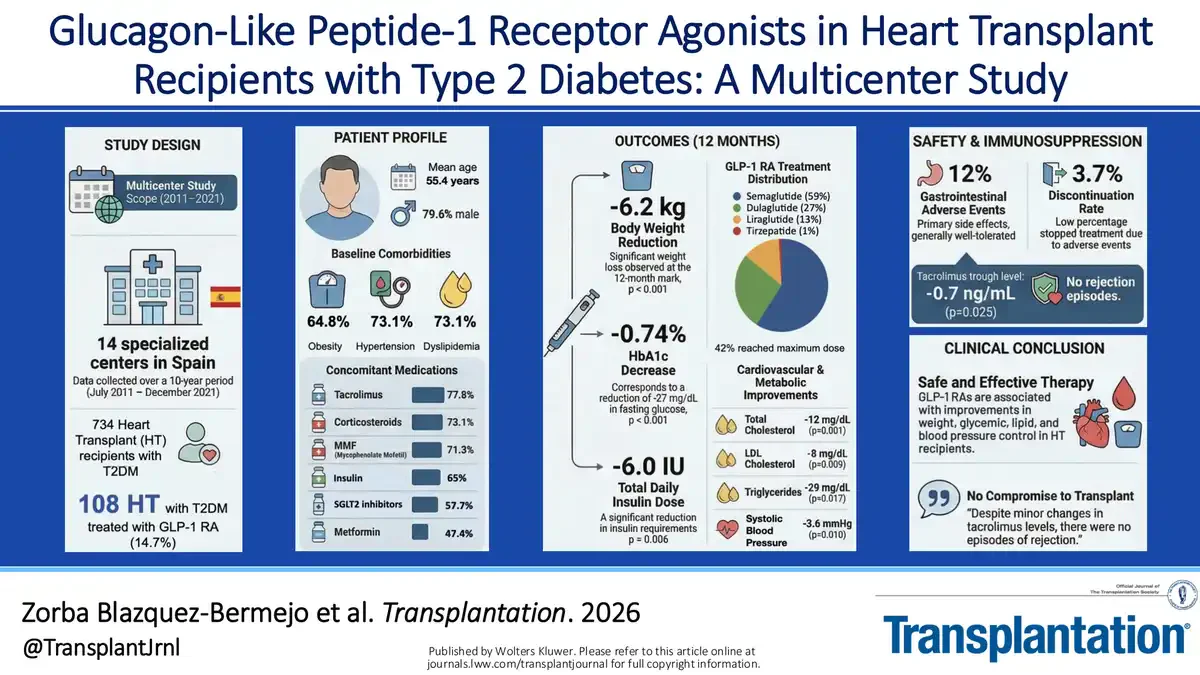
This retrospective, observational study included heart transplant recipients diagnosed with T2DM from 14 transplant centers across Spain, covering patients transplanted and followed between 2011 and 2021. Inclusion criteria encompassed adult HT recipients with T2DM who initiated GLP-1 RA therapy, including semaglutide, dulaglutide, liraglutide, and tirzepatide. Baseline characteristics, concurrent antidiabetic and immunosuppressive medications, and lab parameters were recorded. The primary endpoint was change in metabolic parameters—body weight, fasting glucose, glycated hemoglobin (HbA1c), lipid profile, and blood pressure—at one year post-initiation of GLP-1 RAs. Secondary endpoints involved insulin dose alterations, trough levels of immunosuppressants (mainly tacrolimus), and adverse events including graft rejection episodes. Statistical analyses assessed mean changes with 95% confidence intervals (CIs) and significance testing to evaluate clinical relevance.Key Findings
Among 734 HT recipients with T2DM, 108 (14.7%) received GLP-1 RAs at an average of 4.0 ± 3.1 years post-transplantation. The cohort was predominantly male (79.6%) with a mean age of 55.4 years, and 64.8% had obesity at baseline. GLP-1 RA treatment distribution was as follows: semaglutide (59%), dulaglutide (27%), liraglutide (13%), and tirzepatide (1%). Approximately 42% of patients reached the maximum therapeutic dose. After one year, patients showed statistically and clinically significant improvements: – Body weight decreased by an average of 6.2 kg (95% CI: -7.7 to -4.5 kg), beneficial for cardiovascular risk reduction. – Fasting glucose dropped by 27 mg/dL (95% CI: -41 to -7 mg/dL). – HbA1c improved by 0.74% (95% CI: -1.12% to -0.35%), indicating better glycemic control. – Lipid profile enhancements included reductions in total cholesterol (-12 mg/dL; 95% CI: -19 to -6 mg/dL), low-density lipoprotein cholesterol (-8 mg/dL; 95% CI: -14 to -2 mg/dL), and triglycerides (-29 mg/dL; 95% CI: -53 to -5 mg/dL). – Systolic blood pressure fell by 3.6 mm Hg (95% CI: -6.4 to -0.9 mm Hg), further addressing cardiovascular risk. Tacrolimus trough levels decreased modestly by 0.7 ng/mL (95% CI: -1.4 to -0.1 ng/mL; P = 0.025), without precipitating any episodes of acute rejection during the study period. Adverse events were predominantly gastrointestinal (12.0%), with a small fraction (3.7%) discontinuing therapy due to intolerance. No severe adverse outcomes or increased rejection risk were observed.Expert Commentary and Interpretations
This study is the first large multicenter evaluation highlighting that GLP-1 RAs can safely enhance metabolic control in heart transplant recipients with T2DM. The observed reductions in body weight, glucose levels, and lipid parameters parallel benefits seen in the non-transplant population, supporting the drugs’ pleiotropic effects beyond glycemic control. The mild decrease in tacrolimus levels warrants attention but was clinically inconsequential, potentially reflecting altered absorption or metabolism during GLP-1 RA therapy. Close monitoring remains prudent when initiating GLP-1 RAs in this context. Gastrointestinal side effects aligned with prior GLP-1 RA studies and were manageable. Limitations include the retrospective design, potential selection bias, heterogeneity in GLP-1 RA choice and dosing, and lack of a control group. Long-term impacts on graft survival and cardiovascular outcomes require further prospective study. Nonetheless, this research offers biologically plausible findings consistent with GLP-1 RA mechanisms—promoting insulin secretion, suppressing glucagon, delaying gastric emptying, and reducing appetite—facilitating metabolic improvements that are critical in post-HT care.Conclusion and Future Directions
GLP-1 receptor agonists represent a valuable therapeutic avenue to improve cardiometabolic health in heart transplant recipients with T2DM. Their efficacy in reducing weight, glucose, lipid abnormalities, and blood pressure alongside a favorable safety profile and minimal interference with immunosuppressive therapy challenges prior concerns and encourages wider adoption. Prospective randomized trials are needed to confirm these findings and assess long-term effects on graft function, cardiovascular events, and survival. Integration of GLP-1 RAs into post-transplant diabetes algorithms could profoundly improve patient quality of life and outcomes. Clinicians managing complex post-transplant diabetes should consider GLP-1 RA therapy as a component of multifaceted care, emphasizing individualized assessment and monitoring.Funding and Clinical Trials Registration
No specific funding information was provided. The study was a retrospective analysis registered across multiple centers; no clinicaltrials.gov identifier was reported.References
Blazquez-Bermejo Z, Enríquez-Vázquez D, García-Romero E, et al. Glucagon-like Peptide-1 Receptor Agonists in Heart Transplant Recipients With Type 2 Diabetes: A Multicenter Study. Transplantation. 2026 Oct 27. PMID: 42934184. Additional relevant literature on GLP-1 RAs in cardiovascular disease and transplant populations can be referenced for a broader context when desired.Specialty calculators
For clinical reference; use professional judgment.